Kiln-Dried Wood: What It Means & Why It Matters for Furniture
Freshly cut (“green”) wood can contain more water than wood fibre by weight. As it dries, it shrinks, and if that drying happens unevenly or after furniture is built, the result is warping, splitting, loose joints and squeaks. Kiln drying removes moisture quickly and evenly before the wood is machined, so it stays stable once it is in your home. That is why “kiln-dried hardwood frame” is one of the most important phrases to look for when buying sofas, chairs and case goods.
How kiln drying works
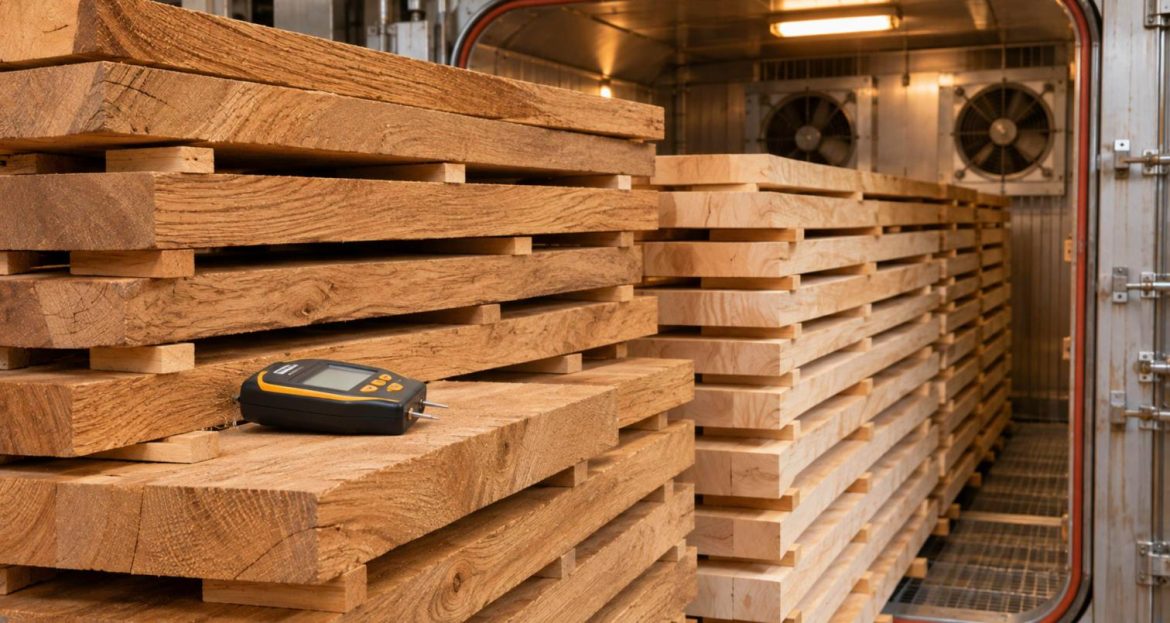
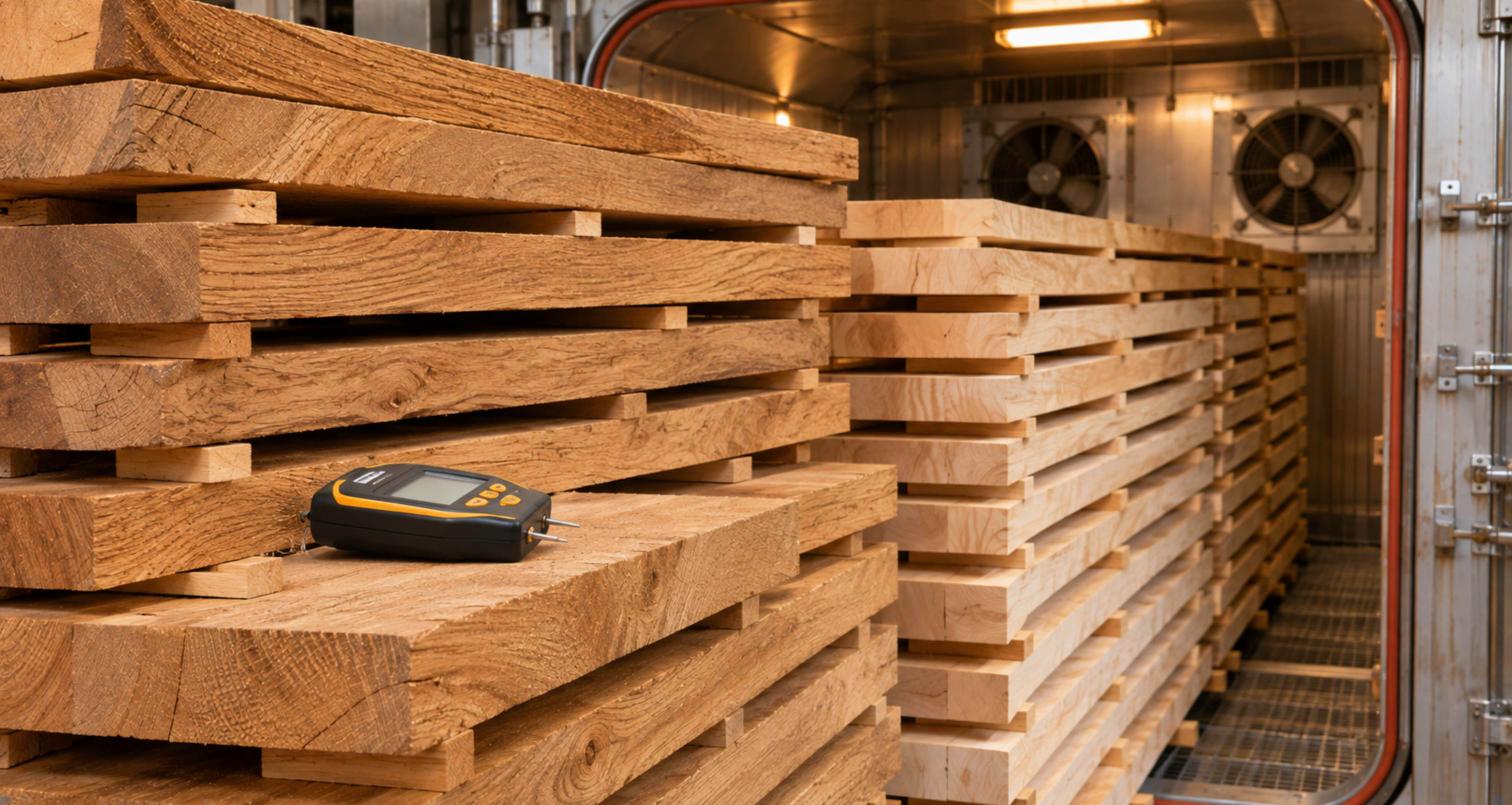
Boards are stacked with thin spacer strips called stickers between layers, as in the photo, so air can circulate around every surface. In the kiln, temperature, humidity and airflow are controlled according to a drying schedule specific to the species and thickness. Moisture is drawn out gradually from the surface and core, and operators monitor progress with moisture meters. Kiln heat also kills insects, fungi and larvae.
Kiln-dried vs. air-dried wood
- Air-dried: stacked outdoors or in sheds for months or years; slower and generally reaches only the moisture level of the surrounding outdoor air, often 12 to 20 percent, which is too high for heated homes.
- Kiln-dried: dried to a specific target in days or weeks; consistent and suitable for indoor furniture.
- Many woodworkers air-dry first and finish in a kiln for the best of both.
Why it matters for furniture
- Stability: less shrinking, swelling and warping once in your home.
- Joint strength: glue bonds better and joints stay tight.
- Fewer squeaks and wobbles: frames do not loosen as wood dries out.
- No pests: heat sterilises the wood.
- Better finishing: stains and finishes absorb more evenly.
Kiln-dried hardwood frames
For upholstered furniture, the frame is the foundation. Kiln-dried hardwoods such as maple, oak, ash, beech and poplar, joined with dowels, glue and corner blocks, are the benchmark. Some manufacturers use kiln-dried softwoods or engineered plywood, which can also be strong if well built. Avoid frames made of green wood, particleboard or staples only.
Wood, moisture and Vancouver’s climate
Metro Vancouver’s humid, rainy winters, combined with dry indoor heat, mean wood furniture is constantly adjusting to changing humidity. Kiln-dried furniture handles this far better. Keeping indoor humidity between about 35 and 55 percent, and keeping furniture away from heaters and direct sun, helps prevent cracks and gaps in solid wood.
Related terms
Frequently asked questions
What does kiln-dried mean?
The wood has been dried in a controlled chamber to a low, stable moisture content.
What moisture content should furniture wood have?
Around 6 to 8 percent for indoor furniture in most climates.
Is kiln-dried wood better than air-dried?
For indoor furniture, yes; it reaches a lower, more consistent moisture level.
Why is a kiln-dried hardwood frame important?
It resists warping and loosening, so the sofa or chair stays solid for years.
Part of the Vancouver Furniture glossary of furniture, design and mattress terms. Browse furniture stores across Metro Vancouver or our mattress store guide.