Mortise and Tenon Joint: How It Works, Types & Why It Matters
The mortise and tenon is one of the oldest and most widely used joints in woodworking, found in ancient Egyptian furniture, Chinese temple architecture and medieval timber-frame buildings. In furniture, it is the classic way to join legs to aprons and rails in tables, chairs and bed frames, the places that carry weight and resist racking. A well-made mortise-and-tenon joint can last for centuries, which is why it remains a benchmark of quality construction.
How the joint works
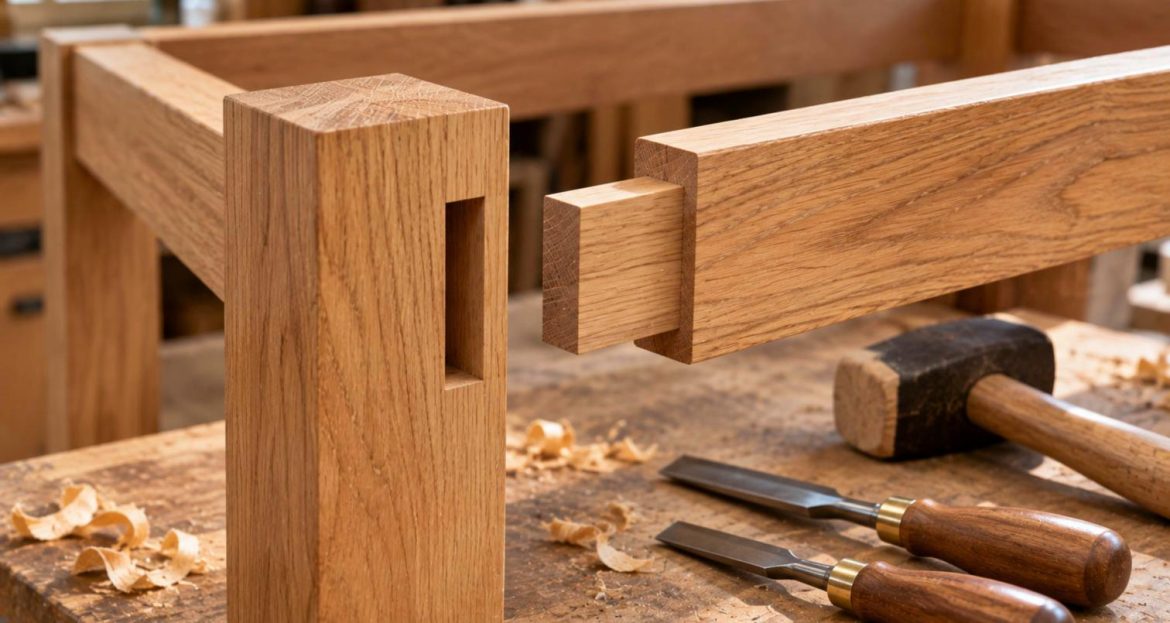
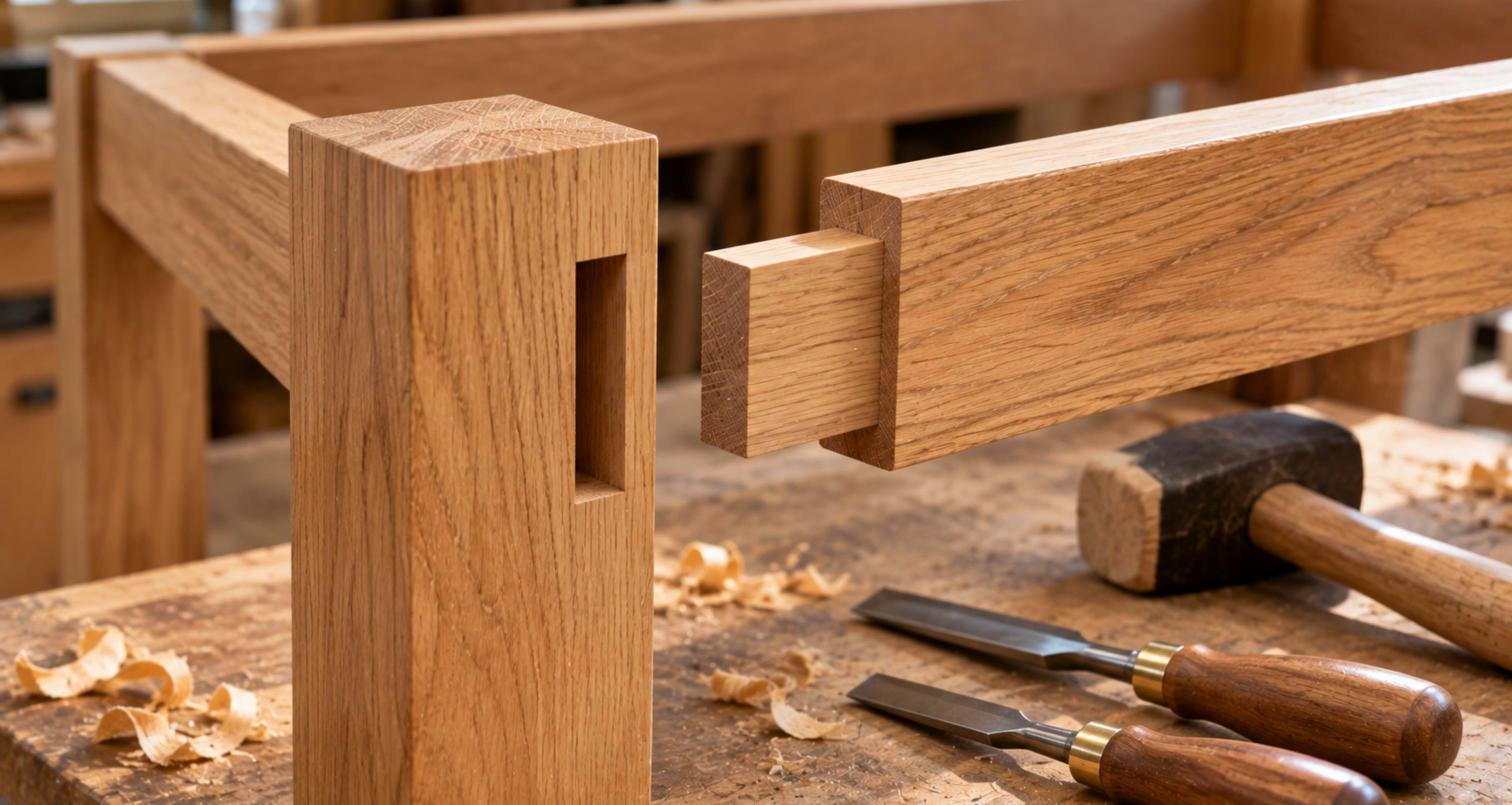
The tenon is cut by removing wood from the faces of the end of a rail, leaving a rectangular tongue with “shoulders” around it. The mortise is a matching rectangular hole chiselled or machined into the leg. When glued together, the large long-grain gluing surfaces and the mechanical fit create a joint that resists twisting and racking. The shoulders also bear weight and keep the rail square to the leg.
Types of mortise and tenon
- Blind (stopped): the mortise does not go all the way through, so the tenon is hidden; the most common in furniture.
- Through: the tenon passes completely through and is visible on the other side, often as a design feature.
- Wedged: wedges driven into a through tenon lock it in place.
- Pinned (drawbored): a wooden peg through the joint pulls it tight and locks it mechanically.
- Loose (floating) tenon: a separate tenon fits into mortises in both pieces; used in modern machine-made furniture.
- Haunched: a small extra “haunch” fills a groove, common in frame-and-panel doors.
Where it is used in furniture
In a dining table, the apron rails are typically joined to the legs with mortise and tenon joints, as in the photo. Chairs use them where seat rails and stretchers meet legs. Bed frames, doors, cabinets and timber-frame structures rely on them too.
Mortise and tenon vs. other joints
- Dowel joints: round pins in drilled holes; faster but less gluing surface.
- Pocket screws: quick and hidden, but weaker over time in high-stress joints.
- Metal brackets and bolts: common in flat-pack furniture; can loosen with use.
- Dovetail joints: best for drawers and box corners rather than leg-and-rail frames.
Spotting quality in a table or chair
- Ask how the legs are attached to the aprons or rails.
- A table that does not wobble when you push a corner suggests strong joinery.
- Look under the table: corner blocks plus mortise-and-tenon joints indicate quality.
- Visible through-tenons or pegs are often a sign of handcrafted furniture.
Related terms
Frequently asked questions
What is a mortise and tenon joint?
A joint where a tongue (tenon) on one piece fits into a matching hole (mortise) in another, usually glued.
Why is mortise and tenon so strong?
It has large gluing surfaces and a mechanical fit that resists twisting and racking.
Where are mortise and tenon joints used?
Mainly where table legs meet aprons, in chair frames, bed frames and doors.
What is a loose tenon?
A separate tenon inserted into mortises cut in both pieces, common in modern furniture production.
Part of the Vancouver Furniture glossary of furniture, design and mattress terms. Browse furniture stores across Metro Vancouver or our mattress store guide.