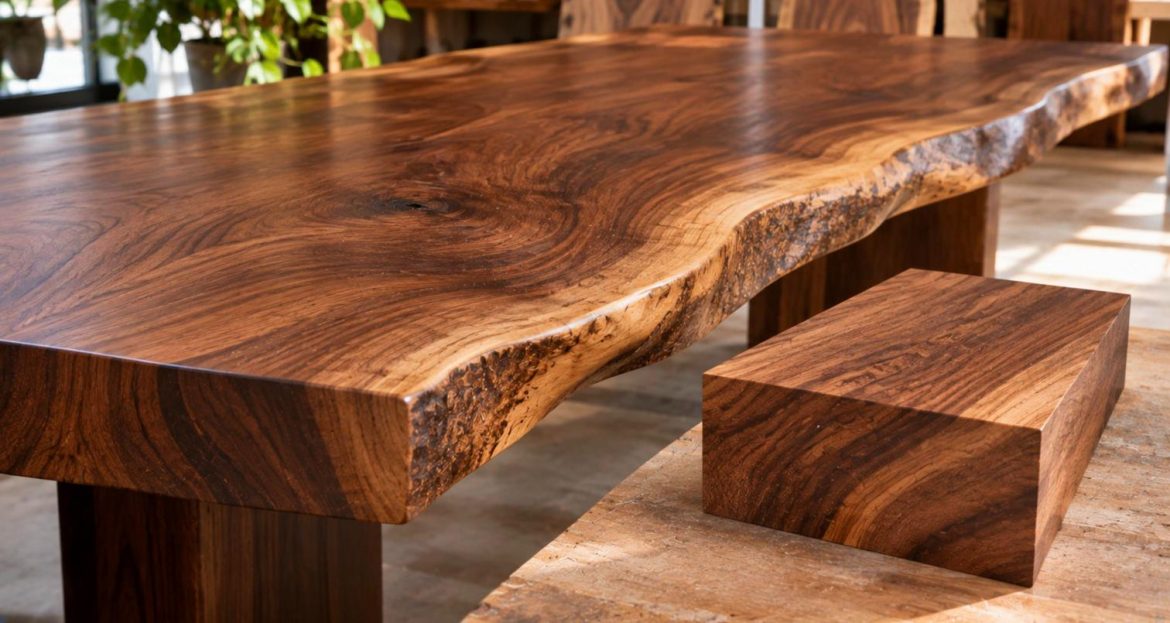
Solid Wood Furniture: Meaning, Species, Pros & Cons vs. Veneer and MDF
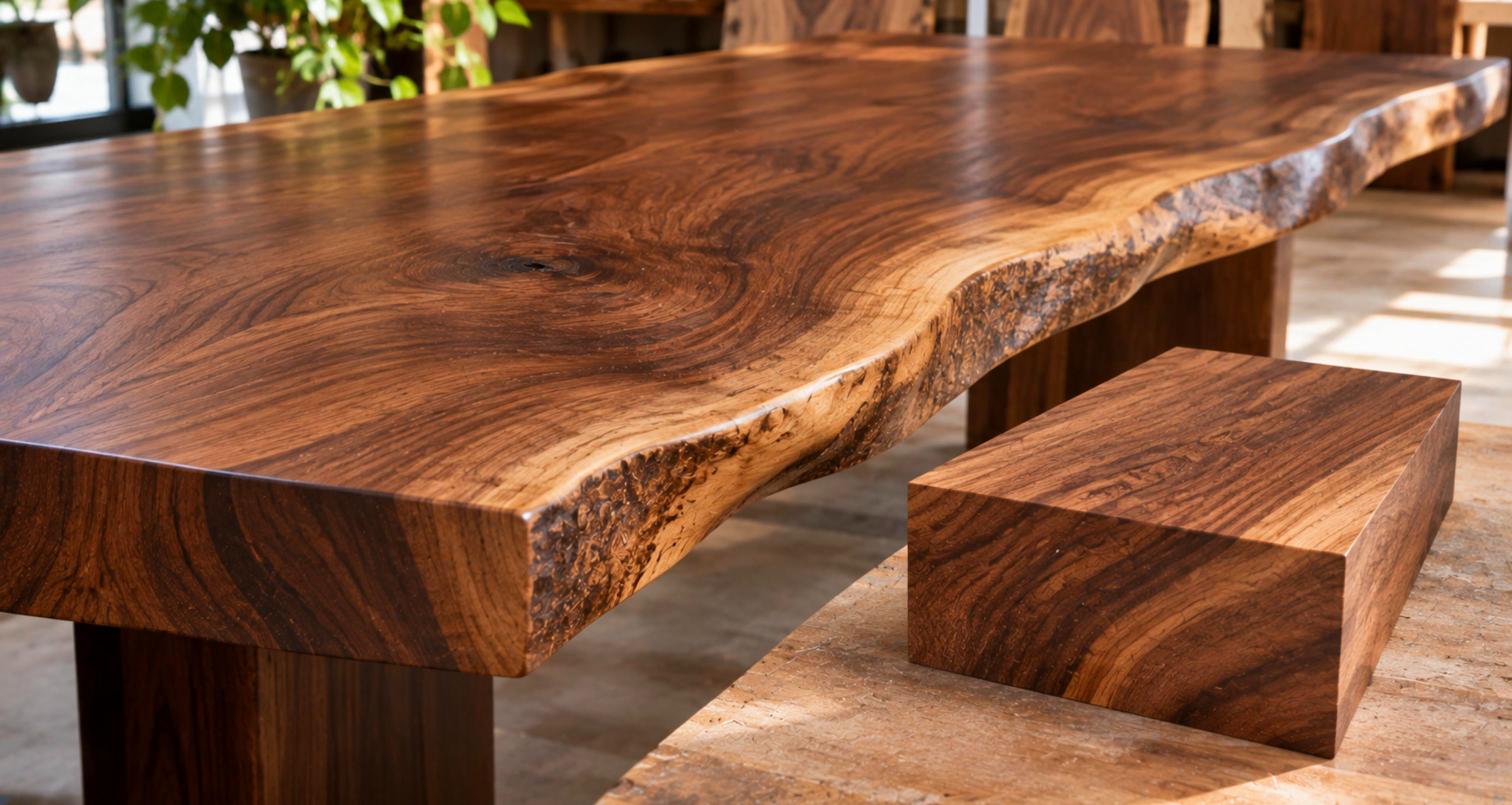
Solid wood has been the traditional material of fine furniture for centuries, and it remains the benchmark for durability and repairability. A solid wood table can be sanded and refinished many times; a scratch in veneer may go straight through the thin surface. That said, “solid wood” is often used loosely in marketing, and well-made veneered furniture can be stable and beautiful. Knowing the differences helps you get the right piece at the right price.
Hardwoods vs. softwoods
- Hardwoods come from broadleaf trees. Oak is strong with prominent grain; walnut is rich and dark; maple is hard and pale; cherry darkens beautifully with age; ash is tough and flexible.
- Softwoods come from conifers. Pine is affordable and rustic but dents easily; fir and cedar are used in outdoor and rustic furniture.
“Hard” and “soft” refer to the tree type, not always the actual hardness, but hardwoods are generally more durable for furniture.
Pros of solid wood
- Can be sanded and refinished repeatedly.
- Scratches and dents can be repaired.
- Very strong joinery, such as dovetails and mortise and tenon.
- Ages well and can last generations.
- Holds resale and heirloom value.
Cons of solid wood
- More expensive than veneer or engineered wood.
- Expands and contracts with humidity, which can cause cracks or gaps if poorly made or poorly cared for.
- Heavy.
- Wide solid panels can warp; good makers allow for wood movement.
Solid wood vs. veneer vs. MDF
Veneer is a thin slice of real wood glued to a stable core, usually plywood or MDF; quality veneer furniture can be excellent and resists warping. MDF and particleboard are engineered from wood fibres or chips; affordable but less durable and hard to repair. Many quality pieces combine solid wood frames and legs with veneered panels.
How to tell if furniture is solid wood
- Look at the edge or end grain: on solid wood, the grain pattern on the top continues around the edge.
- Check the underside and back for unfinished wood rather than particleboard.
- Compare grain patterns: repeating identical patterns suggest veneer or printed laminate.
- Feel the weight: solid wood is heavy.
- Ask for specifications and read the label: “wood product” or “wood veneer” is not solid wood.
Caring for solid wood
Use coasters and placemats, wipe spills promptly, dust with a soft cloth, and keep furniture away from heaters and direct sun. In Vancouver’s damp winters, aim for indoor humidity of about 35 to 55 percent to minimise movement, especially with kiln-dried pieces moved into heated condos.
Related terms
Frequently asked questions
What is solid wood furniture?
Furniture made entirely from natural lumber, with grain running through the full thickness.
Is solid wood better than veneer?
Solid wood is more repairable and long-lasting; good veneer is stable and can be excellent value.
How can you tell if a table is solid wood?
Check whether the grain on the top continues around the edge and end, and check the underside.
Does solid wood furniture crack?
It can if humidity swings widely or construction ignores wood movement; good makers allow for it.
Part of the Vancouver Furniture glossary of furniture, design and mattress terms. Browse furniture stores across Metro Vancouver or our mattress store guide.