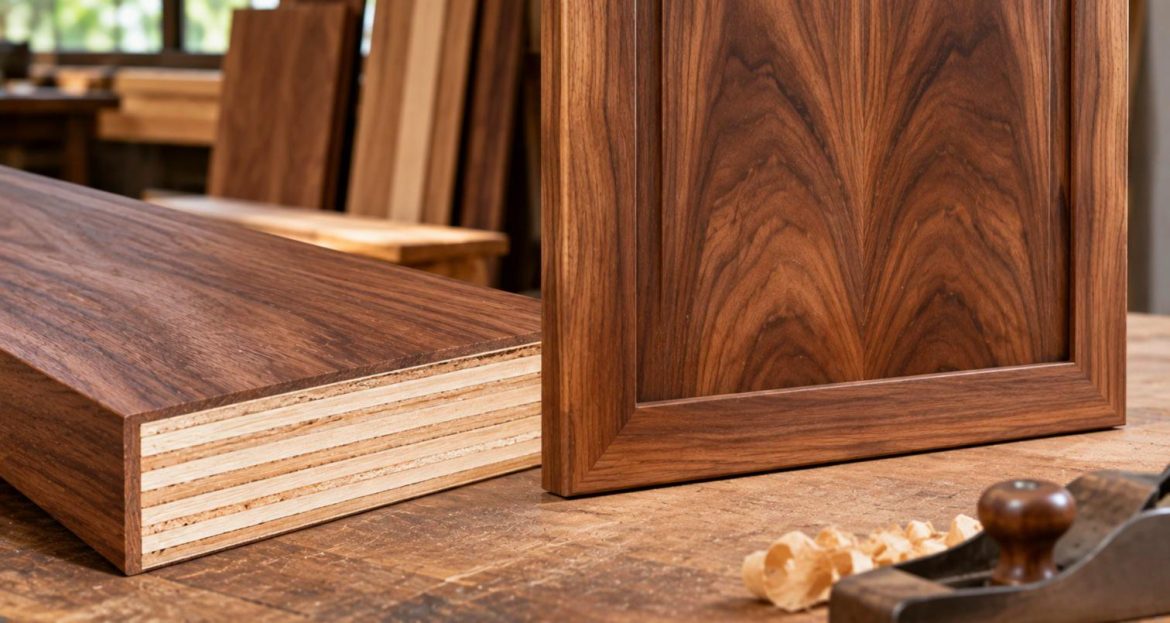
Wood Veneer: What It Is, Types, Quality & Veneer vs. Solid Wood
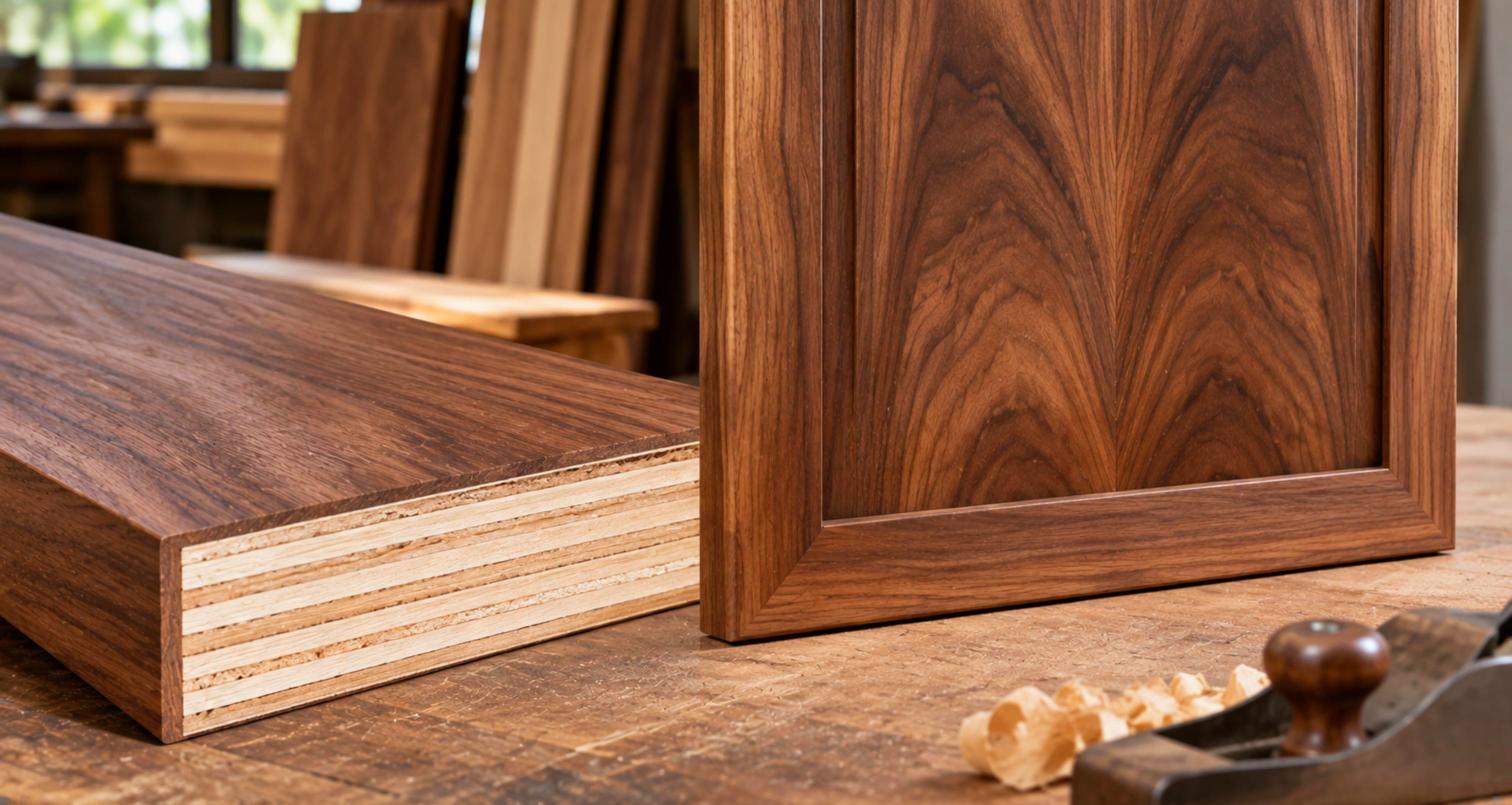
Veneering is an ancient technique; ancient Egyptian craftsmen applied thin layers of precious woods to furniture, and veneer reached a peak of artistry in 18th-century European cabinetmaking with marquetry and inlay. Veneer is often misunderstood as a cheap shortcut, but it has real advantages: it makes rare and figured woods affordable and sustainable, allows striking grain patterns, and, over a stable core, resists the warping that wide solid wood panels can suffer. Much classic mid-century modern furniture is veneered.
How veneer is made
- Rotary cut: the log is turned on a lathe and peeled; produces wide, wild grain patterns, often used for plywood.
- Plain (flat) sliced: sliced parallel to the centre for “cathedral” grain.
- Quarter sliced: produces straight, striped grain.
- Rift cut: a variation that reduces flecking in oak.
Matching patterns
- Book-matched: adjacent sheets are flipped like pages of a book, creating a mirror image, as on the cabinet door in the photo.
- Slip-matched: sheets are slid side by side for a repeating pattern.
- Random-matched: sheets arranged randomly for a natural look.
- Burl and figured veneers: rare, decorative wood only practical as veneer.
Veneer vs. laminate
Real wood veneer is actual wood. Laminate (including high-pressure laminate, melamine, thermofoil and printed paper) is a photographic print of wood grain on plastic or paper. Laminates can be very durable but cannot be refinished. Check product descriptions carefully: “wood finish” or “wood-look” usually means laminate, not veneer.
Pros and cons of veneer
Pros: beautiful, often rare grain; stable and less prone to warping; more sustainable use of timber; usually more affordable than solid wood. Cons: limited refinishing (thin veneers can be sanded through); deep scratches can expose the core; water damage can lift veneer from cheap cores.
Judging veneered furniture
- Ask what the core is: plywood is strongest, then MDF; particleboard is weakest.
- Look for thicker veneers on premium pieces.
- Check that edges are covered with solid-wood edging or wrapped veneer, not plastic tape.
- Inspect for bubbles, lifting or gaps at edges.
- Combine with solid wood legs and frames for strength.
Caring for veneer
Wipe spills promptly, especially water, which can lift veneer at edges. Use coasters and placemats, avoid harsh solvents, and keep pieces away from heaters and direct sun. Small lifts can often be re-glued by a furniture repairer.
Related terms
Frequently asked questions
What is wood veneer?
A thin slice of real wood glued onto a core such as plywood or MDF.
Is veneer real wood?
Yes; veneer is real wood, unlike laminate, which is a printed image.
Is veneer furniture good quality?
It can be excellent, especially with thick veneer over a plywood core.
Can veneer be refinished?
Lightly, yes; thin veneers can be sanded through, so refinishing should be done carefully.
Part of the Vancouver Furniture glossary of furniture, design and mattress terms. Browse furniture stores across Metro Vancouver or our mattress store guide.