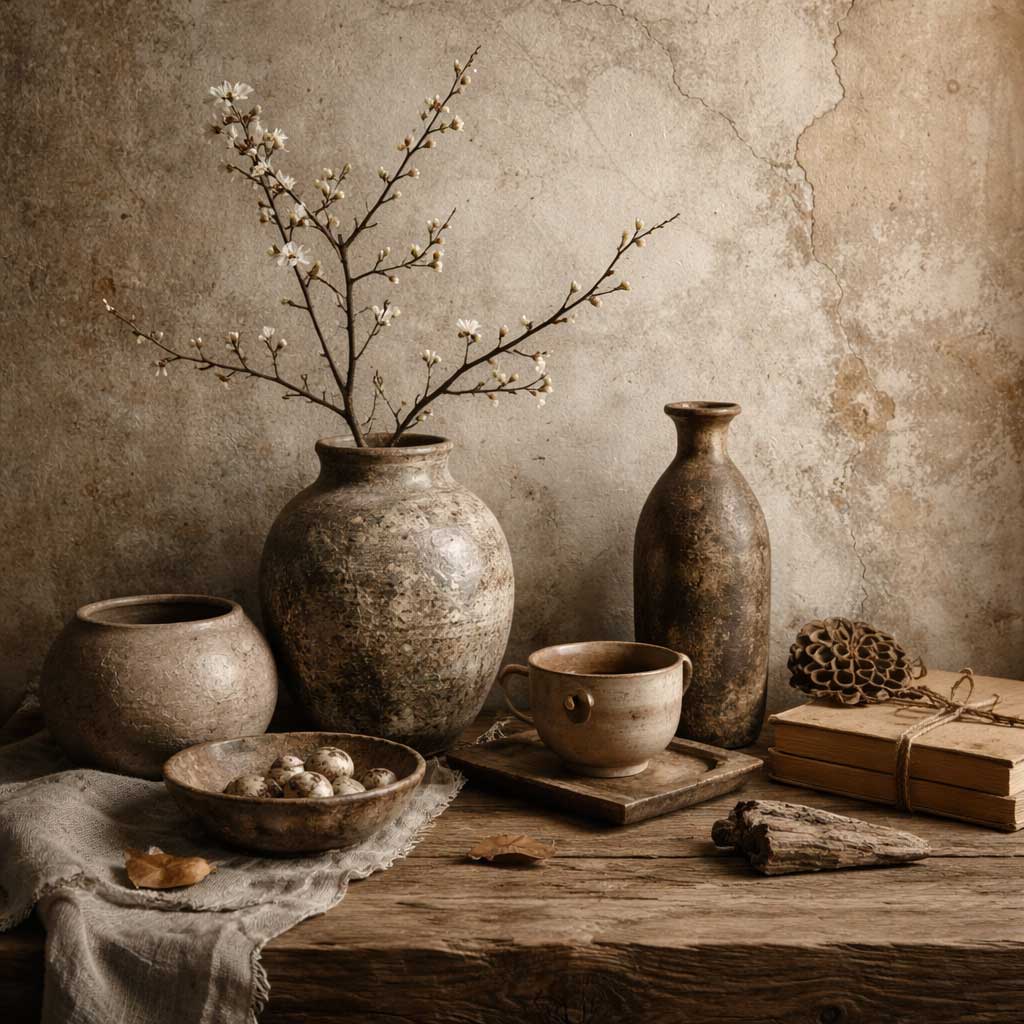
Wabi-sabi is a Japanese aesthetic philosophy that emphasizes simplicity, imperfection, and the beauty of natural aging. It is rooted in traditional Japanese culture and reflects an appreciation for understated elegance, organic materials, and the passage of time. In interior design and furniture, wabi-sabi is expressed through minimal forms, natural textures, and objects that show wear, irregularity, or handcrafted character.
Wabi-sabi differs from highly polished or symmetrical design styles by valuing authenticity and imperfection. It encourages the use of materials and furniture that feel natural, lived-in, and quietly refined.
Definition
In interior design and furniture, wabi-sabi refers to a style and philosophy that embraces imperfection, simplicity, and natural beauty.
Wabi-sabi design typically includes:
- organic and irregular forms
- natural materials and textures
- minimal and uncluttered spaces
- subdued and earthy colour palettes
- appreciation for aging and patina
The goal is to create spaces that feel calm, authentic, and connected to nature.
Etymology
The term “wabi-sabi” originates from two Japanese concepts:
- wabi – referring to simplicity, humility, and understated elegance
- sabi – referring to the beauty that comes with age, wear, and natural patina
Together, the term represents a worldview that finds beauty in imperfection and transience.
Design Characteristics
Wabi-sabi is defined by its focus on natural elements and imperfect beauty.
Imperfection and Asymmetry
Wabi-sabi embraces irregular shapes, uneven textures, and asymmetrical forms, reflecting the natural world rather than manufactured perfection.
Natural Materials
Common materials used in wabi-sabi interiors include:
- raw wood
- stone
- clay and ceramics
- linen and natural fabrics
These materials are often left unfinished or minimally processed.
Minimalism and Simplicity
Spaces are intentionally uncluttered, with only essential items included. Each object is chosen for its purpose and meaning.
Muted Colour Palette
Typical colours include:
- earthy tones
- soft neutrals
- greys and browns
- natural greens
These tones create a calm and grounded atmosphere.
Aging and Patina
Wabi-sabi values objects that show signs of use and aging, such as worn wood, faded fabrics, or handmade imperfections.
Wabi-Sabi in Furniture
Furniture influenced by wabi-sabi principles typically features:
- simple, functional forms
- natural and raw materials
- handcrafted or artisanal construction
- subtle imperfections or irregular finishes
Common pieces include low-profile tables, wooden benches, ceramic décor, and minimalist seating.
Relationship to Other Design Styles
Wabi-sabi is often compared to other minimalist or natural design styles but remains distinct in its philosophy.
- Minimalist design focuses on simplicity and clean lines
- Scandinavian design emphasizes functionality and comfort
- Wabi-sabi focuses on imperfection, aging, and natural authenticity
It is also closely related to Japandi design, which combines Japanese and Scandinavian influences.
Cultural Significance
Wabi-sabi is deeply rooted in Japanese philosophy and is associated with mindfulness, simplicity, and appreciation of the present moment. It reflects a broader cultural approach to life that values authenticity over perfection.
In modern interior design, wabi-sabi has gained global popularity as people seek calming, natural environments that promote well-being and intentional living.
Related Terms
Several design concepts are closely related to wabi-sabi:
- Japandi design
- minimalist design
- Scandinavian design
- natural design
- rustic design
See Also: Furniture Glossary
Japandi Design
Scandinavian Design
Minimalist Interior Design
Rustic Furniture
Natural Materials