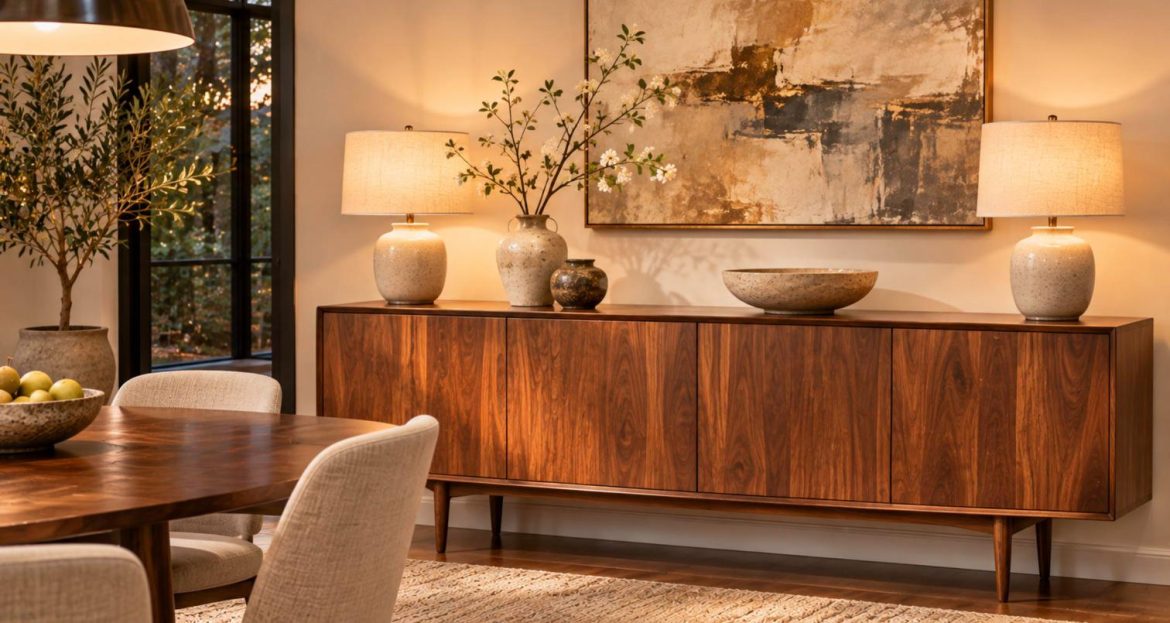
Sideboard vs. Buffet vs. Credenza: Definitions, Sizes & Buying Guide
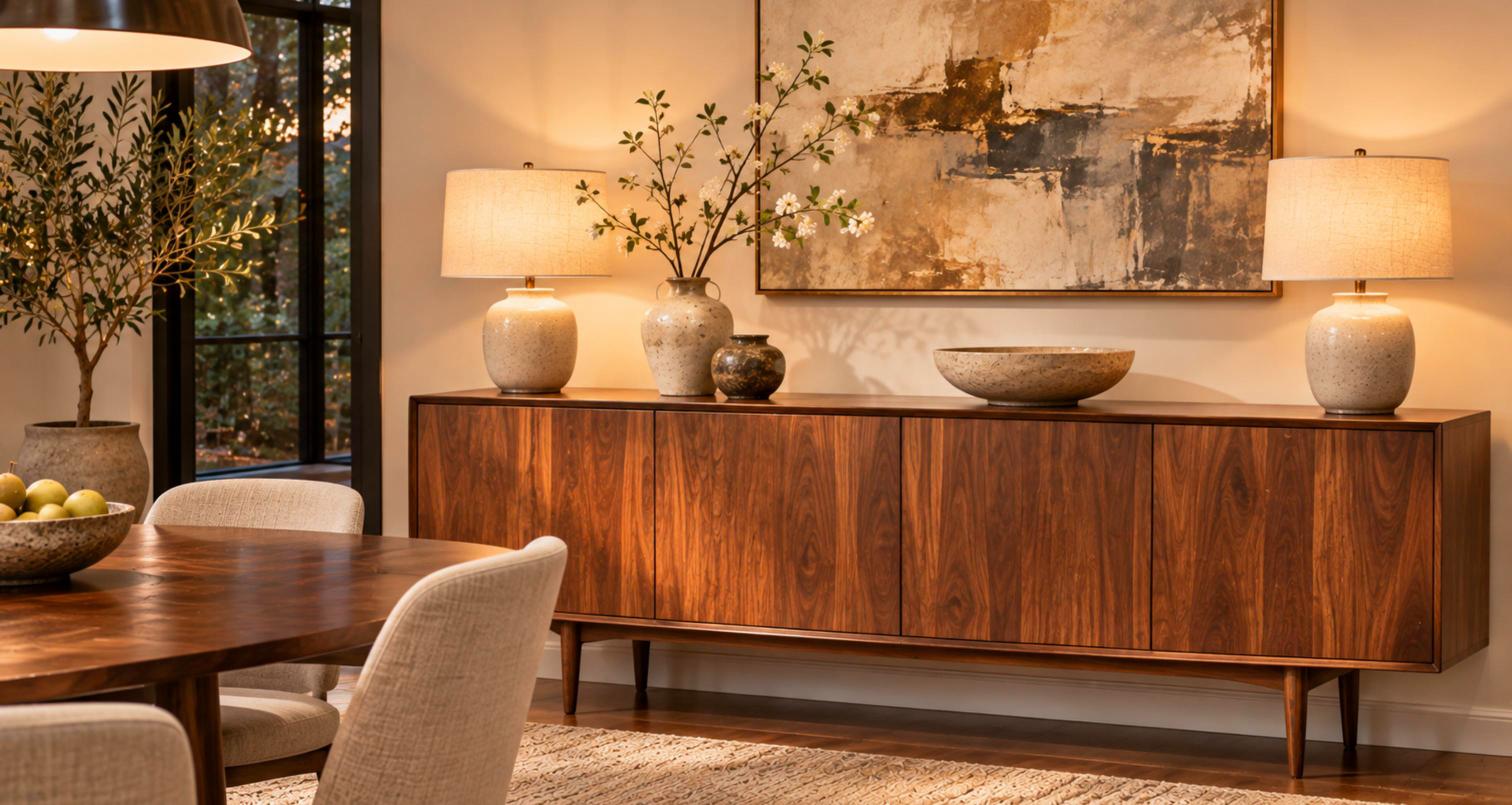
The sideboard developed in 18th-century England, when furniture makers such as the Adam brothers, Hepplewhite and Sheraton designed elegant serving tables with cupboards for the dining rooms of wealthy homes. In France, a similar piece was called a buffet. Over time the two words merged, and the mid-century period added the lower, leggier credenza-style cabinet seen in the photo. Today a sideboard is one of the most versatile storage pieces in a home: it works in a dining room, as a media unit in a living room, or as an entry console.
Sideboard vs. buffet vs. credenza vs. hutch
- Sideboard: a long, low dining storage cabinet, often on short legs.
- Buffet: the same piece by its French name; some people use “buffet” for larger, heavier versions that sit on the floor or have a deeper base.
- Credenza: similar in form but usually lower, with sliding or flush doors and no or short legs; also used in offices and as media units.
- Server: a smaller, often taller sideboard mainly for serving.
- Hutch: a buffet with an upper cabinet or open shelving on top, for displaying dishes.
In practice, retailers use these names loosely, so judge a piece by its size and features rather than the label.
Standard sizes
Most sideboards stand 30 to 36 inches (76–91 cm) high, slightly higher than a dining table so serving dishes sit at a comfortable level. Depth is typically 16 to 20 inches (41–51 cm). Lengths run from compact 48-inch (122 cm) apartment pieces to 84 inches (213 cm) or more. A good rule is to choose a sideboard about two-thirds the length of the wall or of the dining table, and to leave at least 36 inches (91 cm) between the sideboard and the back of dining chairs.
Materials and construction
- Solid wood: walnut, oak, teak or maple; durable and repairable.
- Veneer over plywood or MDF: stable and often more affordable; quality depends on the core and veneer thickness.
- Lacquer and metal: common for modern designs.
- Details to check: soft-close hinges, adjustable shelves, full-extension drawers, dovetail joints and cable cut-outs if it will hold electronics.
How to use a sideboard
- Dining room: store dishes, glassware and linens; serve buffet-style on top.
- Living room: use as a low media unit with a TV above.
- Entryway: keys, mail and shoes behind closed doors.
- Home bar: bottles inside, glasses and a tray on top (see bar cabinet).
- Bedroom: a long, low dresser alternative.
Styling tips
A classic arrangement uses a pair of table lamps for symmetry with art centred above, as in the photo. Alternatively, lean a large mirror or art piece and layer objects of varying heights. Hang art so its bottom edge sits roughly 6 to 10 inches (15–25 cm) above the sideboard top, and leave some breathing room on the surface.
Sideboards for Vancouver homes
In condos where the dining area is part of the living room, a sideboard can double as TV storage and divide zones. Wall-mounted or leggy designs keep compact rooms feeling open. Mid-century walnut sideboards are especially popular in Vancouver, and both new and vintage options are widely available.
Related terms
Frequently asked questions
What is the difference between a sideboard and a buffet?
Today there is little difference; both are long, low dining-room storage cabinets. Some use “buffet” for larger, heavier pieces.
What is the difference between a sideboard and a credenza?
A credenza is usually lower and sleeker, often with sliding doors, and is also used in offices and living rooms.
How high should a sideboard be?
Typically 30 to 36 inches (76–91 cm), slightly above dining table height.
How long should a sideboard be?
About two-thirds the length of the wall or of your dining table is a good guideline.
Can a sideboard be used as a TV stand?
Yes, as long as it is deep and strong enough and has openings for cables.
Part of the Vancouver Furniture glossary of furniture, design and mattress terms. Browse furniture stores across Metro Vancouver or our mattress store guide.