Velvet Upholstery: Types, Durability, Pros & Cons and Care
Velvet has been a luxury fabric for centuries. Woven by hand on special looms, it was prized by royalty and the church in medieval and Renaissance Europe, with Italian cities such as Venice, Genoa and Florence becoming famous for it. Mechanised weaving and synthetic fibres later made velvet affordable, and today it is one of the most popular upholstery choices for sofas, accent chairs, headboards and ottomans.
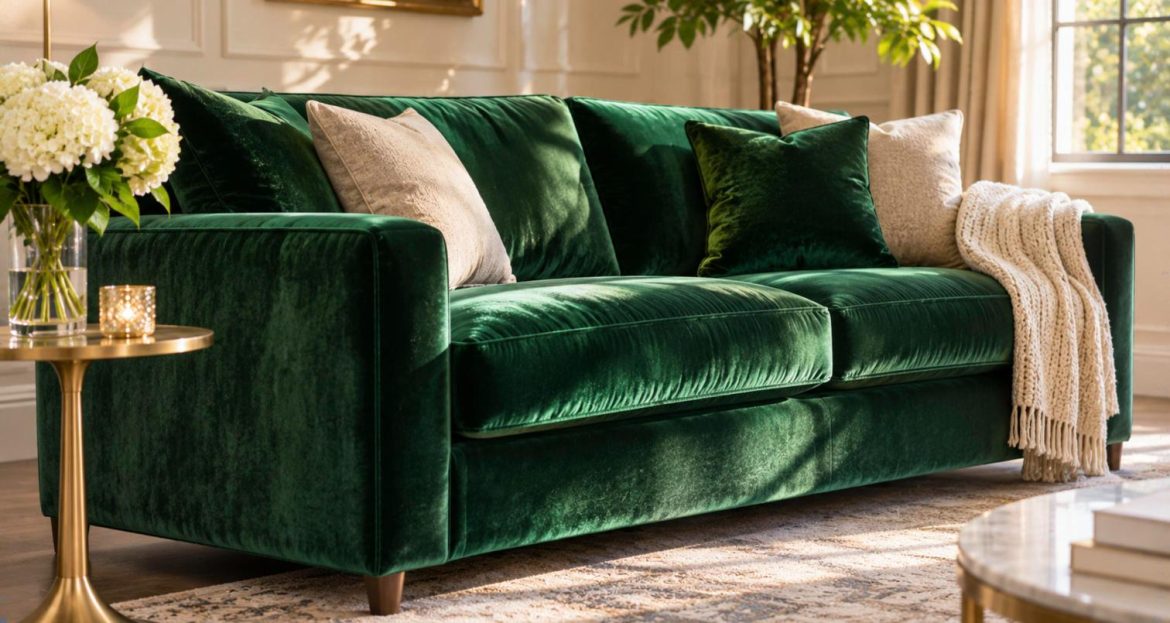
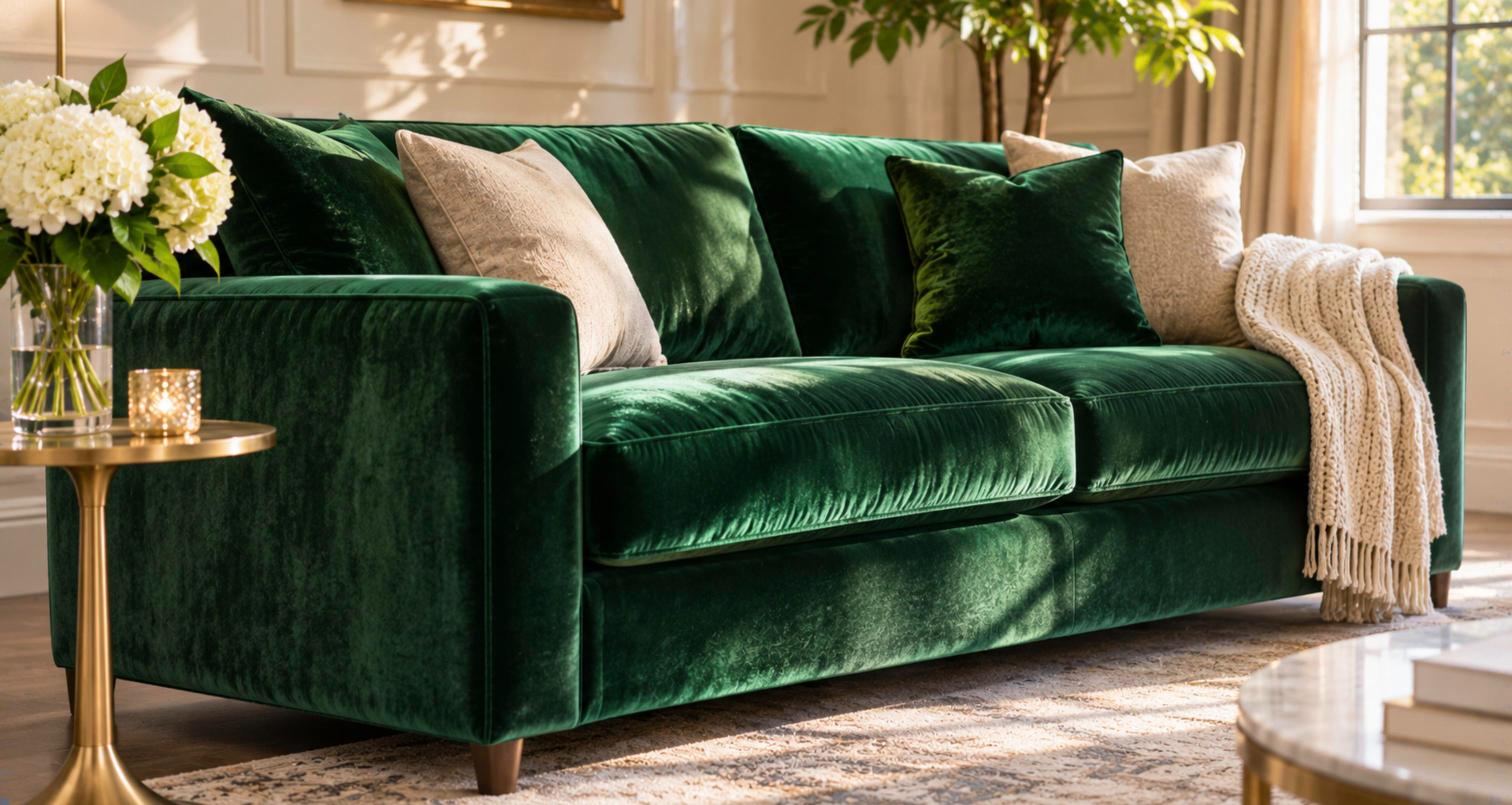
The emerald sofa in the photo shows velvet’s signature quality: the light shifts across the cushions, giving depth to a single solid colour. Jewel tones such as emerald, sapphire and rust show this effect especially well.
Types of velvet
- Cotton velvet: matte, soft and breathable; can crush and stain more easily.
- Linen velvet: textured, relaxed look with a slight slub.
- Silk velvet: very luxurious and delicate; mostly for decorative pieces.
- Viscose or rayon velvet: high sheen, but weaker and water-sensitive.
- Polyester velvet: durable, fade-resistant and affordable; most common on modern sofas.
- Performance velvet: tightly woven synthetic velvet treated for stain and water resistance; ideal for families.
- Crushed velvet: deliberately pressed for a patterned, crinkled look.
Is velvet durable?
Good-quality velvet is surprisingly tough. Because it has no loose loops or raised weave, there is little for pet claws or jewellery to catch, unlike bouclé or loose chenille. Synthetic velvets often have very high abrasion ratings. The main issue is crushing or pressure marks, where the pile flattens in the places people sit, creating lighter or darker patches. This is normal and can be reduced by brushing or steaming.
Velvet with pets and kids
Performance polyester velvet is one of the better choices for cats because claws do not easily snag it. Pet hair is visible on velvet but removes easily with a lint roller or rubber brush. Look for stain-resistant finishes and avoid delicate cotton or viscose velvets in busy family rooms.
Pros and cons
Pros: luxurious look and touch, deep saturated colour, no loops to snag, durable in synthetic versions, and warm in winter. Cons: pressure marks and crushing, shows hair and dust, natural-fibre types can water-stain, can feel warm in summer, and strong sun fades some dyes.
Velvet vs. chenille vs. microfiber
- Velvet: short, dense, even pile; formal and glamorous.
- Chenille: fuzzy textured yarn; more casual.
- Microfiber: smooth, suede-like synthetic; the easiest to clean.
Styling velvet
- Pair velvet with brass, marble and lacquer for a Hollywood Regency or Art Deco look.
- Balance a velvet sofa with natural textures such as linen, jute and wood.
- Try a velvet accent chair or pouf if a full sofa feels too bold.
- Choose deeper colours for a richer sheen.
Cleaning and care
- Vacuum weekly with a soft upholstery brush, in the direction of the pile.
- Blot spills immediately with a dry cloth.
- Follow the cleaning code; many velvets are solvent-clean only.
- Steam lightly from a distance to lift crushed pile.
- Rotate and fluff cushions regularly.
- Keep out of direct sunlight to prevent fading.
Related terms
Frequently asked questions
Is velvet good for a sofa?
Yes, especially polyester or performance velvet, which is durable and easy to clean.
Is velvet good with cats?
Performance velvet is a good choice because it has no loops for claws to catch.
Why does my velvet sofa have marks?
Pressure marks occur when the pile flattens; brushing or light steaming helps.
How do you clean velvet?
Vacuum with a soft brush, blot spills and follow the cleaning code.
Part of the Vancouver Furniture glossary of furniture, design and mattress terms. Browse furniture stores across Metro Vancouver or our mattress store guide.