Upholstery Explained: Frames, Springs, Cushions, Fabrics & Quality
The word comes from “upholder”, an old English term for a tradesman who held up or repaired fabric goods. Upholstery has evolved from simple stuffed cushions on wooden frames to sophisticated systems of springs, foams and fibres. What you see on the outside of a sofa is only part of the story: the frame, suspension and cushion construction hidden inside determine how comfortable it is and how long it lasts. Understanding these layers is the key to buying upholstered furniture wisely.
The frame
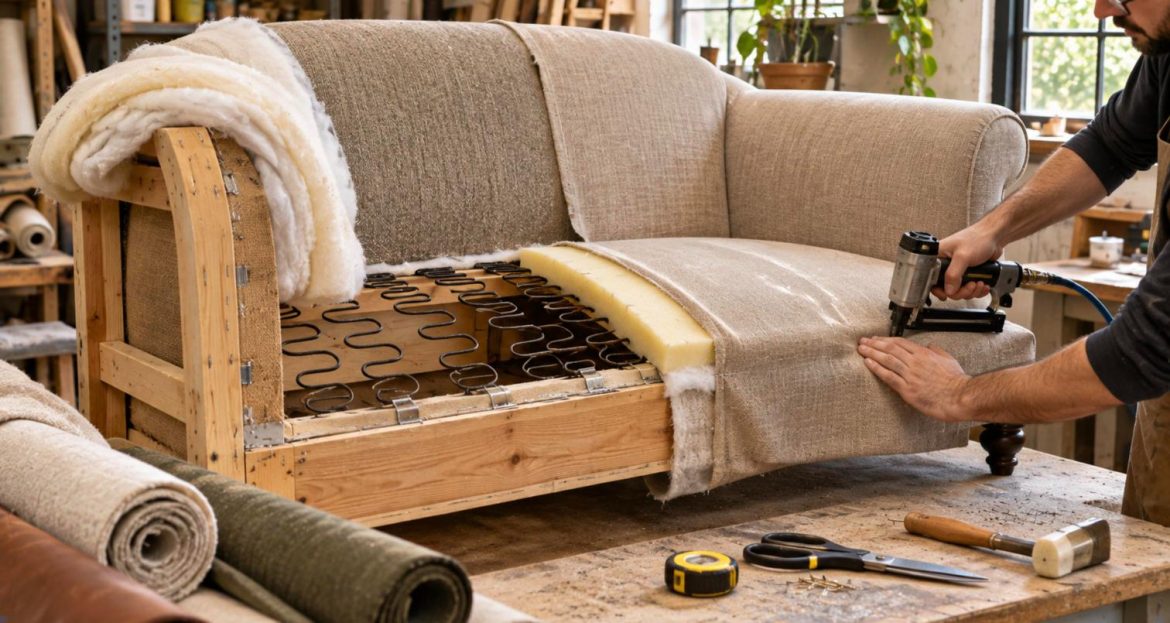
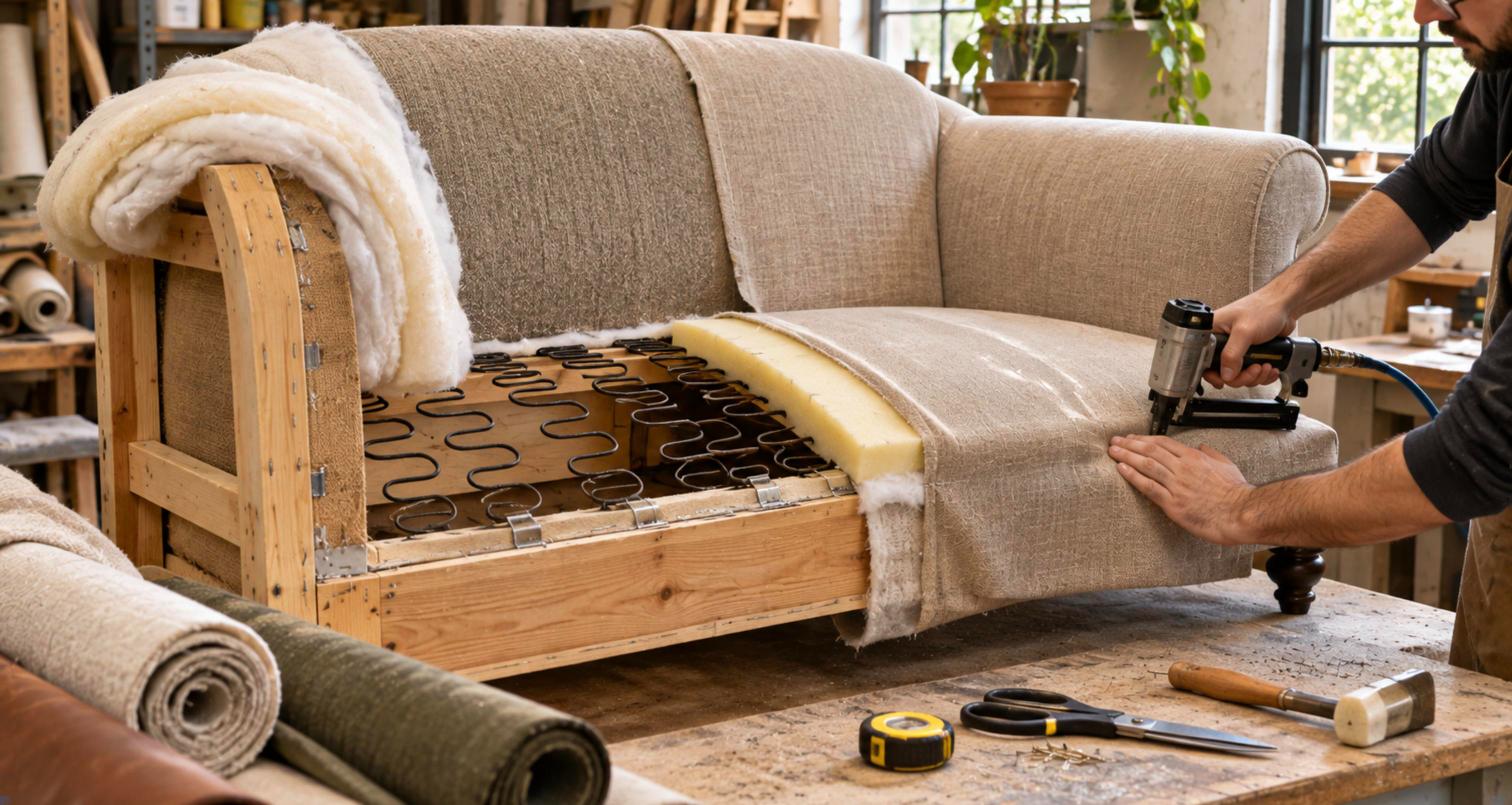
The frame is the skeleton. The best are kiln-dried hardwood (such as maple, oak or ash), joined with dowels, glue and corner blocks, as shown in the photo. Furniture-grade plywood with many layers is also strong. Softwoods, particleboard and stapled joints are signs of lower quality. A sofa frame should feel solid and not twist when you lift one front corner.
Suspension (springs)
- Eight-way hand-tied springs: coil springs tied by hand in eight directions; the traditional premium method.
- Sinuous (S-shaped) springs: zig-zag wire springs across the seat, as in the photo; durable, supportive and widely used.
- Drop-in coil units: pre-assembled coil grids; a middle ground.
- Webbing: elastic or jute straps; common in Scandinavian and modern designs, but cheaper versions can sag.
Cushions and padding
- High-density foam: firm, supportive and long-lasting; look for 1.8 lb/ft³ or higher.
- Foam wrapped in fibre or down: softer feel with good shape retention.
- Down and feather: luxurious and soft but needs regular plumping.
- Pocketed coil cushions: individual springs inside cushions for resilience.
Upholstery fabrics and leather
Covers range from cotton, linen and wool to velvet, microfibre, bouclé, performance fabrics and leathers. Check the abrasion rating (15,000+ double rubs for home use), cleaning code and pattern matching at seams. Details such as welting and tufting show the quality of workmanship.
How to judge upholstery quality
- Lift a front corner: the opposite front leg should rise too if the frame is rigid.
- Feel the arms and back for padding over hard edges.
- Press the seat deck: you should feel springs, not just foam over plywood.
- Check that patterns line up across cushions and seams.
- Look at stitching: straight, tight and even.
- Ask about the warranty on frame, springs and cushions separately.
When to reupholster
Reupholstering makes sense for furniture with a solid hardwood frame, sentimental value or a design you love. It is often worth it for antiques and high-quality pieces, but can cost as much as a new mid-range sofa. For lower-quality frames, a slipcover or replacement may be more economical.
Related terms
Frequently asked questions
What is upholstery?
The padding, springs, webbing and fabric or leather covering on furniture, and the trade of making it.
What is the best frame for a sofa?
Kiln-dried hardwood joined with dowels, glue and corner blocks.
What are the best sofa springs?
Eight-way hand-tied springs are the premium option; good sinuous springs are durable and common.
Is it worth reupholstering a sofa?
Yes if the frame is solid hardwood or the piece is valuable; otherwise a slipcover or replacement may be better value.
Part of the Vancouver Furniture glossary of furniture, design and mattress terms. Browse furniture stores across Metro Vancouver or our mattress store guide.