Bouclé Fabric: What It Is, Pros & Cons, Care and Durability
Bouclé yarn has been used in textiles for well over a century, and it found fame in fashion in the mid-20th century through textured tweed suits. In furniture, mid-century designers used bouclé on sculptural chairs, and the fabric returned in a big way from the late 2010s, when cream and oatmeal bouclé on rounded, curvy sofas and chairs became one of the defining looks of contemporary interiors. Its appeal is tactile: bouclé softens modern shapes and adds cosy texture to minimal rooms.
How bouclé is made
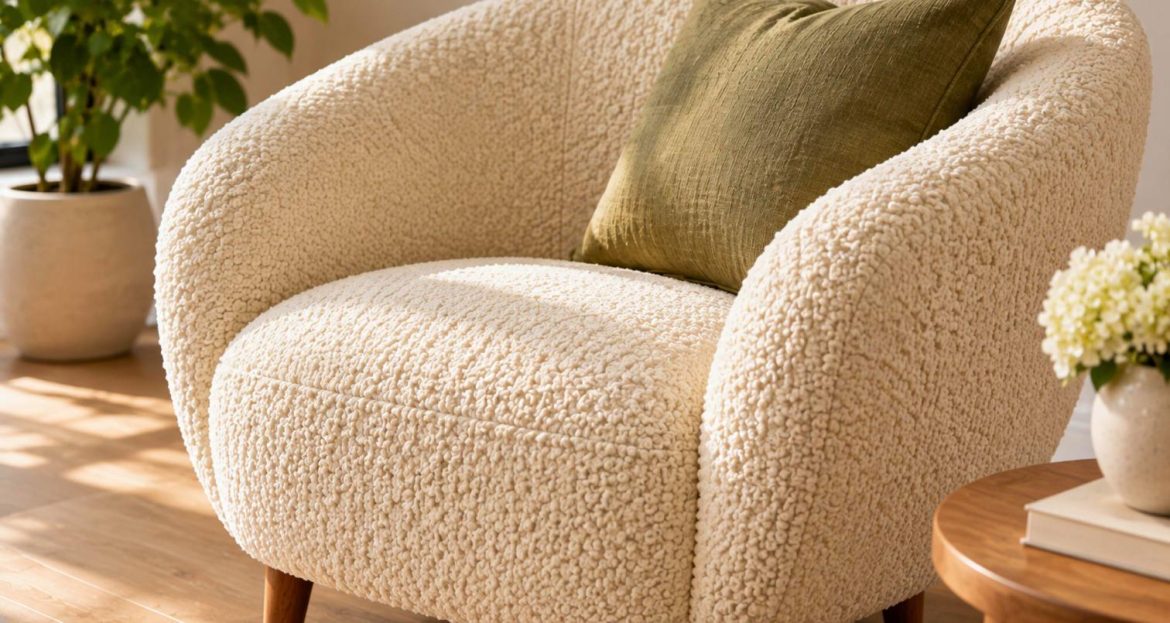
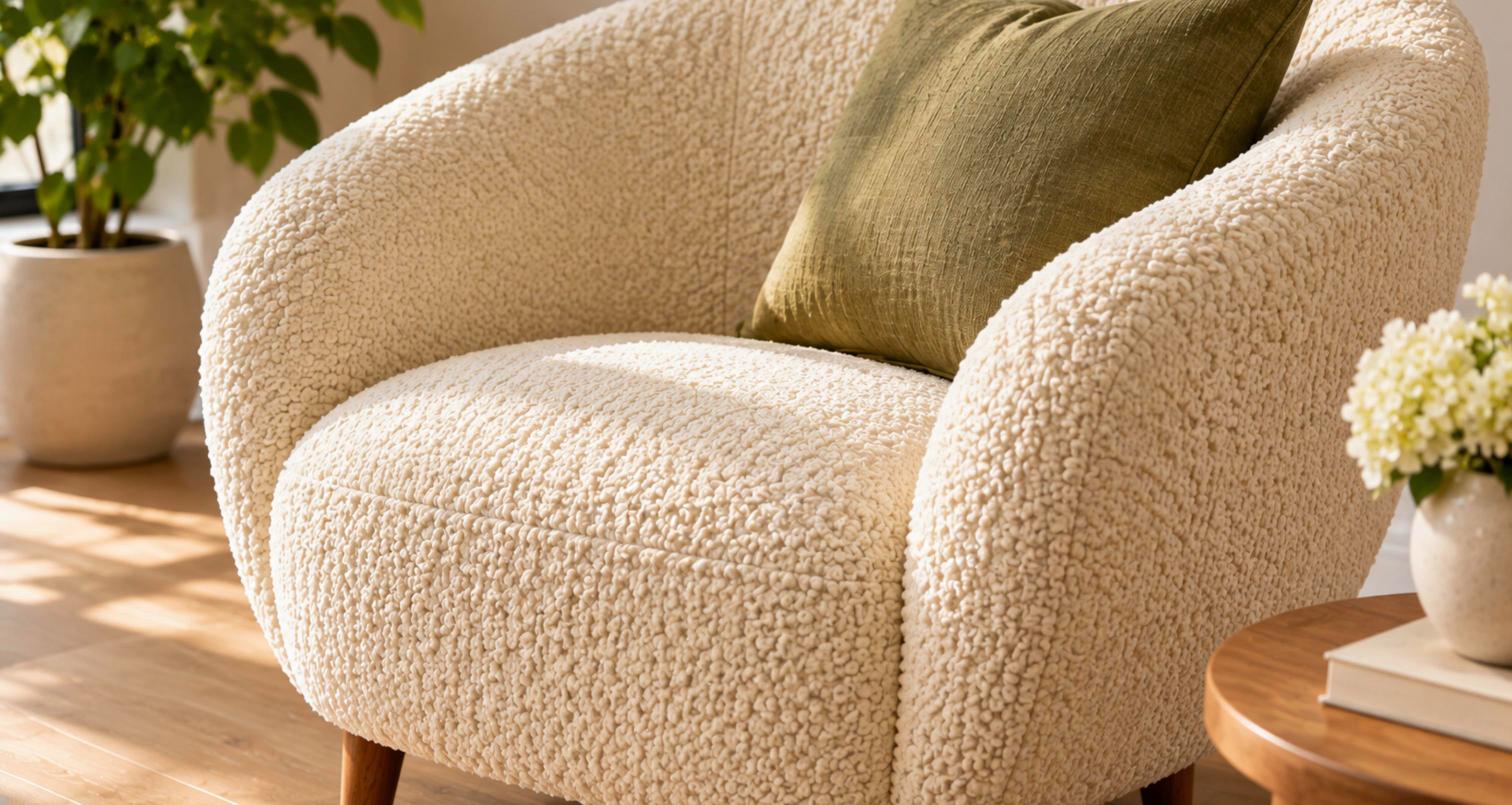
Bouclé yarn is spun with loops of varying size along its length. When woven or knitted, the loops sit on the surface, creating the characteristic pebbly texture. Loop size varies: small, tight loops create a refined, almost felted look; large loops create a dramatic, “sheepskin-like” texture.
Pros of bouclé
- Texture: adds depth and softness to minimal or monochrome rooms.
- Hides minor marks: the irregular surface disguises small spots and wrinkles.
- Warmth: especially wool bouclé, which feels cosy in cooler, damp climates.
- Versatility: suits modern, mid-century, Japandi and Scandinavian rooms.
Cons of bouclé
- Snagging: loops can be pulled by pet claws, jewellery or Velcro.
- Cleaning: dirt can settle between loops; light colours show soiling.
- Pilling: lower-quality synthetic bouclés can pill with use.
- Not always ideal for daily heavy use: durability depends heavily on quality and rub count.
Is bouclé durable?
It depends on the fibre and construction. Look for the fabric’s abrasion rating: a double-rub (Wyzenbeek) count of 15,000 or more, or a Martindale rating of 20,000 or more, is generally considered suitable for everyday residential seating. Tighter, smaller loops are more durable and less prone to snags than large, loose loops. Some manufacturers now offer performance bouclé with stain-resistant finishes.
Bouclé and pets
Cats and dogs with claws can catch the loops, so bouclé is not the best choice for pet-heavy households unless it is a tight, small-loop performance version. Tightly woven microfibre, leather or performance fabrics are usually safer.
How to clean bouclé
- Vacuum regularly with an upholstery brush attachment on low suction.
- Blot spills immediately; do not rub, which can distort loops.
- Spot-clean with a mild solution as allowed by the fabric’s cleaning code.
- Trim snagged loops carefully with small scissors rather than pulling them.
- Use professional upholstery cleaning for deep cleaning, especially for wool.
Related terms
Frequently asked questions
What is bouclé?
A fabric made from looped yarns that gives a nubby, textured surface.
Is bouclé good for a sofa?
Yes, if it is a tight, good-quality weave with a high abrasion rating; large-loop bouclé is better for accent pieces.
Is bouclé good with cats and dogs?
Generally not, because claws can snag the loops.
How do you clean bouclé?
Vacuum gently, blot spills immediately and follow the fabric’s cleaning code; use professional cleaning for deep cleans.
Part of the Vancouver Furniture glossary of furniture, design and mattress terms. Browse furniture stores across Metro Vancouver or our mattress store guide.