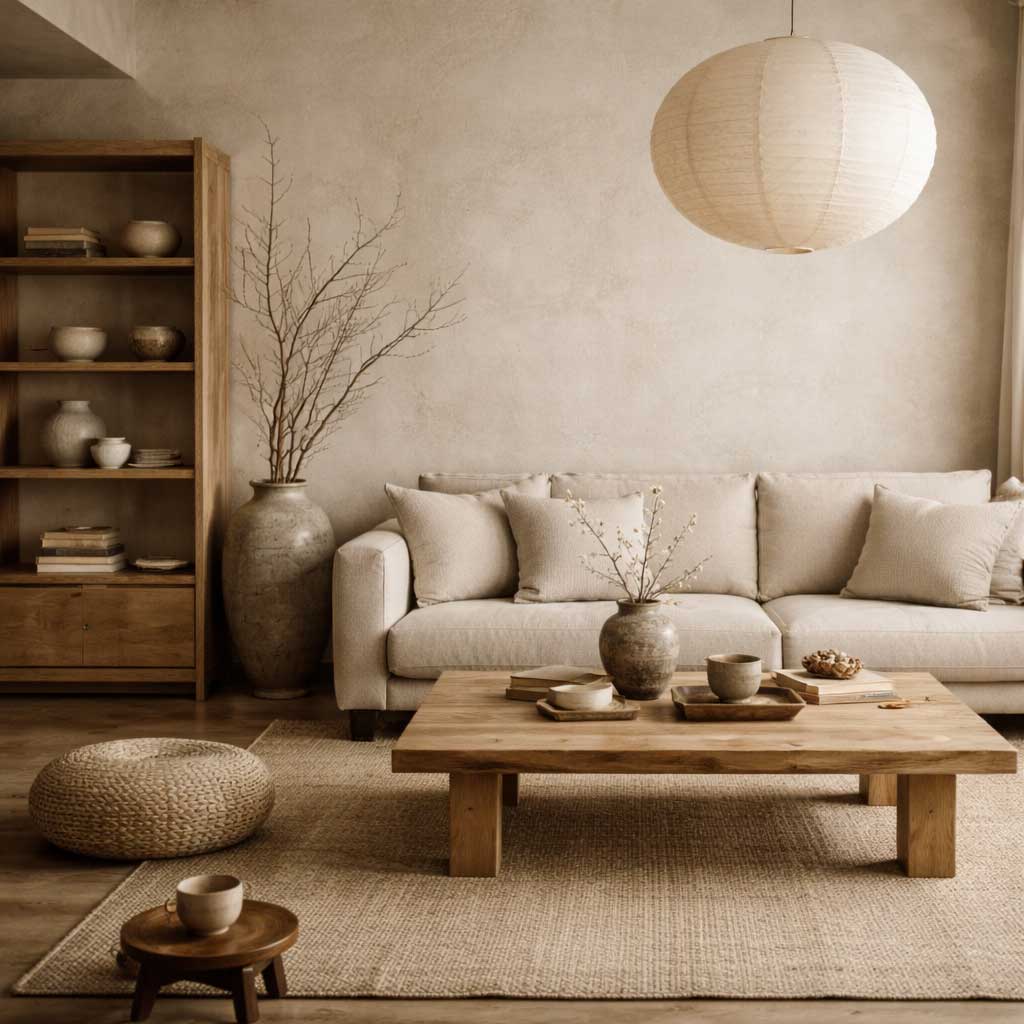
Japandi is a hybrid interior design style that combines elements of Japanese and Scandinavian design, focusing on simplicity, functionality, natural materials, and a balanced aesthetic. The style merges the Japanese philosophy of minimalism and imperfection with the Scandinavian emphasis on comfort and practicality, creating interiors that feel calm, warm, and refined.
Japandi has gained global popularity as a modern design approach that promotes uncluttered living spaces while maintaining a sense of comfort and livability. It is commonly used in residential interiors where a natural, minimal, and harmonious environment is desired.
Definition
In interior design and furniture, Japandi refers to a style that blends Japanese minimalism with Scandinavian functionality and comfort.
Japandi interiors typically include:
- simple and functional furniture
- natural materials and textures
- neutral and earthy colour palettes
- clean, uncluttered layouts
- emphasis on quality and craftsmanship
The goal is to create spaces that are both minimal and inviting.
Etymology
The term “Japandi” is a combination of the words Japanese and Scandi (short for Scandinavian), reflecting the fusion of the two design traditions.
The term became widely used in the 21st century as designers recognized the shared principles between Japanese and Scandinavian aesthetics.
Design Characteristics
Japandi is defined by a balance of minimalism, comfort, and natural elements.
Minimal and Functional Design
Furniture and layouts focus on purpose and simplicity, avoiding unnecessary decoration.
Natural Materials
Common materials include:
- wood (light to medium tones)
- bamboo
- linen
- cotton
- stone and ceramics
These materials create a connection to nature.
Neutral Colour Palette
Typical colours include:
- warm white
- beige and taupe
- soft grey
- muted green and earthy tones
The palette supports a calm and cohesive atmosphere.
Clean Lines and Subtle Warmth
Japandi combines the clean lines of Scandinavian design with the organic softness of Japanese interiors.
Emphasis on Craftsmanship
Both traditions value well-made, durable furniture, resulting in pieces that emphasize quality over quantity.
Japandi Furniture
Furniture in Japandi style typically features:
- low-profile forms
- simple silhouettes
- natural wood finishes
- minimal ornamentation
- comfortable yet understated design
Common pieces include low tables, minimalist sofas, wooden chairs, and functional storage units.
Relationship to Other Design Styles
Japandi shares characteristics with several design styles but remains distinct.
- Scandinavian design emphasizes comfort, light tones, and functionality
- Japanese design emphasizes minimalism, balance, and natural harmony
- Japandi combines both approaches into a cohesive style
It is also closely related to wabi-sabi, particularly in its appreciation of simplicity and natural materials.
Japandi in Interior Design
Japandi is used to create interiors that feel calm, organized, and balanced. It is often applied to:
- reduce clutter and visual noise
- create a sense of harmony and flow
- promote relaxation and mindful living
- integrate natural elements into the home
It is commonly used in living rooms, bedrooms, and open-concept spaces.
Related Terms
Several design concepts are closely related to Japandi:
- wabi-sabi
- Scandinavian design
- minimalist design
- modern interior design
- natural design
See Also: Furniture Glossary
Japandi Style
Wabi-Sabi
Scandinavian Design
Minimalist Interior Design
Modern Furniture