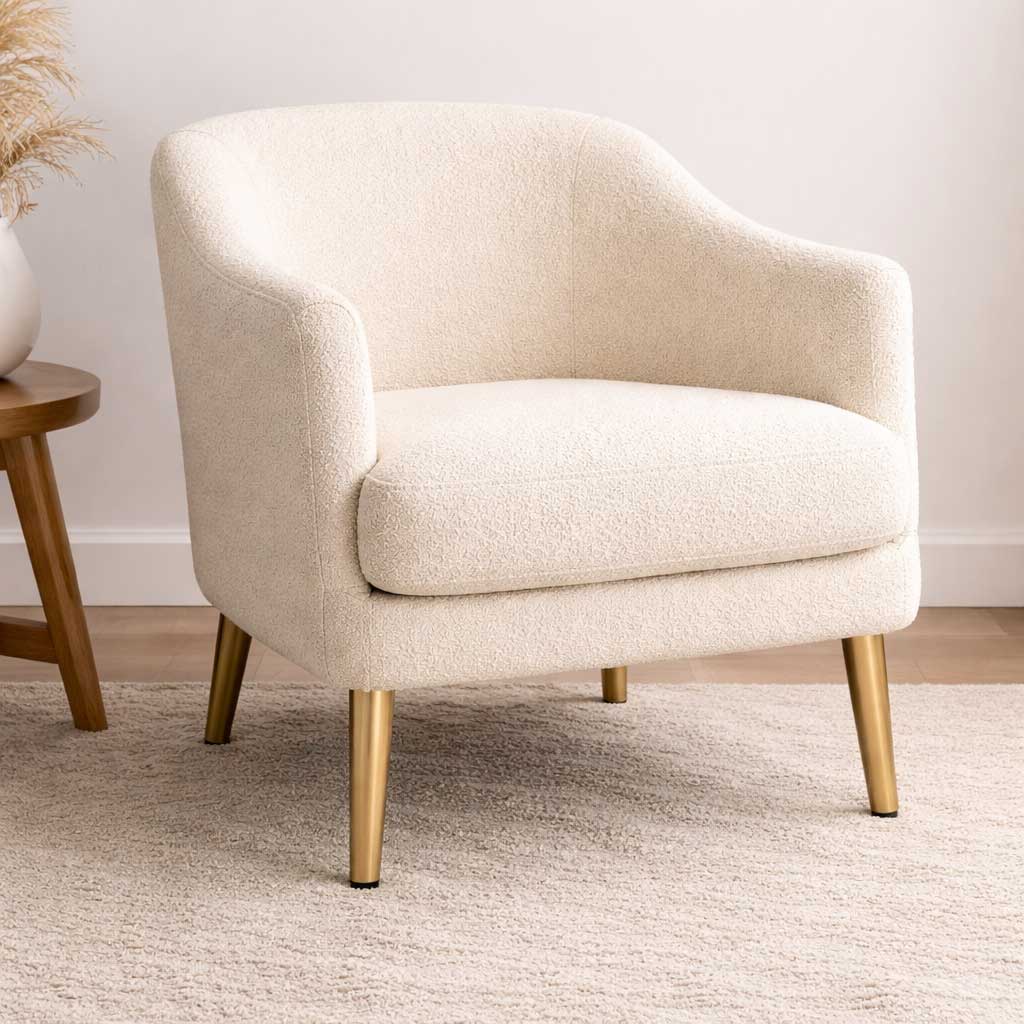
Accent Chair
An accent chair is a single-seat chair designed to complement the décor of a room while providing additional seating. Unlike standard seating furniture, accent chairs are selected for their visual appeal, unique design, or contrasting style that enhances the overall interior. They are commonly used in living rooms, bedrooms, offices, and lounges to add character, texture, and functionality to a space.
Accent chairs are widely used in modern interior design because they serve both decorative and practical purposes. They can act as focal points, introduce colour or pattern, and provide flexible seating without dominating the layout of a room.
Definition
In furniture design, an accent chair refers to a standalone seating piece that is primarily used to enhance interior aesthetics while also offering functional seating.
Accent chairs are typically:
- designed with distinctive shapes or materials
- used as secondary or occasional seating
- positioned to complement existing furniture
- selected to add contrast or visual interest
They are often placed strategically within a room to balance the layout and highlight design elements.
Etymology
The term “accent chair” combines accent, meaning a decorative feature that enhances or highlights a space, and chair, referring to a single-seat piece of furniture.
The name reflects the chair’s primary role as both a functional seating option and a decorative element within interior design.
Design Characteristics
Accent chairs vary widely in style, structure, and materials, depending on the intended design aesthetic.
Distinctive Design
Accent chairs are often chosen for their unique appearance, which may include:
- bold colours or patterns
- sculptural shapes
- textured upholstery
- contrasting finishes
These features help the chair stand out within a space.
Upholstered Comfort
Most accent chairs include cushioned seating for comfort, typically using:
- fabric upholstery
- velvet
- leather
- linen
Comfort is important, but the design often prioritizes visual appeal as well.
Compact and Flexible Form
Accent chairs are generally smaller than sofas and can be easily moved or repositioned.
They are often:
- lightweight or moderately sized
- suitable for small or large spaces
- adaptable to different room layouts
Variety of Styles
Accent chairs are available in many design styles, including:
- modern
- Scandinavian
- mid-century modern
- traditional
- contemporary
This variety allows them to integrate into different interior themes.
Common Uses
Accent chairs are used in various areas of the home to provide both seating and decorative value.
Typical placements include:
- living rooms – as additional seating or statement pieces
- bedrooms – in corners or near windows
- home offices – for guest seating
- entryways – as functional décor
- reading nooks – for comfortable seating
Materials and Construction
Accent chairs are constructed using a combination of structural and upholstery materials.
Common materials include:
- solid wood or engineered wood frames
- metal frames or legs
- foam or cushioned seating
- fabric, leather, or synthetic upholstery
Material selection affects durability, comfort, and style.
Accent Chair in Interior Design
Accent chairs play a key role in interior design by adding contrast, depth, and personality to a room. They are often used to:
- create visual focal points
- introduce colour or texture
- complement sofas and larger furniture pieces
- enhance balance and symmetry in a layout
Because of their versatility, accent chairs are commonly used in both residential and commercial interiors.
Related Furniture Types
Several furniture pieces are closely related to accent chairs or serve similar functions:
- armchair
- club chair
- lounge chair
- occasional chair
- wingback chair
Each type varies in structure, comfort level, and stylistic features.
See Also: Furniture Glossary
Accent Bench
Club Chair
Loveseat
Ottoman
Sofa