Vanity Table: Definition, Sizes, Lighting & How to Choose One
Dressing tables became fashionable in 17th- and 18th-century Europe, when wealthy households set aside a table in the bedroom or dressing room for powdering, wigs and toiletries. By the 1920s and 1930s, Art Deco vanities with large round mirrors, as famous from Hollywood glamour photography, had made the piece a symbol of elegance. Today the vanity table is as much a practical workstation as a decorative piece, and many double as a slim desk.
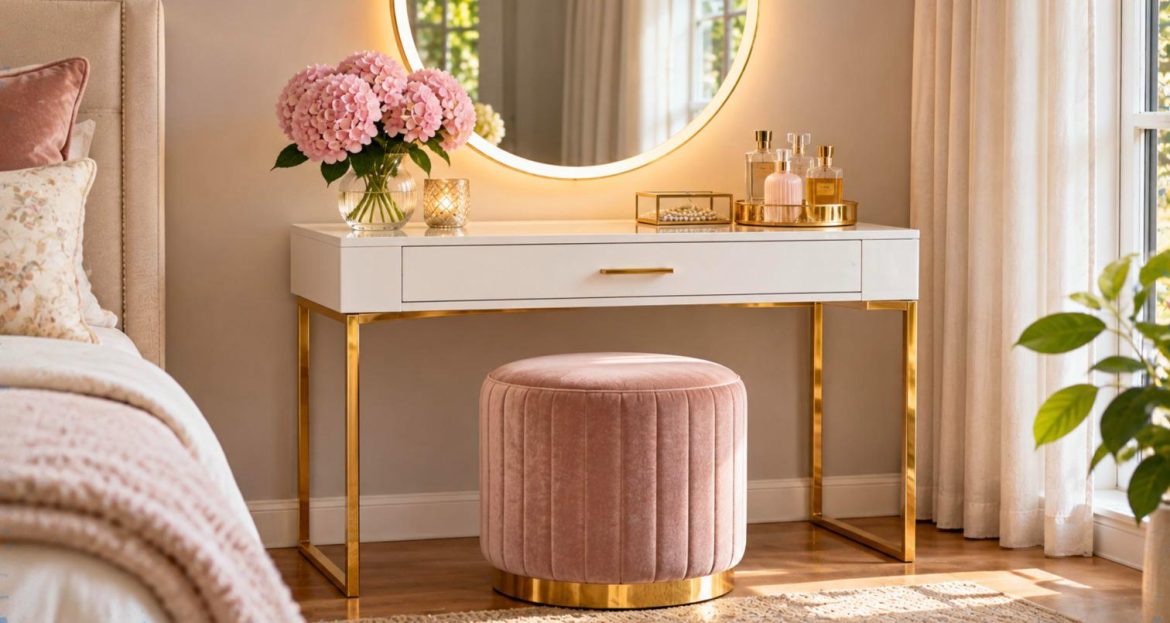
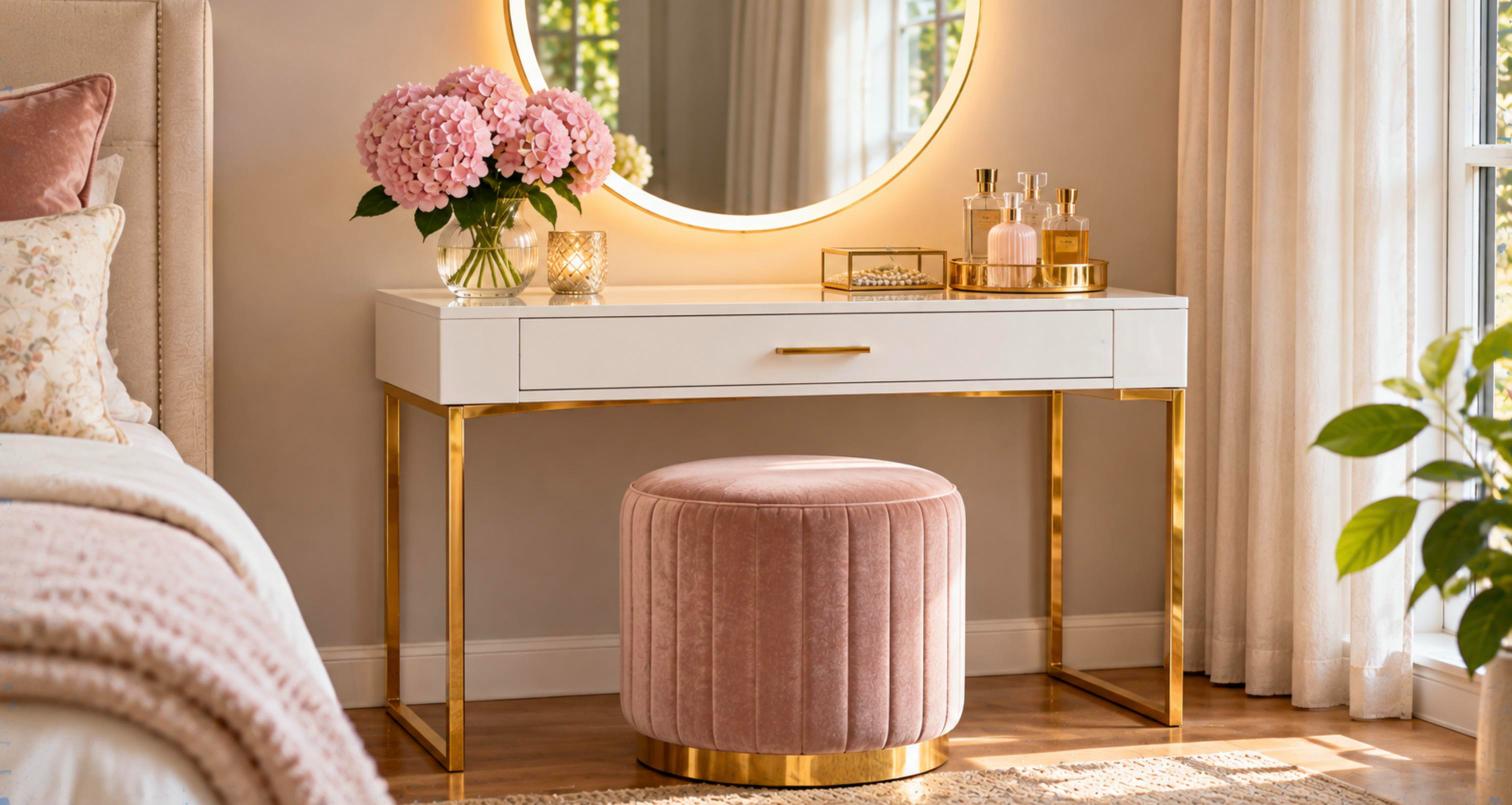
In the photo, a white top with a single drawer sits on a slim gold metal frame, with a backlit round mirror and a pleated velvet stool that tucks fully underneath. This open, leggy design keeps the piece visually light, which matters in the compact bedrooms common in Metro Vancouver condos.
Types of vanity tables
- Classic dressing table: a table with drawers on both sides and a central knee space, often with an attached tri-fold or framed mirror.
- Modern console vanity: a slim table with one drawer and metal or wood legs, as in the photo.
- Lighted vanity: with an integrated LED or Hollywood-bulb mirror.
- Wall-mounted or floating vanity: saves floor space in small rooms.
- Corner vanity: fits into an unused corner.
- Vanity desk: doubles as a work-from-home desk, with a mirror that can be removed or covered.
Sizes and ergonomics
Most vanities are 28 to 31 inches tall, the same height as a desk. A matching stool should leave about 10 to 12 inches between seat and tabletop. A depth of 16 to 20 inches holds a mirror and essentials without crowding the room. Leave at least 30 inches of clear floor space behind the stool so you can sit and stand comfortably.
Lighting: the most important detail
Good makeup application depends on even, shadow-free light on the face. The best setups light the face from the front and sides rather than from above. Look for:
- Lighting with a high colour rendering index (CRI 90 or above) for accurate skin tones.
- A colour temperature around 4,000–5,000 K (neutral to daylight); some mirrors let you adjust this.
- Dimmable lights for evening use.
- Natural light from a window to the side, not behind you.
Storage options
- Shallow drawers with dividers for makeup and brushes.
- Lift-top designs that hide a mirror and storage compartments.
- Side cabinets or open shelves for larger items.
- Trays on top for perfume and jewellery, as shown in the photo.
- Acrylic organizers inside drawers.
Choosing a stool or bench
A backless stool or round pouf that slides fully under the table saves space. Upholstered velvet stools are a classic choice, but wipeable performance fabrics hold up better against spilled powder and nail polish. If you sit for long periods, a low-back vanity chair is more comfortable.
Materials and care
- Lacquered or painted MDF: affordable and smooth, but water and nail-polish remover can damage the finish.
- Solid wood: durable and refinishable.
- Glass or marble tops: easy to clean, though marble stains from oils.
- Use a tray or glass top to protect surfaces from cosmetics.
Where to put a vanity
- Next to a window for natural light.
- In a walk-in closet or dressing room.
- In a bedroom corner or alcove.
- Near an outlet for hair tools and a lighted mirror.
- Avoid placing it in direct sun, which can fade finishes and heat cosmetics.
Related terms
Frequently asked questions
What is a vanity table?
A table with a mirror used for makeup, hair and grooming, usually paired with a stool.
What is the standard height of a vanity table?
About 28 to 31 inches, with a stool seat 17 to 19 inches high.
What is the best lighting for a vanity?
Even, front-facing light with a high CRI (90 or above) and a neutral colour temperature around 4,000–5,000 K.
Can a vanity table double as a desk?
Yes, many modern vanities are designed to work as a compact desk.
Part of the Vancouver Furniture glossary of furniture, design and mattress terms. Browse furniture stores across Metro Vancouver or our mattress store guide.