Dresser: Definition, Types, Sizes & Quality Checklist
The word comes from the French dresseur, a sideboard on which food was “dressed” or prepared before serving. In Britain the name stuck to kitchen cabinets with plate racks, while in North America it moved into the bedroom to describe a chest of drawers, often with a mirror, where people dressed. Today the dresser is the backbone of bedroom storage. A well-made one can last generations, while a poorly built one quickly develops sticking drawers and sagging bottoms, so it pays to know what to look for.
Dresser vs. chest of drawers
A dresser is wider and lower, usually waist height, with two or three columns of drawers, and its top doubles as a surface for a mirror, lamp or TV. A chest of drawers is taller and narrower, with a single column of drawers, saving floor space. A nightstand is a small bedside chest, and an armoire is a tall wardrobe for hanging clothes.
Types of dressers
- Single dresser: one column of three to four drawers.
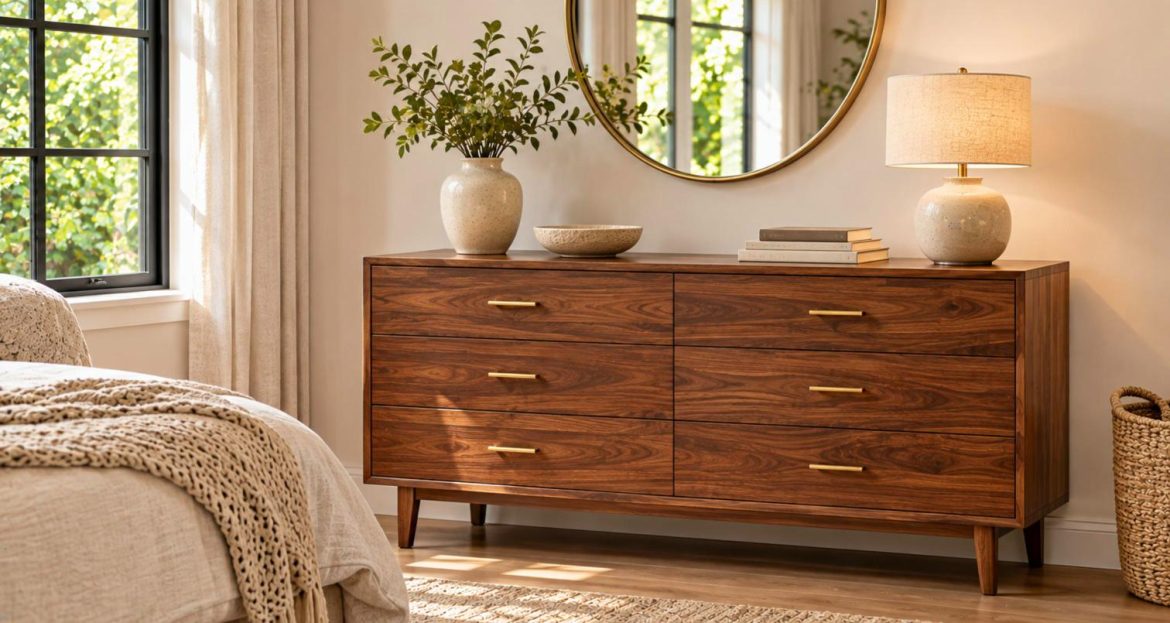
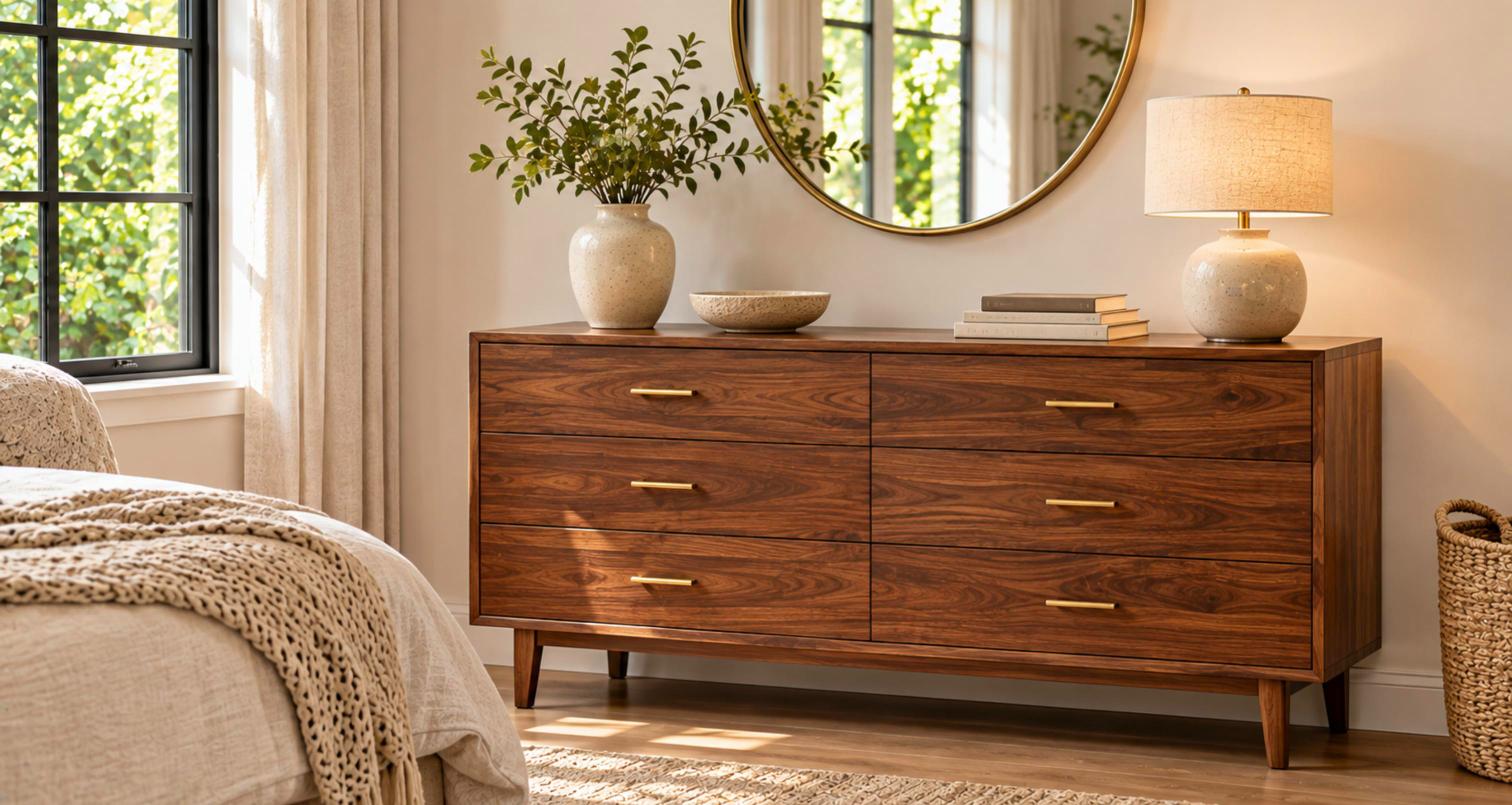
- Double dresser: two columns, usually six drawers, as in the photo.
- Triple dresser: three columns, often nine drawers, for large bedrooms.
- Combo dresser: drawers plus a cabinet with doors.
- Dresser with mirror: a mirror attached or sold with the piece.
- Tall dresser / chest: a taller form for smaller footprints.
Standard sizes
Most dressers are 28 to 40 inches (71–102 cm) high, 16 to 20 inches (41–51 cm) deep and 40 to 72 inches (102–183 cm) wide. Allow at least 36 inches (91 cm) in front so drawers can open fully and you can stand comfortably.
Quality checklist
- Drawer joinery: dovetail joints at the front and back are the best sign of quality; stapled or glued-only drawers are weaker.
- Drawer glides: full-extension, ball-bearing or soft-close glides run smoothly.
- Drawer bottoms: plywood set into grooves, not thin hardboard stapled on.
- Dust panels: horizontal panels between drawers keep contents clean and add strength.
- Case material: solid wood or veneer over plywood; low-density particleboard is the weakest.
- Back panel: screwed in, not just stapled.
- Anti-tip kit: essential, especially with children.
Safety: anchoring a dresser
Dressers can tip over if drawers are open or children climb them. Always use the anti-tip strap or bracket supplied and anchor the dresser to a wall stud. In Canada, Health Canada advises securing dressers and other tall furniture to the wall.
Styling a dresser
Hang a mirror or art above, centred and narrower than the dresser. Add a lamp for evening light, a tray for jewellery, a plant or vase and a few books. In small Vancouver bedrooms, a dresser can double as a TV stand or replace a nightstand on one side of the bed.
Related terms
Frequently asked questions
What is a dresser?
A low, wide piece of bedroom furniture with several drawers for clothes, often with a mirror above.
What is the difference between a dresser and a chest of drawers?
A dresser is lower and wider with two or more columns of drawers; a chest of drawers is taller and narrower.
How do you tell if a dresser is good quality?
Look for dovetail drawer joints, smooth full-extension glides, solid drawer bottoms and a solid wood or plywood case.
Should a dresser be anchored to the wall?
Yes. Always anchor dressers to prevent tip-overs.
Part of the Vancouver Furniture glossary of furniture, design and mattress terms. Browse furniture stores across Metro Vancouver or our mattress store guide.