Pouf: What It Is, Types, Filling & Pouf vs. Ottoman
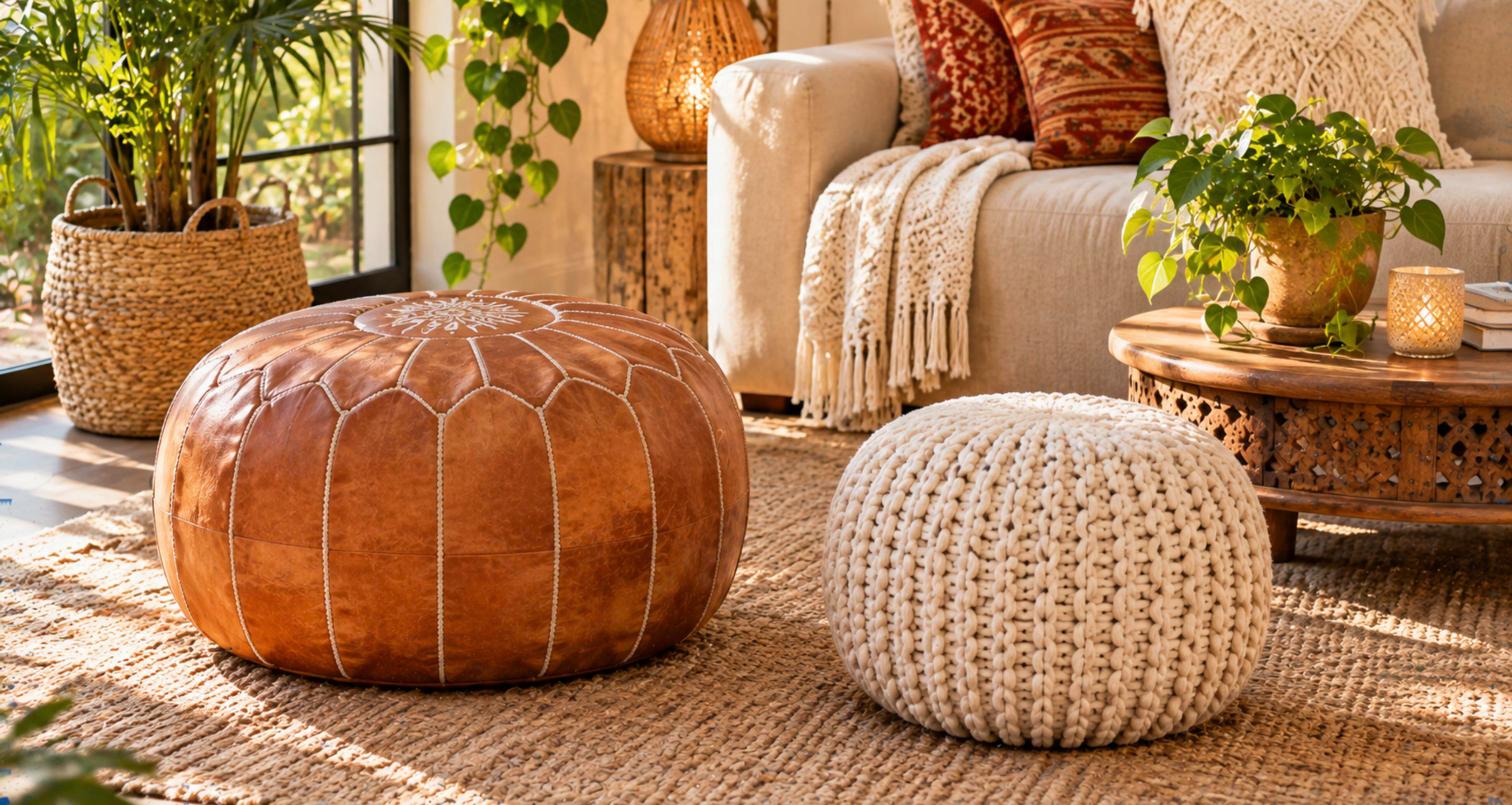
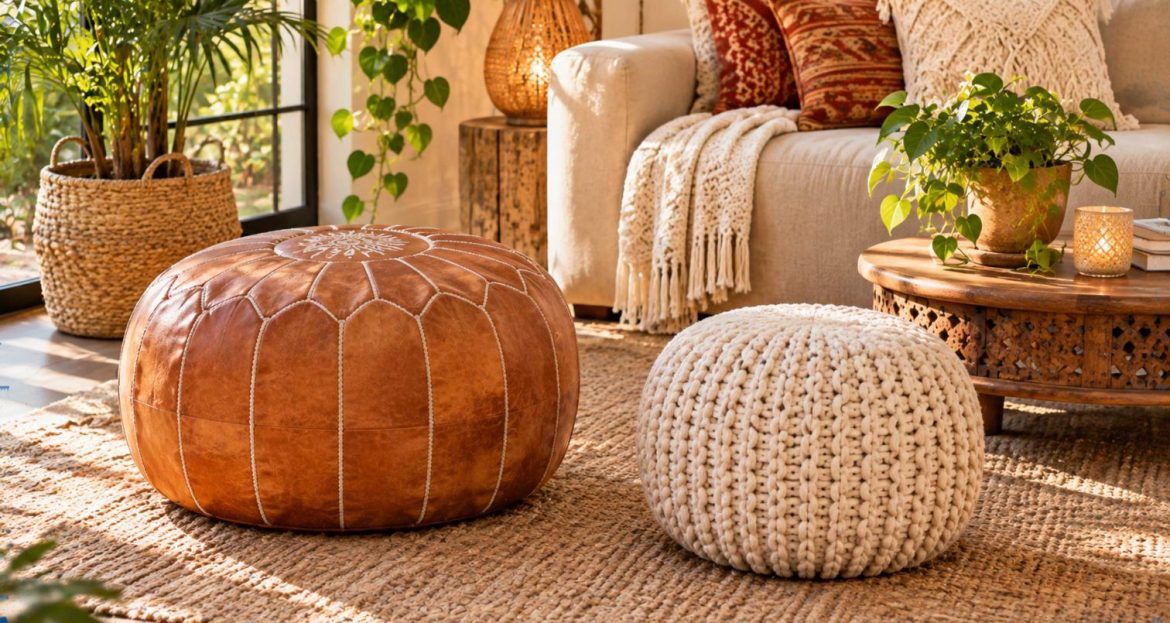
The word comes from the French pouf, used for padded, puffy furnishings, and similar floor cushions have been used for centuries across North Africa, the Middle East and South Asia. The hand-stitched leather Moroccan pouf, like the tan one in the photo, is the best-known example and became popular in Western interiors through the bohemian and global-décor trends.
Poufs are inexpensive, lightweight and easy to move, which makes them practical in small Vancouver apartments: an extra seat when friends visit, a footrest in the evening and a perch for a tray in between.
Pouf vs. ottoman
An ottoman typically has a structured frame, a firm top, sometimes legs and sometimes storage inside. A pouf is softer, frameless and lighter, more like a large, firm floor cushion. Poufs are better for casual seating and kicking your feet up; ottomans are better as coffee tables because their tops are flat and firm.
Types of poufs
- Moroccan leather pouf: handmade from stitched leather panels, often embroidered; durable and develops patina.
- Knitted pouf: chunky cotton or wool knit, as in the photo; soft and cosy.
- Jute or seagrass pouf: woven natural fibres for coastal and boho rooms.
- Velvet or bouclé pouf: glamorous or textural accent pieces (see bouclé).
- Outdoor pouf: water-resistant fabric and quick-dry filling for patios.
- Floor pouf / bean bag: larger and softer for lounging.
Filling a pouf
Many leather poufs are sold unstuffed so they ship flat. Common fillings include:
- Old clothes, towels and blankets: economical and firm when packed tightly.
- Polyester fibrefill: lighter and softer, but compresses over time.
- Foam insert: the firmest and most even, good if used as a seat.
- Combination: a foam core wrapped with fibre or textiles.
Pack firmly; an under-filled pouf sags and looks sloppy.
How to use poufs
- As extra seating around a coffee table.
- As a footrest in front of an armchair or sofa.
- As a side table with a tray on top.
- In a kids’ room or reading corner.
- At the end of a bed or in a dressing area.
Caring for poufs
- Leather: wipe with a damp cloth and condition occasionally; natural leather may have an initial smell that fades.
- Knitted: remove cover if possible and hand wash or spot-clean; avoid snagging.
- Jute: vacuum and keep dry.
- Rotate to keep the shape even.
Related terms
Frequently asked questions
What is a pouf?
A soft, low, usually frameless seat or footrest, often round or cube-shaped.
What is the difference between a pouf and an ottoman?
A pouf is soft and frameless; an ottoman usually has a structured frame and firmer top.
What do you fill a pouf with?
Old textiles, polyester fibrefill, a foam insert or a combination.
Can you sit on a pouf?
Yes, firmly filled poufs make comfortable extra seats.
Part of the Vancouver Furniture glossary of furniture, design and mattress terms. Browse furniture stores across Metro Vancouver or our mattress store guide.