Bench: Types of Furniture Benches, Sizes & Where to Use Them
The bench is one of the oldest forms of seating. For centuries most people sat on benches and stools; chairs were reserved for the head of the household or a person of rank. Benches remain popular because they are simple, versatile and space-efficient. A bench can slide under a dining table when not in use, provide a place to put on shoes by the front door, store blankets at the foot of a bed or act as a low coffee table. For specifically decorative pieces see our accent bench guide.
Types of benches
- Dining bench: sits along one or both sides of a dining table; tucks under when not in use.
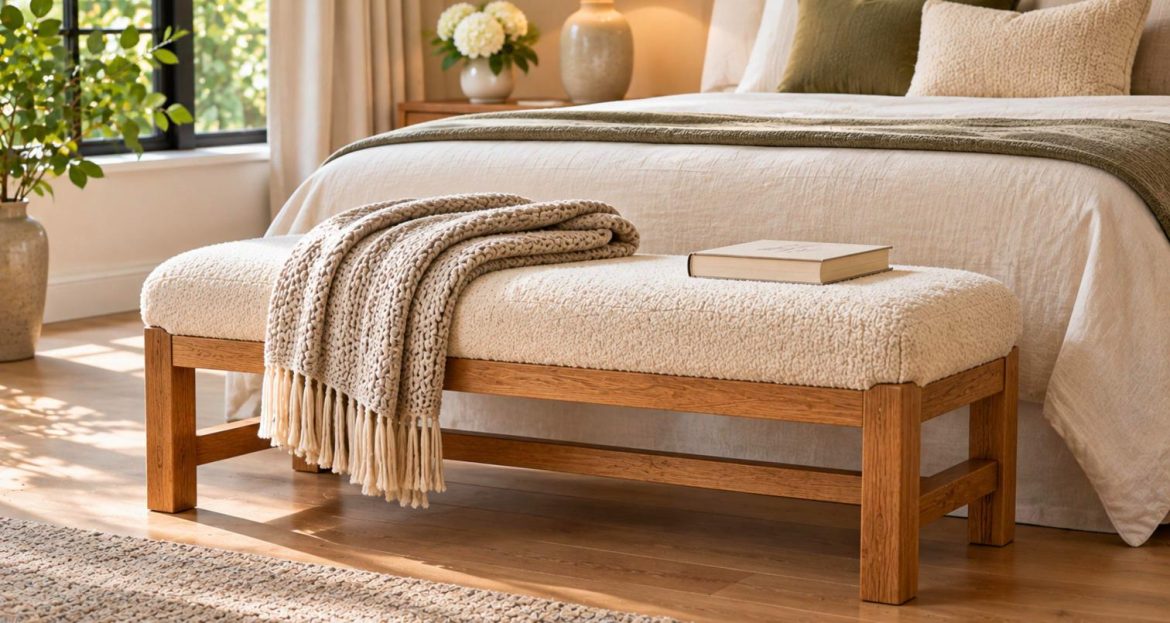
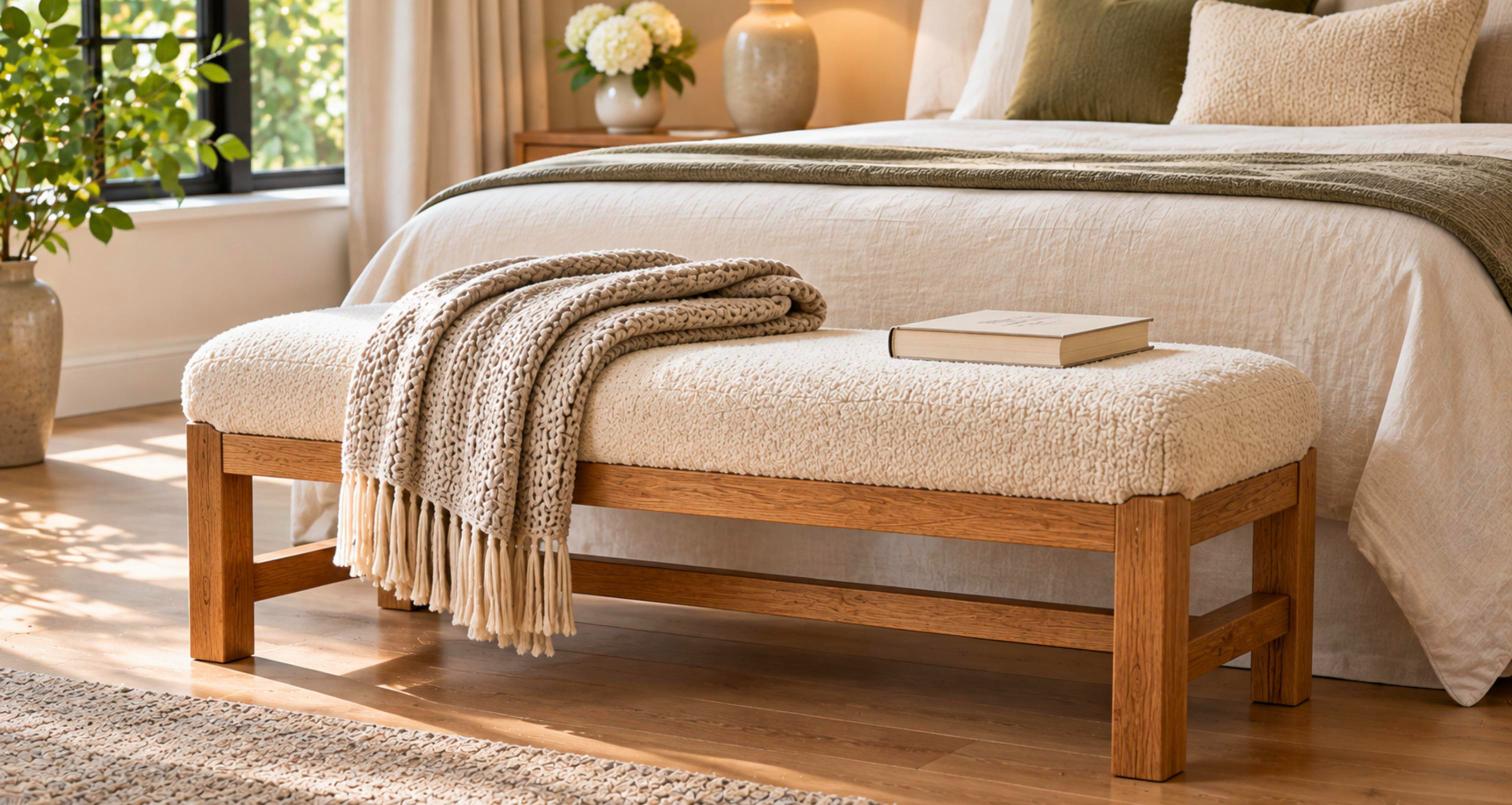
- End-of-bed bench: placed at the foot of the bed, as in the photo; often upholstered.
- Entryway bench: a spot to sit and remove shoes, often with shoe storage or cubbies.
- Storage bench: a lift-up seat or drawers for blankets, toys or shoes.
- Upholstered bench: padded seat in fabric, leather or bouclé.
- Built-in bench: window seats and banquettes.
- Outdoor bench: teak, cedar or metal for patios and gardens.
Sizing a bench
- Dining: choose a bench 6 to 12 inches (15–30 cm) shorter than the table so it fits between legs, and about 10 to 12 inches (25–30 cm) lower than the tabletop.
- End of bed: about two-thirds to three-quarters the width of the bed, and no taller than the top of the mattress.
- Entryway: narrow, 12 to 16 inches (30–41 cm) deep, so it does not block the door.
Bench vs. banquette vs. ottoman vs. settee
A bench is usually backless and often wooden or lightly padded. A banquette is an upholstered bench, often built in against a wall. An ottoman is a padded backless seat or footrest, often square or round. A settee has a back and arms.
Materials
Solid oak, walnut, ash and teak benches are durable and suit dining and entry use. Upholstered benches add comfort and colour; choose performance fabric or leather in high-traffic spots. Metal-framed benches suit industrial and modern rooms.
Benches in Vancouver homes
An entryway bench with a boot tray beneath is practical for Vancouver’s wet months, giving everyone a place to remove muddy shoes. In compact condos, a dining bench seats more people than chairs and slides away under the table, and a storage bench at the foot of the bed adds valuable closet space.
Related terms
Frequently asked questions
How long should a dining bench be?
About 6 to 12 inches shorter than the table so it fits between the legs.
How tall should an end-of-bed bench be?
No taller than the top of the mattress, typically 18 to 22 inches.
How many people fit on a bench?
Allow about 20 to 24 inches of length per person.
What is the difference between a bench and a banquette?
A banquette is an upholstered bench, often built into a wall or corner.
Part of the Vancouver Furniture glossary of furniture, design and mattress terms. Browse furniture stores across Metro Vancouver or our mattress store guide.