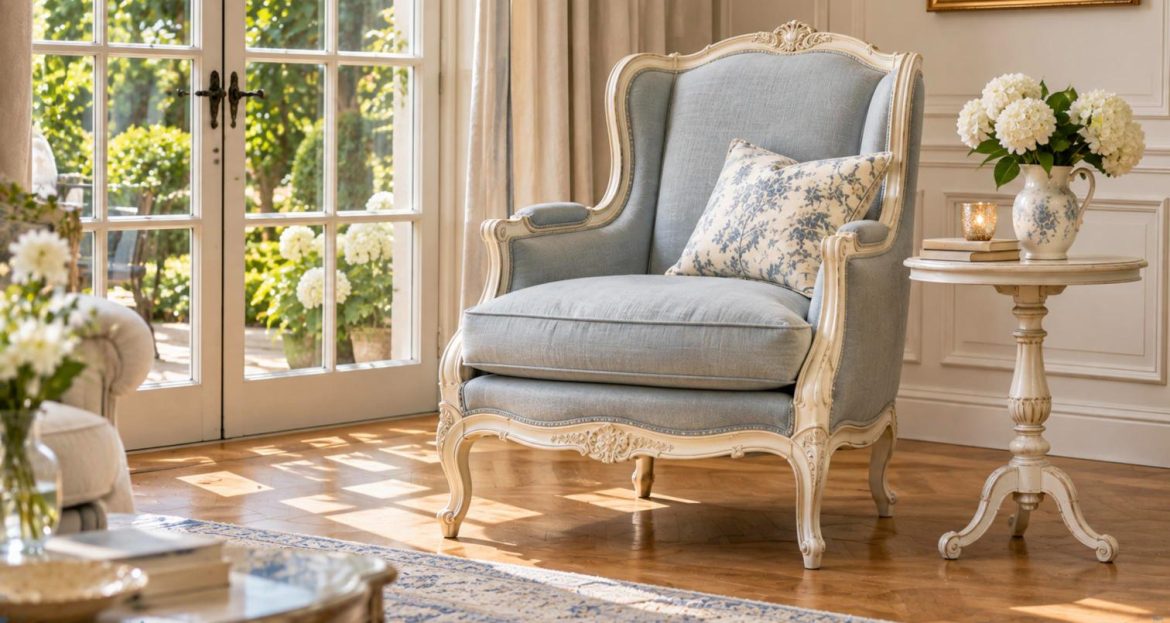
Bergère Chair: Definition, History, Bergère vs. Fauteuil & Styling
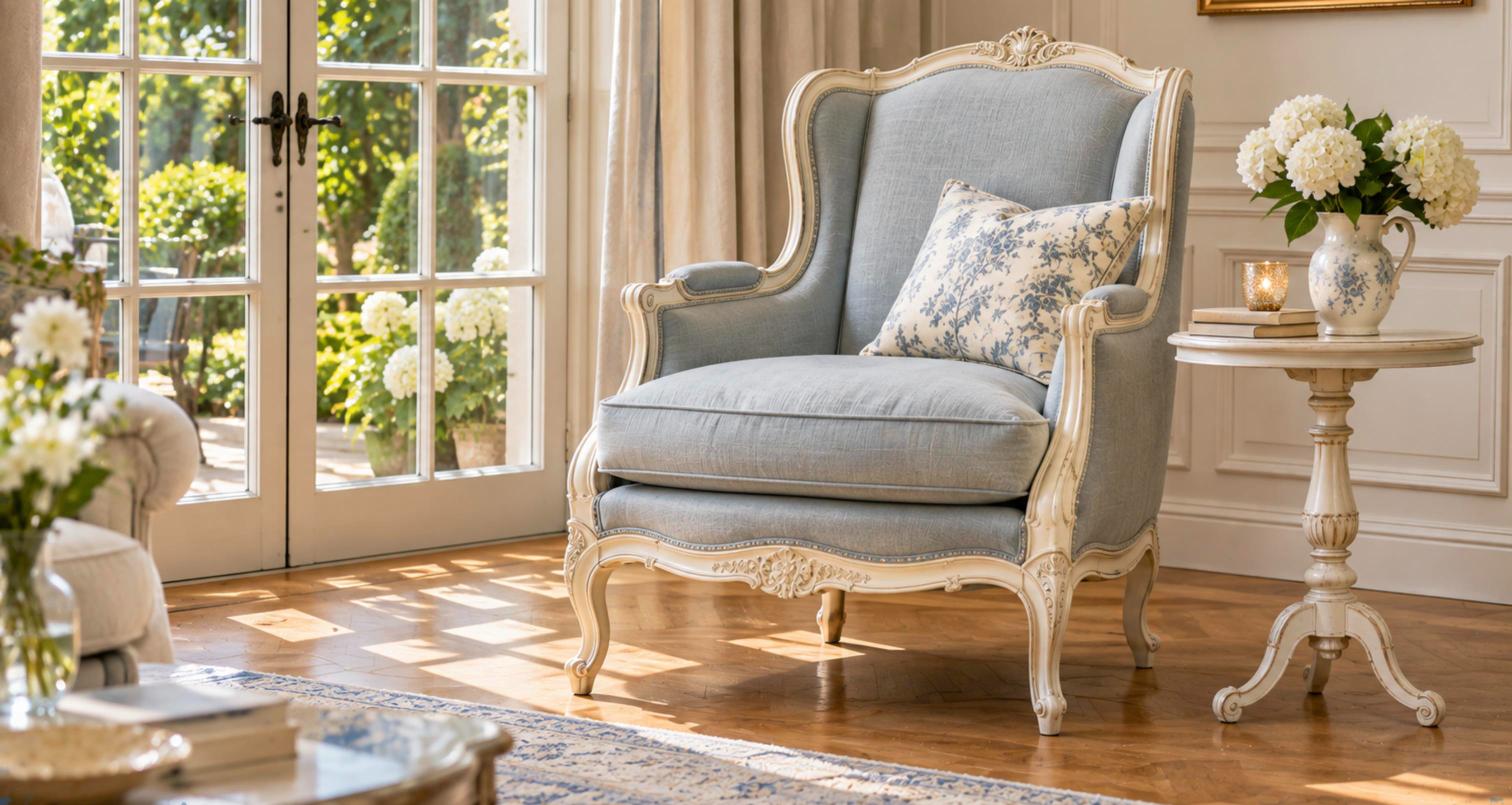
The bergère emerged in France in the early 18th century, during the reign of Louis XV, when furniture makers began designing chairs for comfort and intimate conversation rather than formal display. The name is often linked to the French word for shepherdess, though the origin is debated. Bergères were made in carved, gilded or painted wood and covered in silk, damask or tapestry. Today, original antiques and reproductions alike bring elegance and softness to traditional, French country and eclectic interiors.
Bergère vs. fauteuil
Both are French armchairs with exposed wooden frames. The key difference is the space beneath the arms: a bergère has fully upholstered, closed sides and usually a loose seat cushion, while a fauteuil has open arms with an empty space between arm and seat, and typically a tight, upholstered seat. Bergères are generally deeper and more comfortable; fauteuils are lighter and more upright.
Louis XV vs. Louis XVI bergères
- Louis XV (Rococo): curving lines, cabriole legs and carved shells and flowers, as in the photo.
- Louis XVI (Neoclassical): straighter, more restrained lines, fluted tapered legs and oval or square backs.
- Bergère à oreilles: a version with wing-like sides at head height, similar to a wingback.
- Marquise: a wider, two-person bergère.
Finishes and fabrics
Frames are often painted in cream, grey or soft colours, gilded, or left in natural walnut or beech. Traditional upholstery includes silk, velvet and tapestry, but linen, cotton and performance fabrics make bergères practical for everyday use. A neutral linen gives a relaxed French-country look; a bold velvet creates a statement.
Styling a bergère
- Place a pair either side of a fireplace or facing a sofa.
- Use a single bergère as a reading chair with a lamp and side table.
- Mix with modern pieces for an eclectic look.
- Add a patterned pillow to tie it to the room’s colours.
Buying antique vs. reproduction
Antique bergères are valued for craftsmanship and age; check frame joints, carving condition and whether they have been reupholstered. Reproductions offer the look at lower cost and often more comfortable modern cushions. See our antique furniture guide for tips.
Related terms
Frequently asked questions
What is a bergère chair?
A French armchair with an exposed wooden frame, enclosed upholstered sides and a loose seat cushion.
What is the difference between a bergère and a fauteuil?
A bergère has closed, upholstered sides; a fauteuil has open arms.
How do you pronounce bergère?
Roughly “bair-ZHAIR”.
Are bergère chairs comfortable?
Yes. Their deep seat and loose cushion make them among the most comfortable traditional French chairs.
Part of the Vancouver Furniture glossary of furniture, design and mattress terms. Browse furniture stores across Metro Vancouver or our mattress store guide.