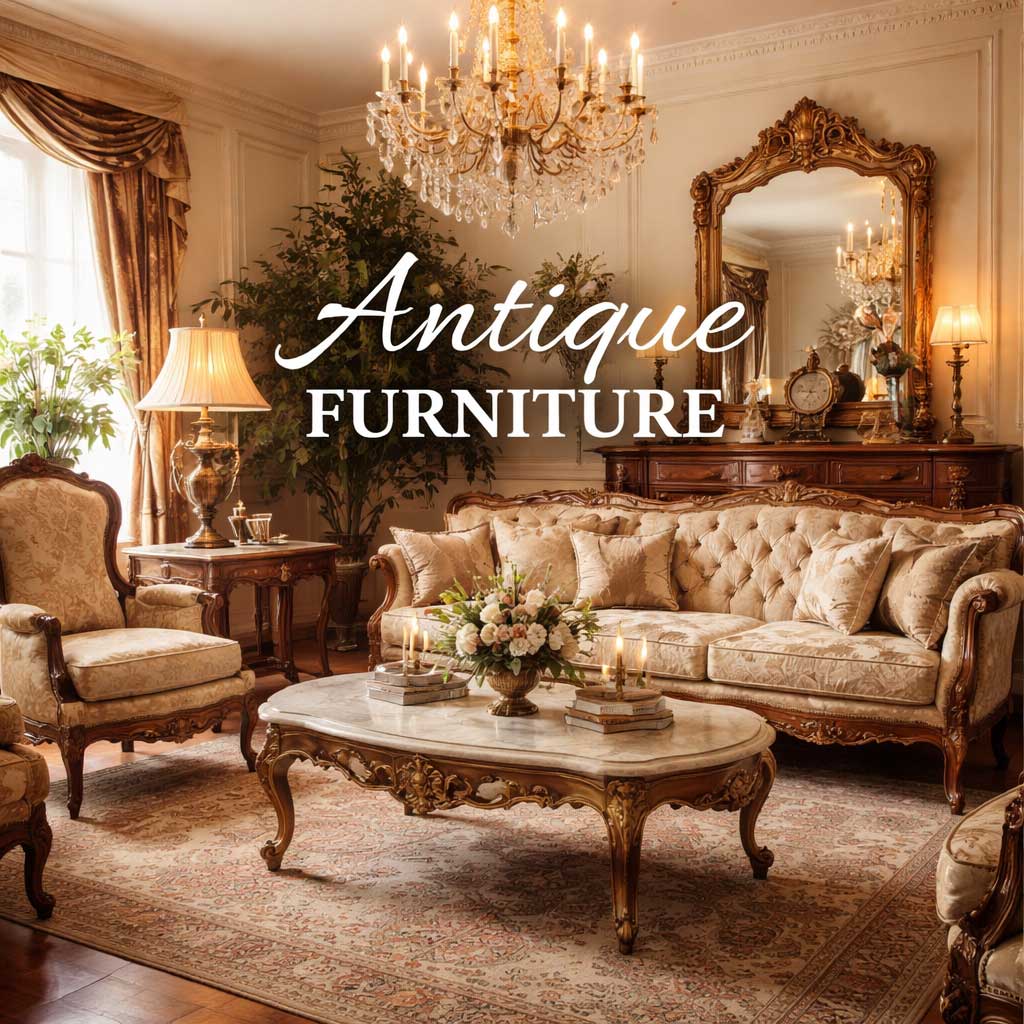
Antique furniture refers to furniture pieces that are typically at least 100 years old and are valued for their historical significance, craftsmanship, and design. These pieces often reflect the styles, materials, and construction techniques of the period in which they were made. Antique furniture is commonly associated with traditional, classical, and heritage interiors and is often collected for both functional use and decorative purposes.
Antique furniture differs from modern or contemporary furniture in its age, rarity, and the methods used in its construction. Many antique pieces are handcrafted and may feature detailed carvings, high-quality materials, and traditional joinery techniques.
Definition
In furniture classification, antique furniture refers to furniture that is generally over 100 years old and represents the design characteristics of a specific historical period.
Antique furniture is typically:
- produced using traditional craftsmanship
- made from solid wood or natural materials
- associated with historical design styles
- valued for age, rarity, and condition
The classification may vary slightly depending on regional standards and the context of use.
Etymology
The term “antique” originates from the Latin word antiquus, meaning “old” or “ancient.” The word came into broader use in European languages to describe objects from earlier historical periods.
In furniture and decorative arts, the term is used to distinguish older, historically significant pieces from newer reproductions or vintage items.
Characteristics of Antique Furniture
Antique furniture is recognized by several key characteristics related to age, craftsmanship, and materials.
Age and Historical Value
Antique furniture is typically at least 100 years old and often reflects the design trends and cultural influences of its time.
Craftsmanship
Many antique pieces were handcrafted using traditional techniques such as:
- mortise and tenon joints
- dovetail joinery
- hand carving
These methods contribute to durability and uniqueness.
Materials
Common materials used in antique furniture include:
- solid hardwoods such as oak, mahogany, and walnut
- natural finishes and veneers
- metal hardware such as brass
The materials often indicate the period and origin of the piece.
Decorative Detailing
Antique furniture often includes intricate decorative elements such as:
- carved wood motifs
- inlays and marquetry
- turned legs and ornate handles
These details reflect the artistic styles of historical periods.
Historical Styles
Antique furniture is often categorized based on historical design styles.
Common styles include:
- Georgian
- Victorian
- Edwardian
- Baroque
- Rococo
- Neoclassical
Each style reflects specific design characteristics, proportions, and decorative elements.
Antique vs Vintage Furniture
Although sometimes used interchangeably, antique and vintage furniture are different classifications.
- Antique furniture: typically over 100 years old
- Vintage furniture: generally between 20 and 100 years old
Both may have aesthetic and collectible value, but antiques are usually considered more historically significant.
Use in Interior Design
Antique furniture is used in interior design to add character, history, and craftsmanship to a space. It is often incorporated into:
- traditional interiors
- eclectic designs
- classic or heritage-inspired homes
Antique pieces can also be combined with modern furniture to create contrast and visual interest.
Condition and Restoration
The condition of antique furniture can affect its value and usability. Some pieces may require restoration or preservation to maintain structural integrity and appearance.
Common restoration practices include:
- refinishing wood surfaces
- repairing joints and structures
- replacing hardware
Proper restoration aims to preserve the original character of the piece.
Related Terms
Several terms are closely related to antique furniture:
- vintage furniture
- reproduction furniture
- period furniture
- collectible furniture
- traditional furniture
See Also: Furniture Glossary
Vintage Furniture
Traditional Furniture
Reproduction Furniture
Wood Furniture
Classical Design