Banquette Seating: Definition, Types, Dimensions & Design Ideas
The word comes from French, via the Italian banchetta, “little bench”. Banquettes became a fixture of restaurants and cafés because they seat more people in less space and feel comfortable and intimate. At home they do the same job: a banquette tucked into a kitchen corner or bay window creates a cosy breakfast nook, seats extra guests without extra chairs, and often hides useful storage under the seat. In compact Vancouver condos and townhouses, a banquette can turn an awkward corner into the best seat in the house.
Types of banquettes
- Built-in: constructed in place by a carpenter or cabinetmaker, often with storage drawers or lift-up seats.
- Freestanding: a movable upholstered bench that can sit against a wall and move with you.
- L-shaped (corner): wraps two walls for maximum seating in a nook.
- U-shaped: wraps three sides, like a restaurant booth.
- Straight: a single run along one wall, paired with chairs on the other side.
- Curved or bay-window: follows the shape of a bay window or round table.
Standard banquette dimensions
- Seat height: about 18 inches (46 cm) to the top of the cushion, matching standard dining chairs at a 29–30 inch (74–76 cm) table.
- Seat depth: 18 to 22 inches (46–56 cm), deeper with a thick back cushion.
- Back height: 32 to 36 inches (81–91 cm) from the floor, or higher for a dramatic upholstered wall.
- Length: allow roughly 24 inches (61 cm) per person.
- Table overlap: the table edge should extend 3 to 4 inches (8–10 cm) over the front of the seat so diners can sit close.
Choosing a table
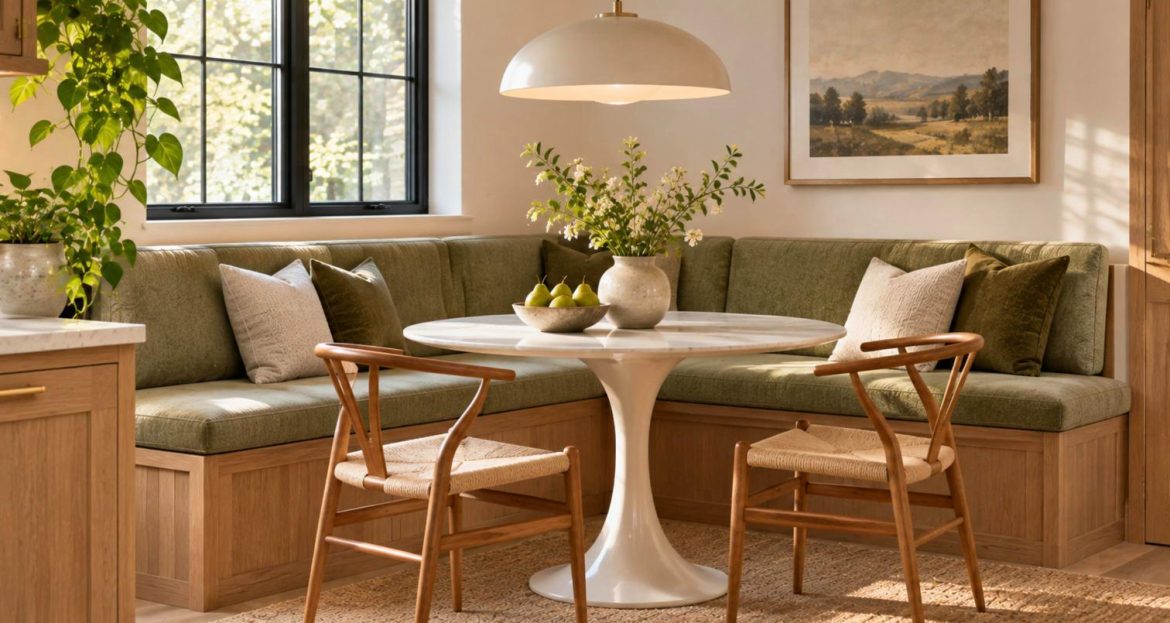
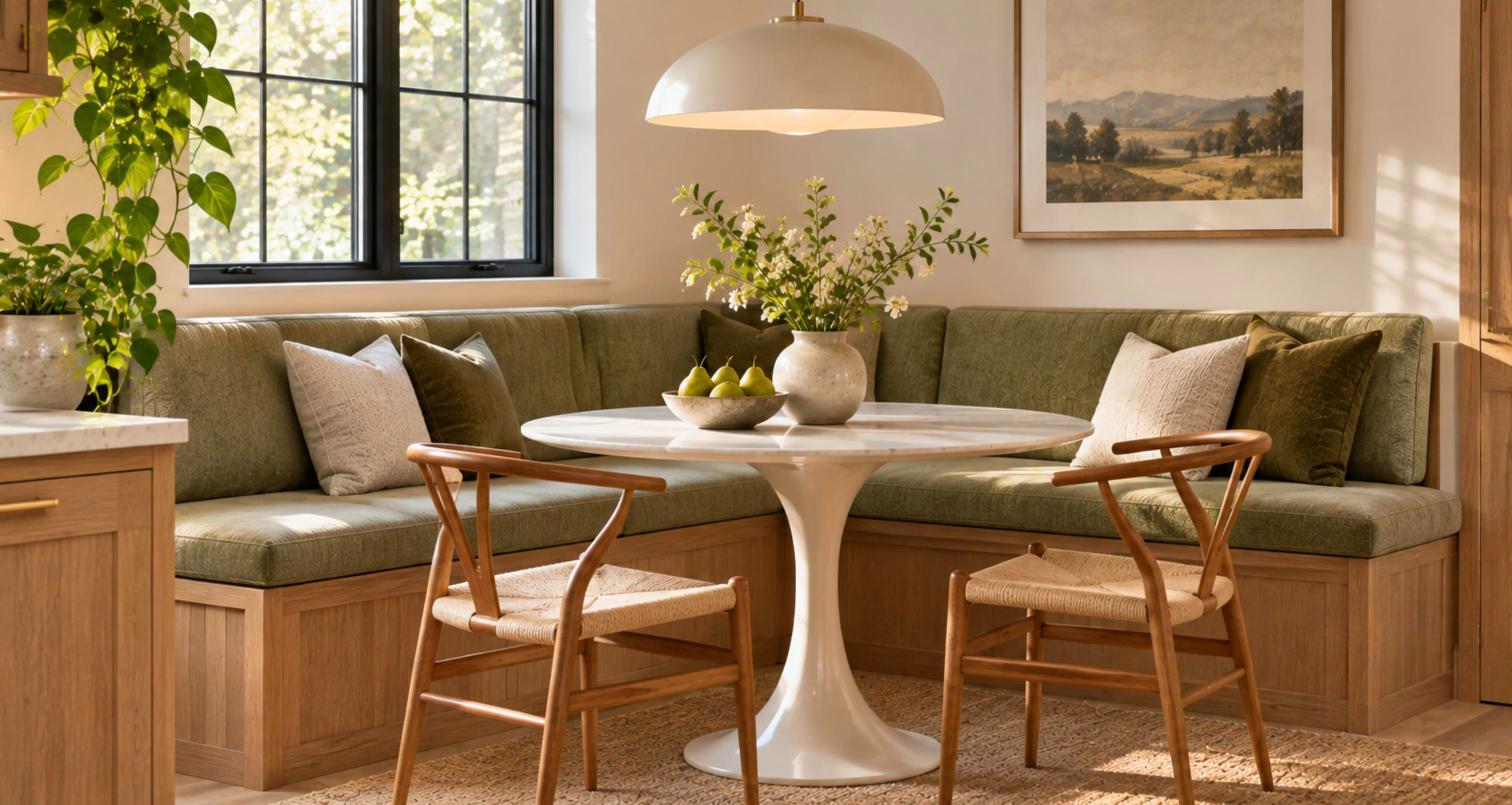
Pedestal tables, as in the photo, work best with banquettes because there are no corner legs to climb over. Round and oval tables suit L-shaped and curved banquettes; rectangular tables suit straight runs. Keep the table height at 29 to 30 inches (74–76 cm). See our dining table guide for sizing.
Upholstery and materials
Because banquettes are used for meals, fabric durability and cleanability matter. Performance fabrics, vinyl and leather are practical; removable cushion covers or slipcovers help with families. Bases are typically painted MDF or plywood for built-ins and solid wood for freestanding pieces. Tufting or channel-stitched backs add a tailored, restaurant-style look.
Pros and cons
Pros: saves floor space, seats more people, adds storage, creates a cosy focal point and suits awkward corners. Cons: inner seats are harder to get in and out of, built-ins are permanent and cost more than chairs, and fabric needs regular cleaning.
Banquette ideas for Vancouver homes
Banquettes are a smart fit for condo kitchens with no room for a full dining set and for townhouses with bay windows. Use lift-up seats for storage of seasonal items, add a window cushion for a reading nook, and pick moisture-resistant, wipeable upholstery for a busy family kitchen. Freestanding banquettes are a good option for renters.
Related terms
Frequently asked questions
What is a banquette?
A long upholstered bench, usually against a wall or in a corner, used for seating at a dining table.
How high should a banquette seat be?
About 18 inches (46 cm) including the cushion, for a standard 29–30 inch table.
How deep should a banquette be?
The seat should be 18 to 22 inches (46–56 cm) deep.
What kind of table works best with a banquette?
A pedestal table, because it has no legs at the corners to get in the way.
Is a banquette cheaper than chairs?
A freestanding banquette can be similar in cost; a custom built-in usually costs more but adds storage.
Part of the Vancouver Furniture glossary of furniture, design and mattress terms. Browse furniture stores across Metro Vancouver or our mattress store guide.