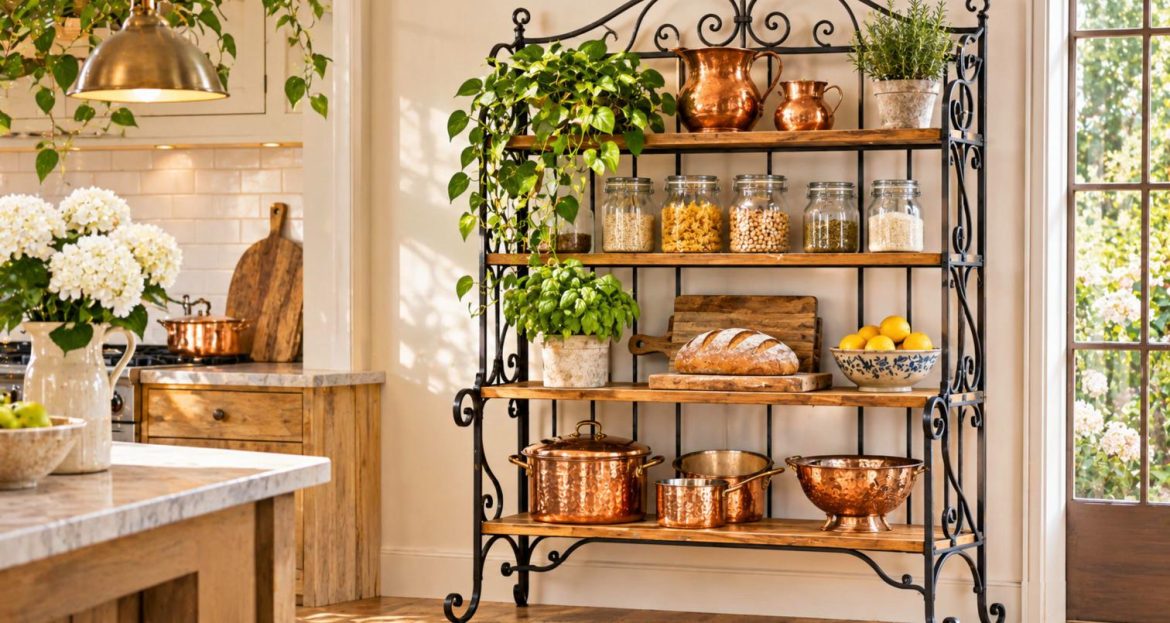
Baker’s Rack: Definition, History, Uses & Buying Guide
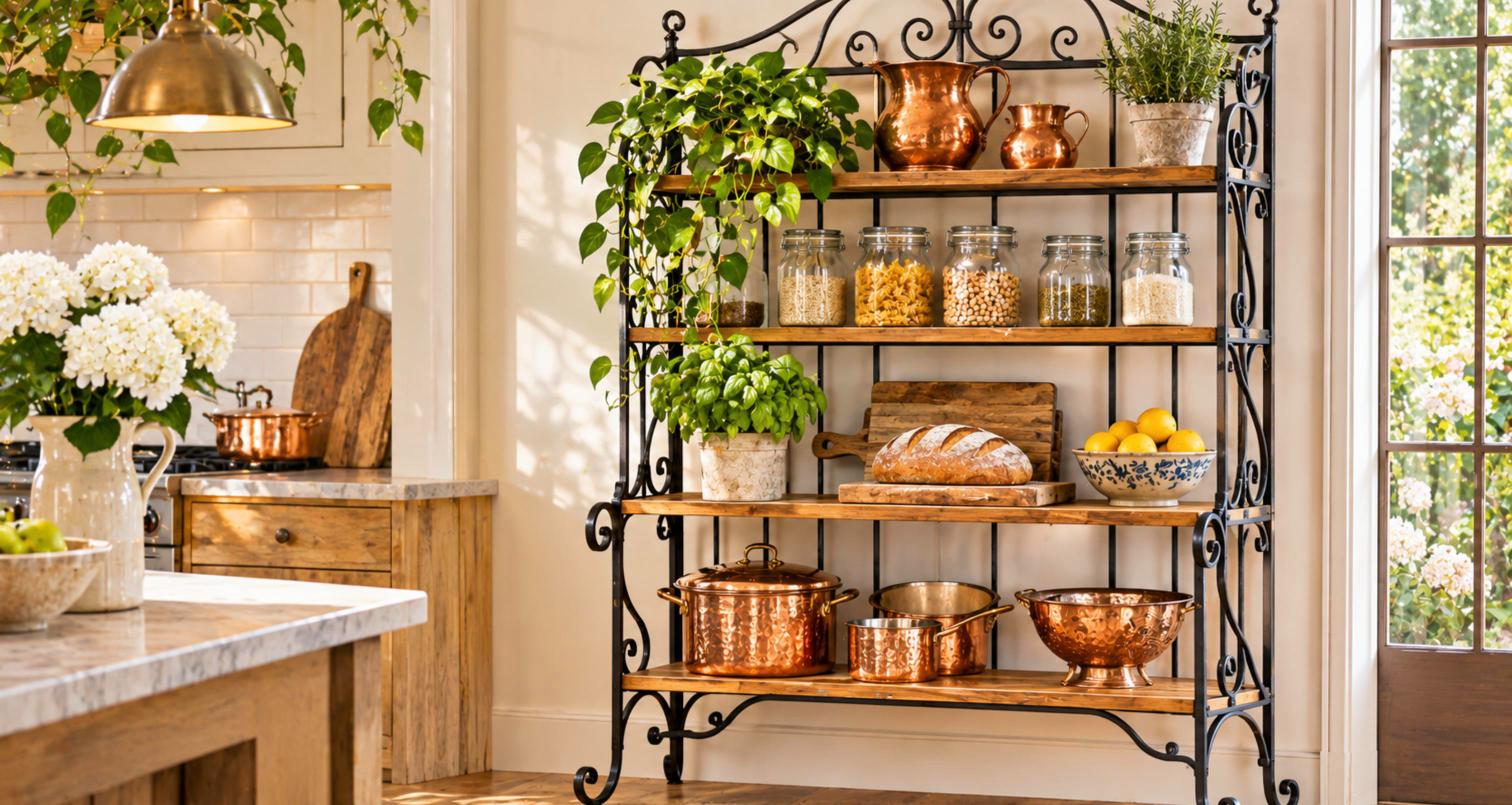
The baker’s rack began as a working tool in professional bakeries, where trays of fresh loaves needed somewhere airy to cool. Its open frame, slim profile and sturdy shelves turned out to be just as useful at home. Today a baker’s rack is one of the simplest ways to add storage to a kitchen that lacks cabinets, and its decorative metalwork can give a room real character, from French country to modern industrial.
A brief history
Early baker’s racks were simple wooden or metal frames that let air circulate around freshly baked bread, preventing soggy bottoms. As domestic kitchens became more decorative in the 19th and 20th centuries, especially in France, blacksmiths produced ornamental wrought-iron racks with scrollwork and brass finials. These became fixtures of country kitchens, and the style spread widely in North American homes, particularly in the 1980s and 1990s.
Common features and types
- Classic wrought-iron rack: scrolled metal frame with wire, wood or glass shelves.
- Industrial rack: black steel pipe or angle-iron frame with reclaimed-wood shelves.
- Microwave or appliance rack: a deeper, reinforced shelf for a microwave, coffee machine or toaster oven.
- Rack with workspace: a butcher-block or marble work surface at counter height.
- Rack with drawers or baskets: closed storage for utensils, linens or produce.
- Hanging rail or hooks: for mugs, utensils or a wine glass rack.
- Corner rack: triangular to fit kitchen corners.
How to use a baker’s rack
- Extra pantry: store dry goods in matching glass jars for a tidy display.
- Appliance station: free counter space by housing a microwave, air fryer or stand mixer.
- Cookware display: show off copper pots, cast-iron pans and serving dishes.
- Coffee bar: machine on the work shelf, mugs and beans above.
- Plant stand: in a sunny window, for herbs or houseplants.
- Dining room or bar: a compact alternative to a sideboard or bar cabinet.
- Bathroom or laundry: towels and baskets.
Buying tips
- Check weight limits for each shelf, especially for appliances.
- Measure height, width and depth; leave 5 cm above appliances for ventilation.
- Look for stability: adjustable levelling feet and the option to anchor to the wall.
- Choose finishes that handle kitchen humidity; powder-coated steel resists rust better than raw iron.
- Consider assembly: many racks are flat-packed, so check hardware quality.
Styling tips
Treat a baker’s rack like a bookcase: mix practical items with a few decorative pieces, repeat materials such as copper or ceramic, group items in threes, and leave some empty space. Use the lowest shelf for heavy items and baskets, eye level for things you use daily, and the top for lightweight décor. Our entry on the bookcase has more shelf-styling ideas.
Baker’s racks in Vancouver kitchens
Many Vancouver condo and rental kitchens have limited cabinet space and almost no pantry. A slim baker’s rack against a spare wall adds open storage without renovation and moves with you to the next home. In humid kitchens and older basement suites, choose rust-resistant finishes and wipe metal dry after cleaning.
Related terms
Frequently asked questions
What is a baker’s rack used for?
Originally for cooling bread; at home it is used for kitchen storage, appliances, cookware, pantry jars, plants and display.
Can a baker’s rack hold a microwave?
Many have a reinforced appliance shelf. Check the weight rating and depth, and leave space for ventilation.
Where should a baker’s rack go?
Against a spare kitchen or dining room wall, near where you will use what it stores, and away from direct stove heat.
How do I stop a baker’s rack from tipping?
Load heavy items low, use levelling feet and anchor tall racks to the wall.
Part of the Vancouver Furniture glossary of furniture, design and mattress terms. Browse furniture stores across Metro Vancouver or our mattress store guide.