Chenille Fabric: What It Is, Durability, Pros & Cons for Sofas
The word chenille is French for caterpillar, because the yarn looks like a fuzzy caterpillar. Chenille yarn is generally traced to 18th-century France, and the fabric became fashionable for bedspreads and robes in the United States in the 20th century. Today it is one of the most popular upholstery fabrics because it combines softness, warmth and rich texture at a reasonable price.
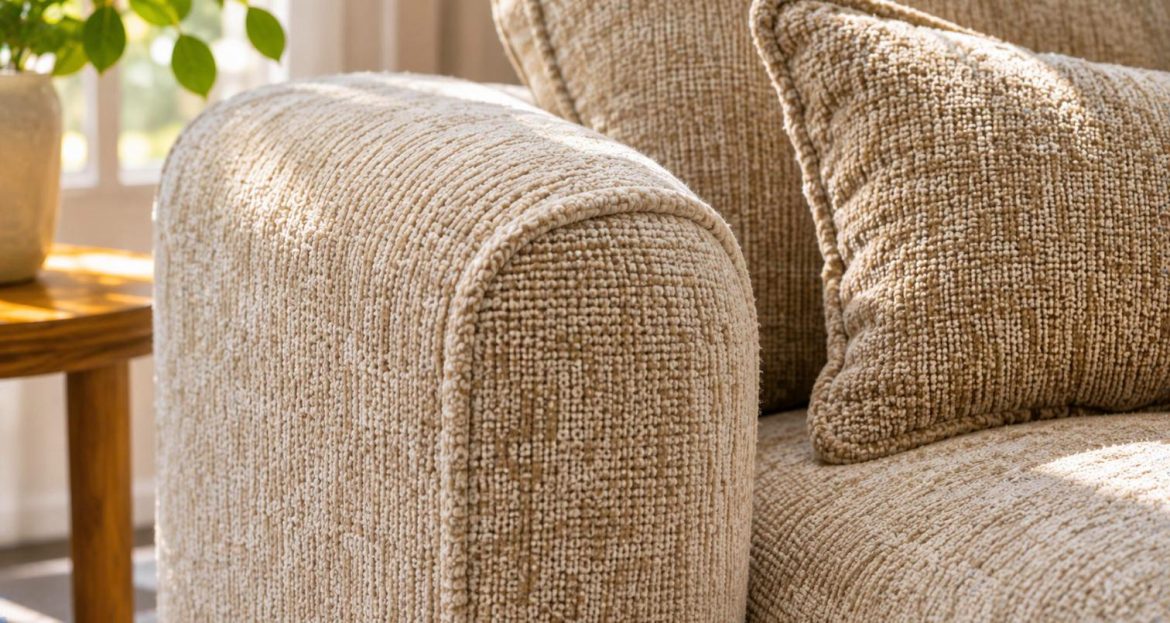
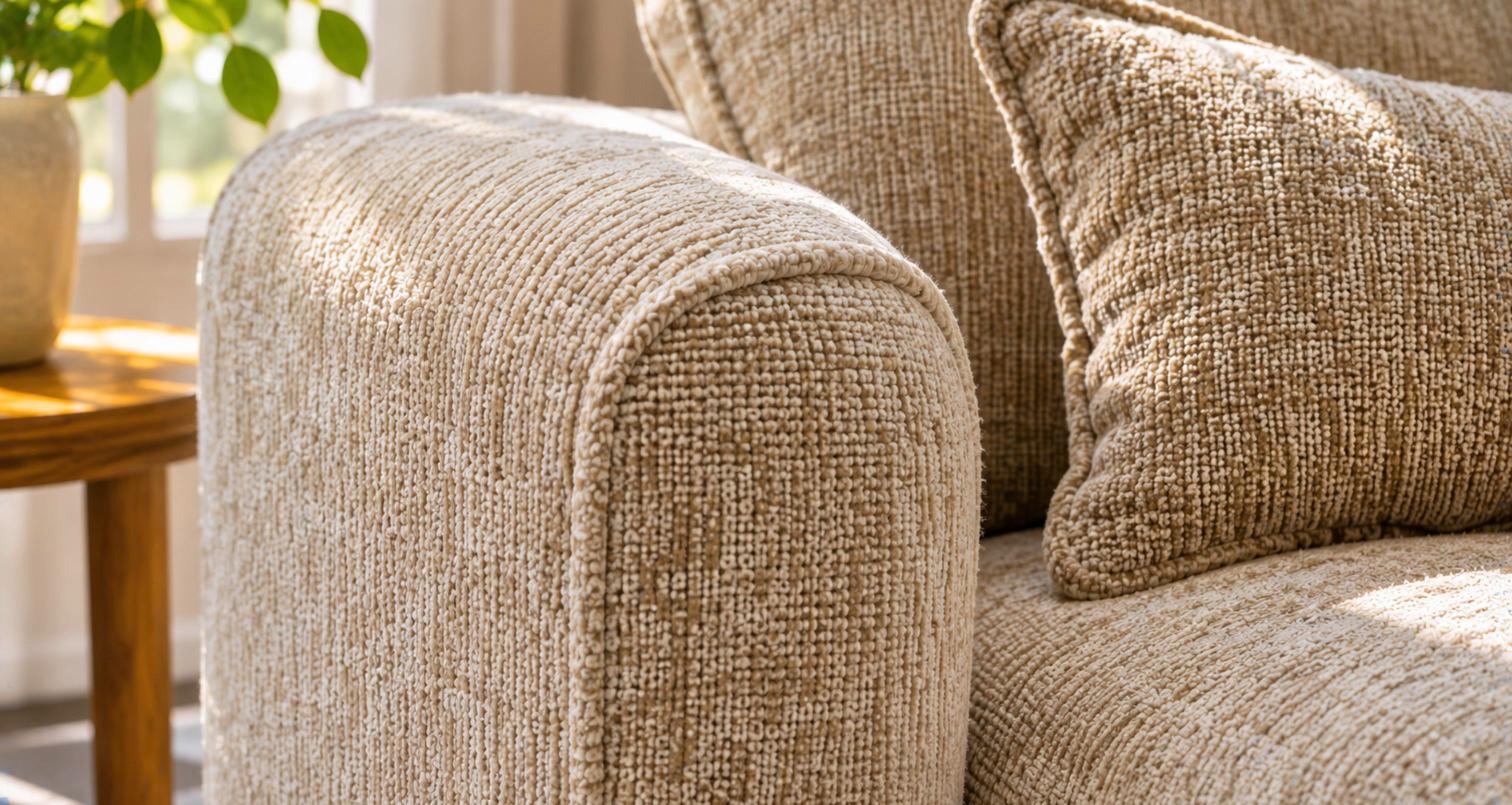
In the photo, an oatmeal chenille covers both the sofa and a matching cushion. Raking light shows the characteristic nubbly texture, which helps hide minor wear and lint.
How chenille is made
Chenille yarn is made by placing short fibres between two core yarns and twisting them together, then cutting the fibres so they stand out like a brush. This yarn is then woven into fabric. Because the pile surrounds the yarn, chenille looks soft from every angle and can show a subtle sheen as light hits the fibres differently.
Fibre types
- Polyester: durable, fade-resistant and easy to clean; the most common for upholstery.
- Acrylic: soft and colourfast, similar to wool.
- Cotton: breathable and natural but less durable and more prone to staining.
- Rayon or viscose: silky sheen but weaker, especially when wet.
- Blends: combine softness with strength.
Durability
Chenille durability varies widely. Look for upholstery grades with a high abrasion rating. For a family sofa, many experts suggest at least 15,000 double rubs (Wyzenbeek) or a similar Martindale rating. Tightly woven polyester chenilles hold up best. Check the cleaning code on the label (W, S, W/S or X) before buying.
Pros and cons
Pros: very soft and warm, rich texture that hides small marks, wide range of colours, generally affordable, and less prone to showing pressure marks than velvet. Cons: loops and pile can snag on pet claws, some types stretch or sag, natural-fibre versions can shrink if wet-cleaned, and the pile can wear flat in heavily used spots.
Chenille vs. velvet vs. bouclé
- Chenille: fuzzy yarn woven into a textured fabric; casual and cosy.
- Velvet: a dense, short, even pile with a smooth sheen; more formal.
- Bouclé: made from looped yarn with a nubbly, curly texture; snags easily.
- Microfiber: very fine synthetic fibres; smoother and the most stain-resistant.
Pets and kids
Chenille is a middle-ground choice for busy homes. It hides wear and lint well, but cats can pull loops. A tight-weave polyester chenille or a performance chenille with stain treatment is the best option for families.
Cleaning and care
- Vacuum weekly with an upholstery brush.
- Blot spills immediately; never rub.
- Follow the cleaning code; many chenilles need solvent-based cleaners or professional cleaning.
- Avoid soaking; water can shrink or distort natural fibres.
- Brush the pile gently to restore texture.
- Rotate cushions and keep out of strong sun.
Related terms
Frequently asked questions
What is chenille fabric?
A soft, fuzzy fabric woven from chenille yarn, which has short fibres standing out around a core.
Is chenille good for sofas?
Yes, especially tightly woven polyester chenille with a high rub count.
Is chenille good with cats?
Not ideal, as claws can pull loops; a tight weave helps.
How do you clean chenille?
Vacuum regularly, blot spills and follow the fabric’s cleaning code; many need solvent or professional cleaning.
Part of the Vancouver Furniture glossary of furniture, design and mattress terms. Browse furniture stores across Metro Vancouver or our mattress store guide.