Teak Wood Furniture: Grades, Outdoor Durability, Care & Weathering
Teak has been used for shipbuilding for centuries because it withstands salt water and does not easily crack, warp or rot. Those same qualities make it ideal for patio furniture that stays outside year-round. In the mid-20th century, Danish and Scandinavian designers also popularised teak indoors, and vintage teak sideboards and dining sets remain highly collectible.
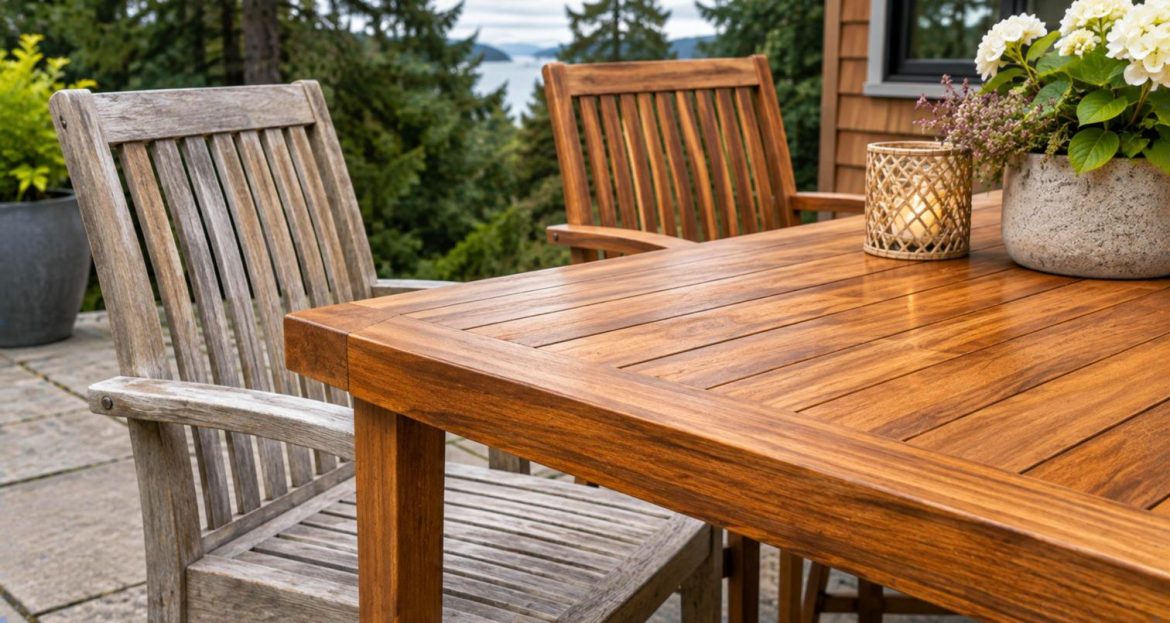
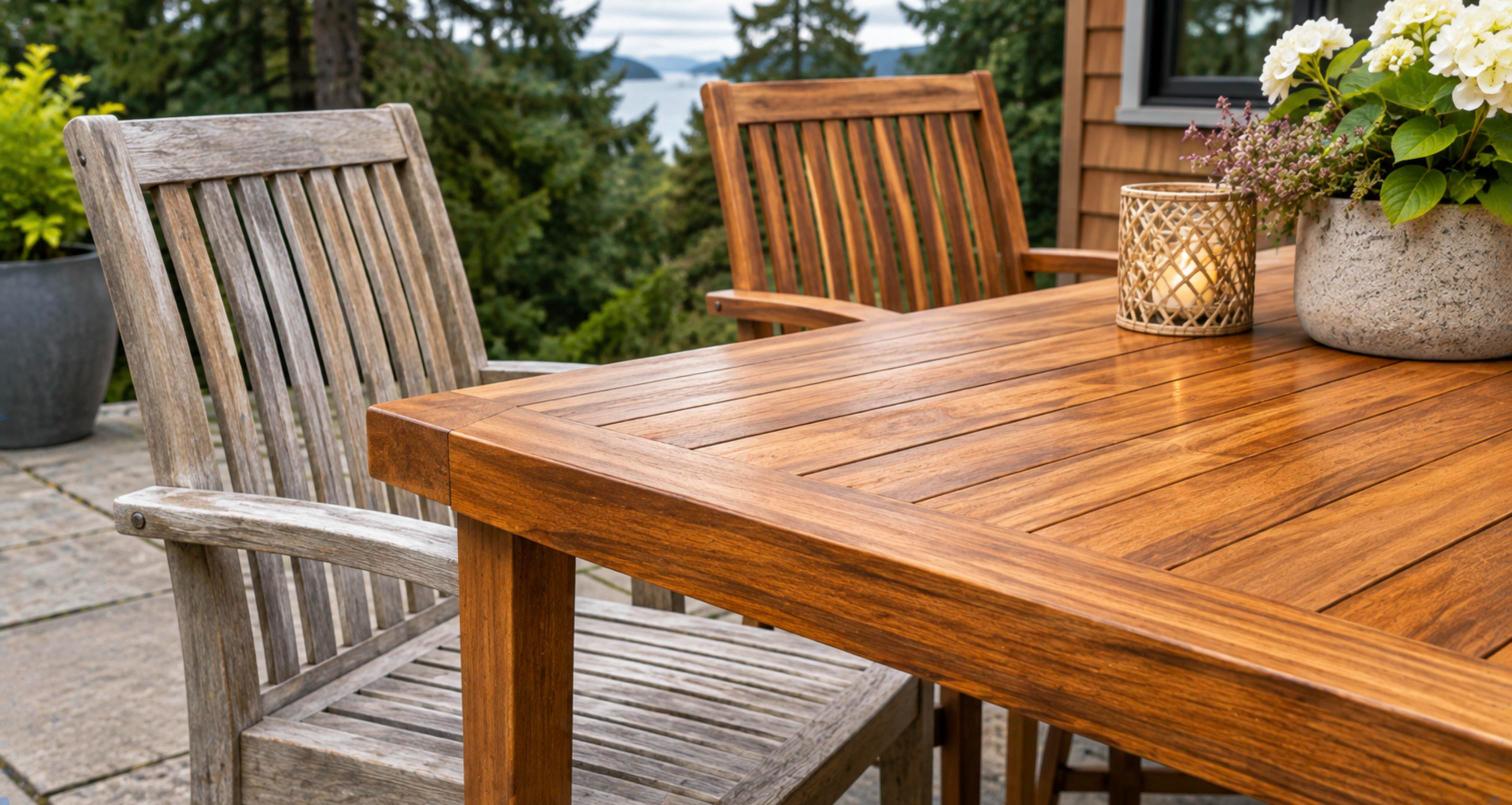
The photo demonstrates teak’s most famous trait. Left untreated outdoors, the chair on the left has weathered to a soft silver-grey; the table on the right, freshly oiled, keeps its warm golden-brown tone. Both are structurally sound: the difference is purely cosmetic and a matter of preference, which matters for patios in Vancouver’s wet climate.
Teak grades
- Grade A: heartwood from the centre of mature trees; dense, even golden colour, high oil content and the best durability.
- Grade B: outer heartwood; lighter colour and less oil.
- Grade C: sapwood near the bark; pale, uneven and much less durable.
Grade terminology is not standardised, so ask the retailer what the grade means and look at the wood itself.
Plantation vs. old-growth teak
Natural old-growth teak forests have been heavily logged and are now protected in many countries. Most teak sold today comes from plantations. Plantation teak grown for longer is denser and more oily. Look for certification, such as FSC, to support responsible sourcing.
Why teak is so durable outdoors
Teak’s natural oils repel water and its tight grain and silica content resist insects and decay. It also has low shrinkage, so it moves less than many woods as humidity changes, reducing cracking and joint loosening. High-quality teak furniture can last for decades outside, even through wet West Coast winters.
Patina or oil: caring for teak
- Let it weather: teak naturally turns silver-grey within months outdoors. No maintenance is needed beyond cleaning.
- Keep it golden: clean, then apply teak sealer or teak oil once or twice a year. Sealers generally last longer and attract less mildew than oils.
- Restore it: clean grey teak with a teak cleaner and soft brush, lightly sand, then seal.
- Avoid pressure washing, which raises and damages the grain.
In Vancouver’s damp climate, mildew spots can appear on outdoor wood; a mild cleaner and brush remove them.
Teak indoors
Indoor teak, often found in vintage mid-century furniture, is usually finished with oil. It requires only dusting and occasional re-oiling. Some vintage pieces are teak veneer over a core, so check before sanding.
How to spot quality teak furniture
- Consistent golden colour without pale streaks of sapwood.
- Heavy weight and dense feel.
- Slightly oily touch on unfinished wood.
- Strong mortise-and-tenon joints rather than only screws.
- Stainless-steel or brass hardware outdoors.
Related terms
Frequently asked questions
Why is teak good for outdoor furniture?
Its natural oils and dense grain resist water, rot and insects.
Does teak need to be oiled?
No; oiling or sealing only maintains the golden colour, while untreated teak turns silver-grey.
What is Grade A teak?
Heartwood from mature trees, with the most oil and best durability.
Can teak stay outside in winter?
Yes, quality teak can stay outdoors year-round, though covers help keep it clean.
Part of the Vancouver Furniture glossary of furniture, design and mattress terms. Browse furniture stores across Metro Vancouver or our mattress store guide.