Walnut Wood Furniture: Black Walnut, Grain, Cost, Pros & Care
Walnut has been a favourite of cabinetmakers for centuries. European walnut was so fashionable in late 17th-century England that the period is sometimes called the Age of Walnut, before mahogany took over in the 18th century. In the mid-20th century, American black walnut became a signature wood of modern design, and today it is widely used for dining tables, sideboards, beds and desks.
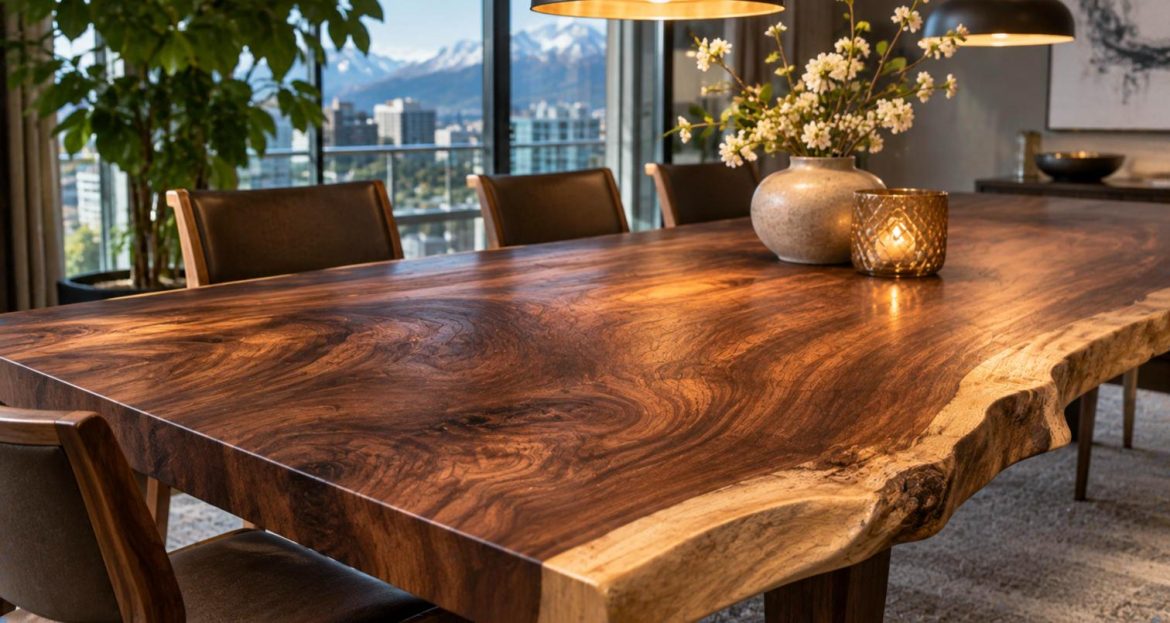
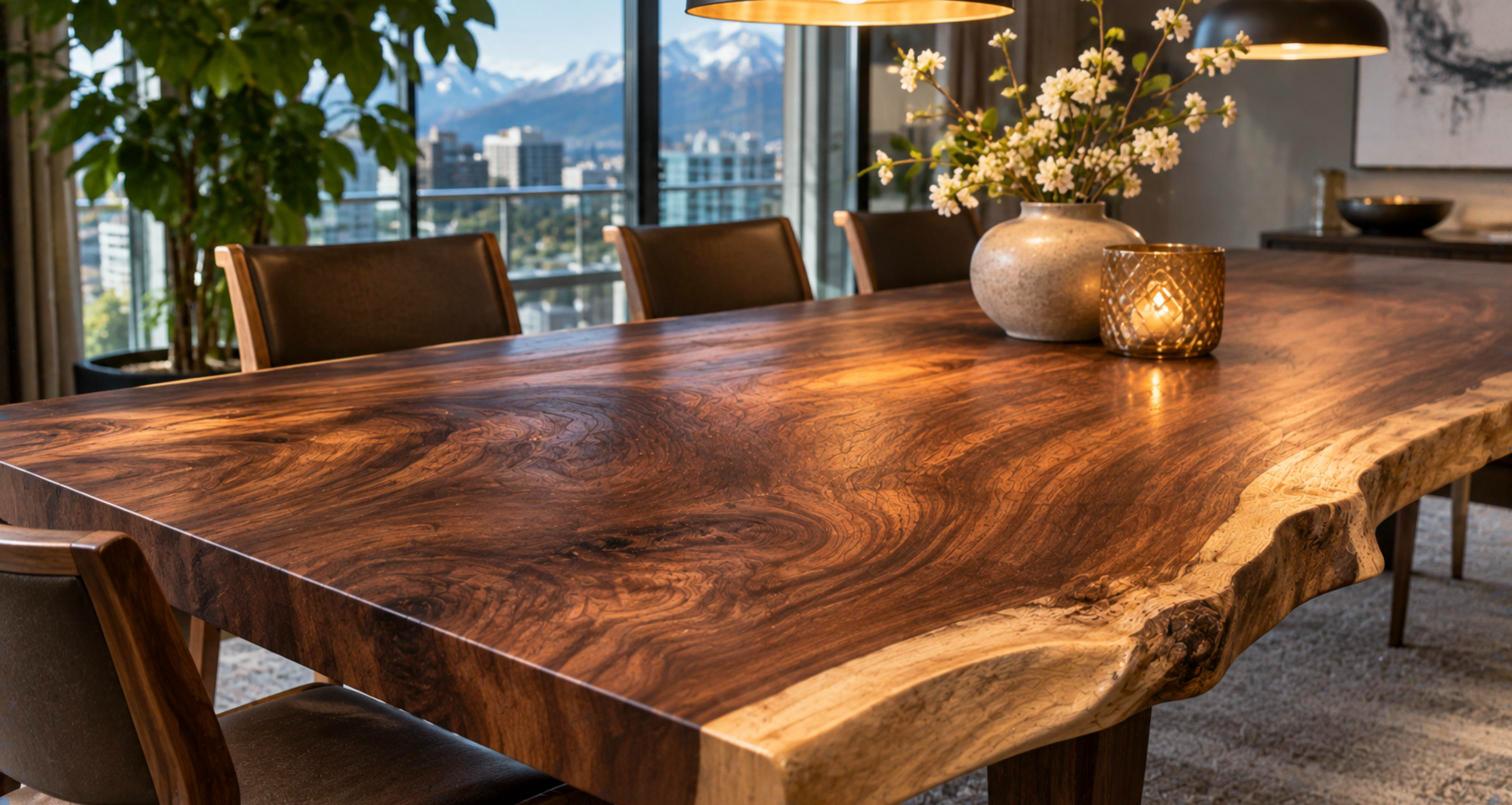
The live-edge table in the photo shows walnut’s two-tone character: dark heartwood with swirling figure, and a band of pale sapwood along the natural edge of the tree. Many makers in British Columbia build live-edge pieces like this from single slabs.
Heartwood and sapwood
The dark centre of the tree is heartwood; the pale outer layer is sapwood. Traditionally, sapwood was cut away or steamed to darken it to match the heartwood. Today many people value the contrast, especially in live-edge pieces. Ask whether lumber has been steamed, as some feel steaming makes the colour duller.
How walnut ages
Unlike many woods that darken, walnut tends to lighten slightly with exposure to sunlight over time, taking on warmer, more golden-brown tones. Keeping it out of direct sun slows this change.
Solid walnut vs. walnut veneer
Solid walnut is made entirely of walnut boards and can be sanded and refinished many times. Walnut veneer is a thin layer glued to plywood or MDF; it allows beautiful book-matched patterns at lower cost and is very stable, but can only be lightly refinished. Both can be high quality; ask which you are buying.
Pros and cons
Pros: rich colour without stain, beautiful grain, strong yet easy to work, stable, and highly valued. Cons: expensive, softer than oak or maple so it can dent, lightens in sun, and dark surfaces show dust and scratches.
Walnut vs. other woods
- vs. oak: walnut is darker, smoother and pricier; oak is harder with a more open grain.
- vs. teak: walnut is for indoor use; teak resists weather.
- vs. cherry: cherry is reddish and darkens with age; walnut lightens.
- vs. maple: maple is light and harder.
Caring for walnut furniture
- Dust with a soft, dry cloth.
- Use coasters, trivets and placemats.
- Keep out of direct sunlight and away from heaters.
- Clean with a slightly damp cloth, then dry.
- Re-oil oil-finished pieces periodically.
- Use a humidifier in dry winters to reduce cracking.
Related terms
Frequently asked questions
Is walnut a good wood for furniture?
Yes, it is strong, stable and beautiful, one of the most prized furniture woods.
Does walnut darken over time?
No, walnut usually lightens slightly and becomes warmer with sun exposure.
Why is walnut furniture expensive?
Walnut trees grow slowly and yield less premium lumber than many woods.
Does walnut scratch easily?
It is softer than oak or maple, so it can dent or scratch more easily.
Part of the Vancouver Furniture glossary of furniture, design and mattress terms. Browse furniture stores across Metro Vancouver or our mattress store guide.