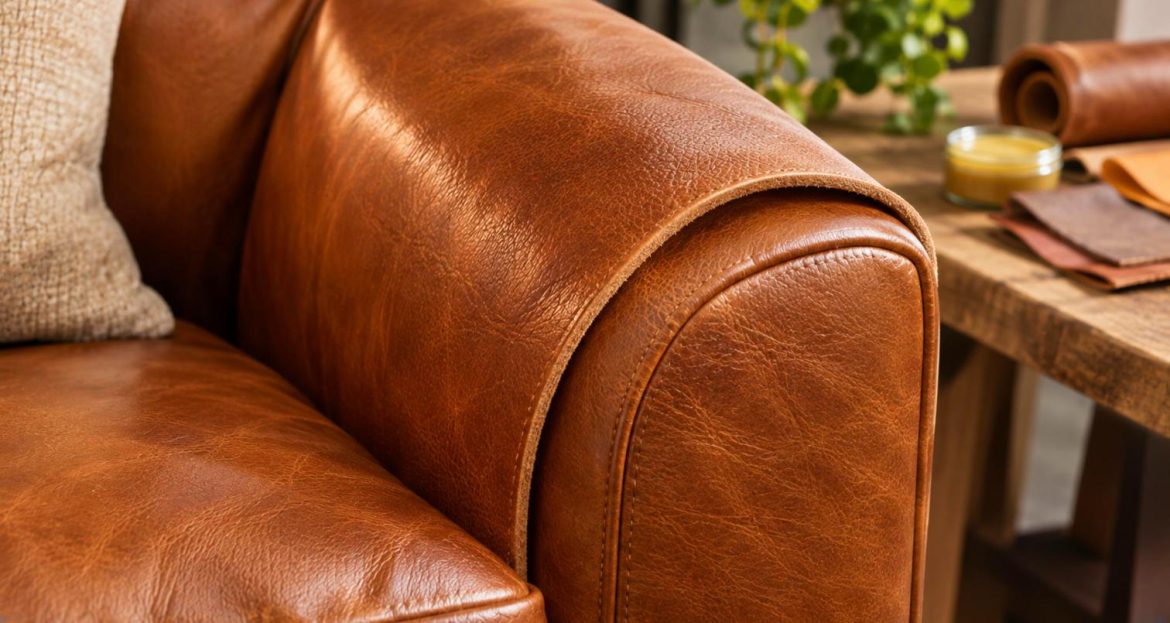
Top-Grain Leather: Definition, Grades Compared & Buying Guide
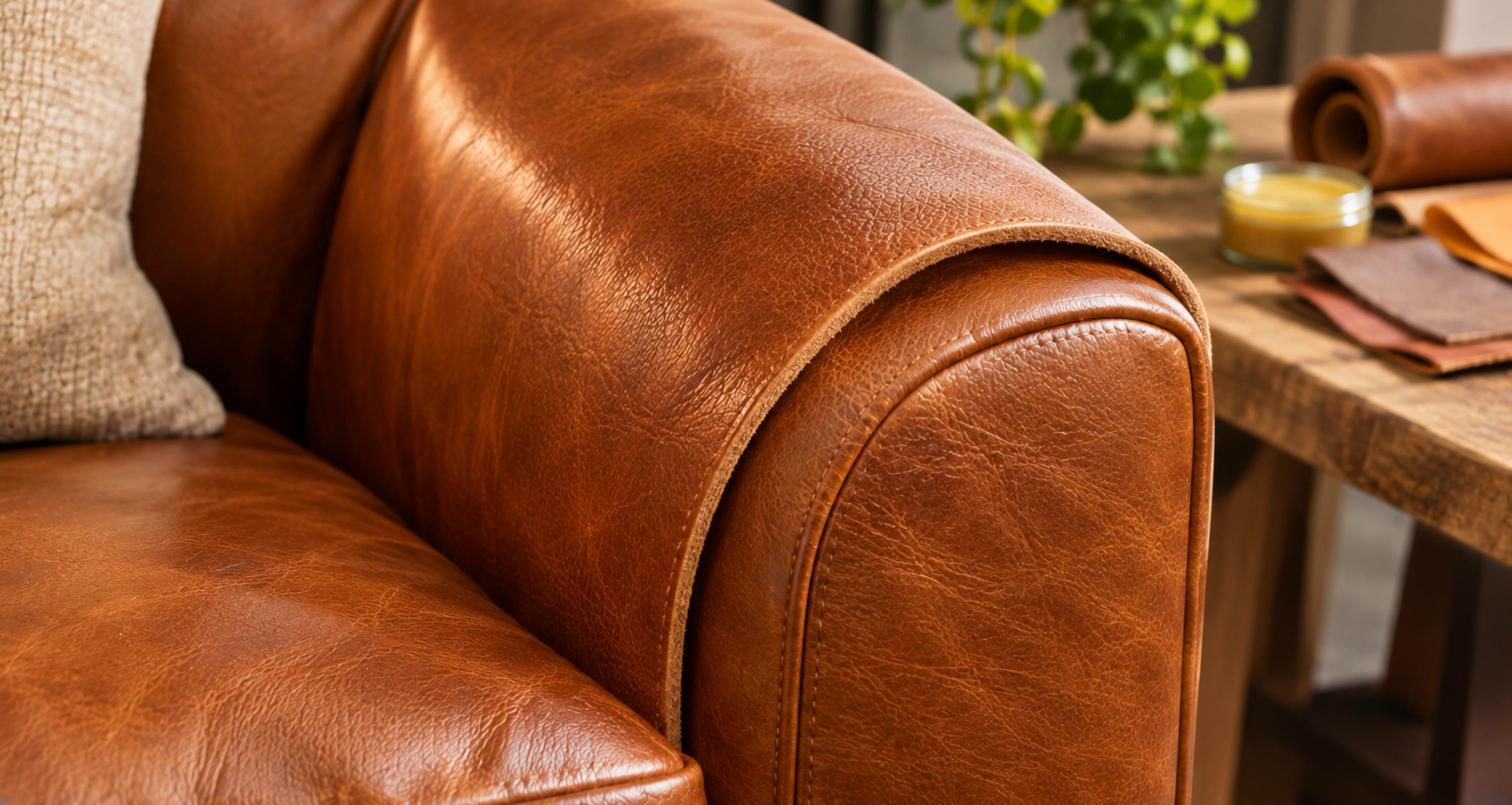
When shopping for a leather sofa, the word “leather” covers a wide range of materials, from heirloom-quality hides to products that are mostly plastic. Understanding the grades is the single most important step in buying leather furniture. Top-grain sits near the top of the scale: it is real, durable leather from the strongest part of the hide, but it has been refined to look more uniform and resist stains better than untreated full-grain.
Leather grades compared
- Full-grain: the complete outer layer with natural markings intact; the strongest and most expensive grade, developing a rich patina over time.
- Top-grain: the outer layer with the surface lightly sanded and finished; durable, more stain-resistant and more uniform than full-grain.
- Split / corrected grain: lower layers of the hide, embossed with an artificial grain pattern; weaker and often used on sides and backs of furniture.
- “Genuine leather”: a marketing term that usually means lower-grade split leather.
- Bonded leather: leather scraps bonded with polyurethane onto a backing; prone to peeling and not true leather in performance.
Leather finishes
- Aniline: dyed through with no protective coating; the most natural feel but stains and fades easily.
- Semi-aniline: dyed with a light protective coat; a good balance of softness and protection.
- Pigmented (protected): a pigmented surface coating; the most durable and stain-resistant, ideal for families.
- Nubuck: sanded to a velvety nap; soft but delicate.
- Distressed / pull-up: waxed or oiled to change colour when stretched, giving a vintage look.
“Leather match” and leather sides
Some sofas use top-grain leather only on the seats, backs and arms where you touch them, with split leather or vinyl on the outer sides and back. This is often described as “leather match” and lowers the cost. Ask the retailer to confirm exactly which surfaces are top-grain.
Pros and cons of top-grain leather
Pros: durable, easy to wipe clean, ages well, good for allergy sufferers since it does not trap dust and dander like fabric, and pet hair does not cling. Cons: more expensive than fabric, can scratch from claws, feels cold in winter and sticky in summer, and can fade in strong sun.
Caring for a leather sofa
- Dust and wipe with a soft, dry or slightly damp cloth.
- Blot spills immediately; avoid soaking.
- Condition every 6 to 12 months with a product suited to the finish.
- Keep it out of direct sunlight and away from heaters and fireplaces.
- Test any cleaner on a hidden area first.
Related terms
Frequently asked questions
What is top-grain leather?
Leather from the outer layer of the hide, lightly sanded and finished for durability and a uniform look.
Is full-grain or top-grain leather better?
Full-grain is the strongest and develops the richest patina; top-grain is slightly less natural but more stain-resistant and affordable.
Is “genuine leather” good quality?
The term usually refers to lower-grade split leather, so it is generally lower quality than top-grain.
How long does a top-grain leather sofa last?
With good care, often 15 years or more.
Part of the Vancouver Furniture glossary of furniture, design and mattress terms. Browse furniture stores across Metro Vancouver or our mattress store guide.