Bonded Leather: What It Is, Why It Peels & Better Alternatives
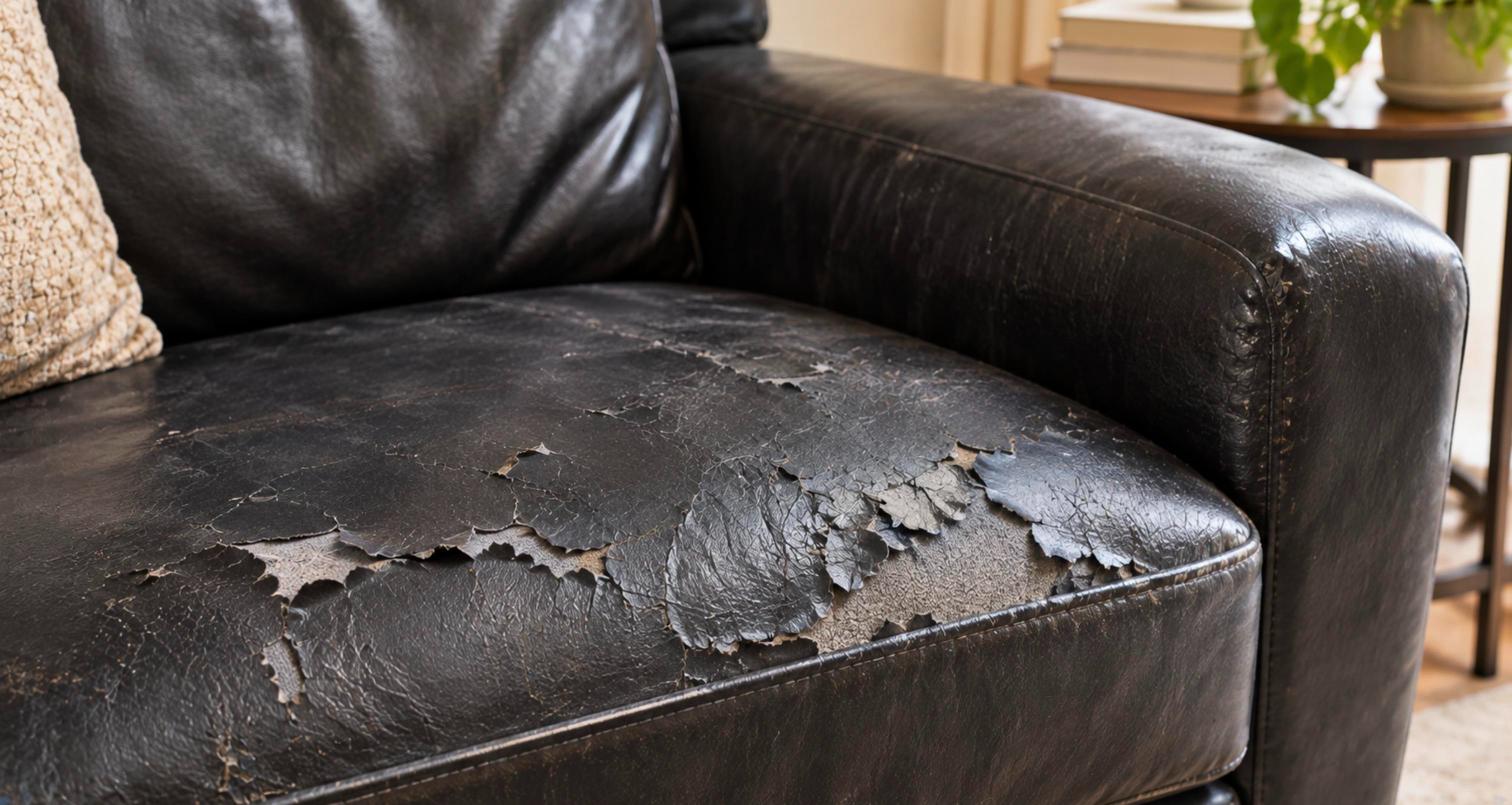
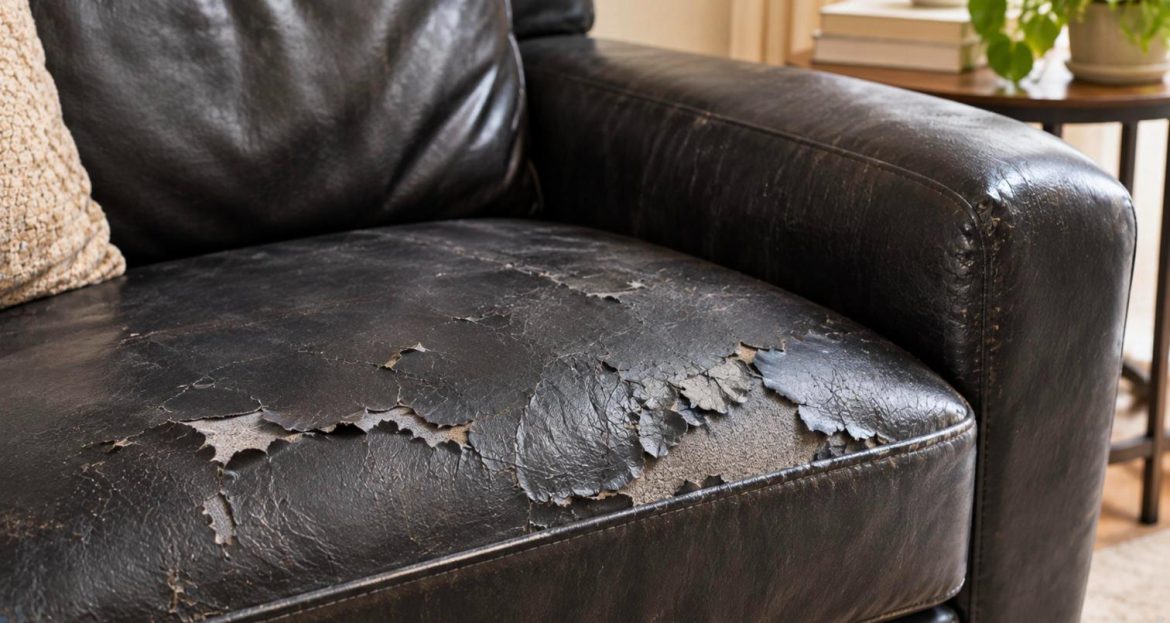
Bonded leather became widespread in furniture because it looks like leather at a fraction of the price. Unfortunately, it does not behave like leather. The surface is mostly a thin plastic coating, and over a few years of use, body heat, sunlight and friction cause it to crack, flake and peel, as in the photo. Many shoppers only discover this after their “leather” sofa starts shedding. Understanding what bonded leather is helps you avoid a disappointing purchase.
How bonded leather is made
- Leftover leather scraps and shavings are shredded into fibres.
- The fibres are mixed with a binder such as polyurethane or latex.
- The mixture is spread onto a fabric or paper backing.
- A polyurethane layer is applied to the surface and embossed with a leather-grain texture, then coloured.
Why bonded leather peels
The visible surface is a thin polyurethane coating, not the leather itself. Over time, heat, body oils, UV light, cleaning products and repeated flexing break down the bond between the coating and the backing. Once small cracks form, the surface flakes off in patches. This damage cannot be repaired effectively; recovering or replacing the furniture is usually the only fix.
Bonded vs. top-grain vs. faux leather
- Top-grain leather: real leather from the outer layer of the hide; durable for 15+ years.
- Bonded leather: a composite with a PU surface; inexpensive but short-lived.
- Faux leather (PU or PVC): fully synthetic; quality varies, and good modern PU can outlast bonded leather.
- Leather match: real leather on contact surfaces, with vinyl or PU on the sides and back.
How to spot bonded leather
- Check the product label or specifications for terms such as “bonded,” “blended,” “reconstituted” or “PU leather.”
- Very low prices for a “leather” sofa are a warning sign.
- A perfectly uniform grain pattern, with no natural variation, suggests embossing.
- Ask the retailer directly for the leather grade and warranty on the cover material.
Better alternatives
If budget is tight, a good performance fabric or a quality microfibre usually lasts longer than bonded leather and is easier to clean. If you want the look and feel of leather, saving for top-grain or a leather-match piece is generally better value over the life of the furniture.
Caring for bonded leather you already own
- Keep it out of direct sunlight and away from heaters.
- Wipe with a soft, slightly damp cloth; avoid harsh cleaners and alcohol.
- Use a conditioner made for PU or bonded leather sparingly.
- Consider fitted slipcovers once peeling begins.
Related terms
Frequently asked questions
What is bonded leather?
A composite of leather fibres and binder on a backing, coated with polyurethane and embossed to look like leather.
Why does bonded leather peel?
Its thin polyurethane surface breaks down from heat, oils, sunlight and wear, then flakes away from the backing.
How long does bonded leather last?
Often only a few years under daily use.
Can peeling bonded leather be repaired?
Not effectively; reupholstery, slipcovers or replacement are usually the only options.
Part of the Vancouver Furniture glossary of furniture, design and mattress terms. Browse furniture stores across Metro Vancouver or our mattress store guide.