Recliner Guide: Types, Mechanisms, Power vs. Manual & Buying Tips
Reclining chairs have existed for centuries; adjustable “Morris chairs” were popular in the late 19th century. The modern upholstered recliner with a pop-up footrest was developed in North America in the 20th century and became a living-room staple. Today recliners come in manual and power versions, as single chairs, loveseats, sofas and sectionals, and in styles from bulky traditional chairs to slim, modern designs that barely look like recliners at all.
Types of recliners
- Standard (rocker-less) recliner: the classic form; needs space behind it to recline.
- Wall-hugger (wall-saver): the seat slides forward as it reclines, so it can sit close to a wall; ideal for small rooms.
- Rocker recliner: rocks when upright and reclines fully.
- Swivel-glider recliner: swivels 360° and glides, popular in nurseries.
- Push-back recliner: no lever; you push against the arms to recline. Often more stylish.
- Lift chair: a power recliner that tilts forward to help the user stand, useful for older adults or people with limited mobility.
- Zero-gravity recliner: raises the legs above the heart for a weightless feel.
Manual vs. power recliners
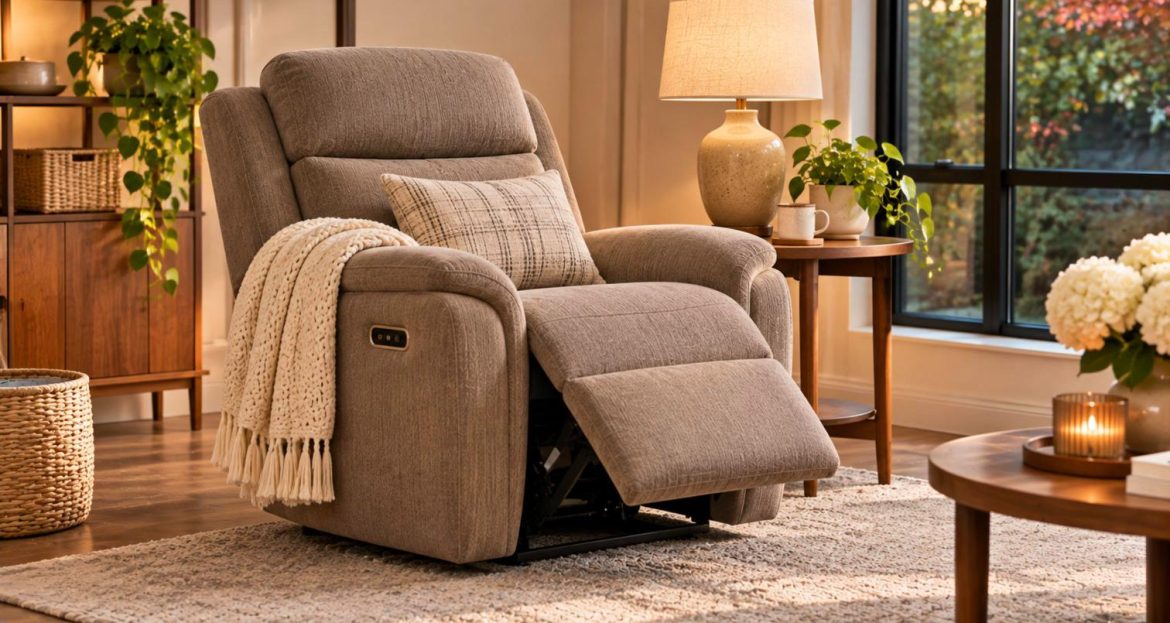
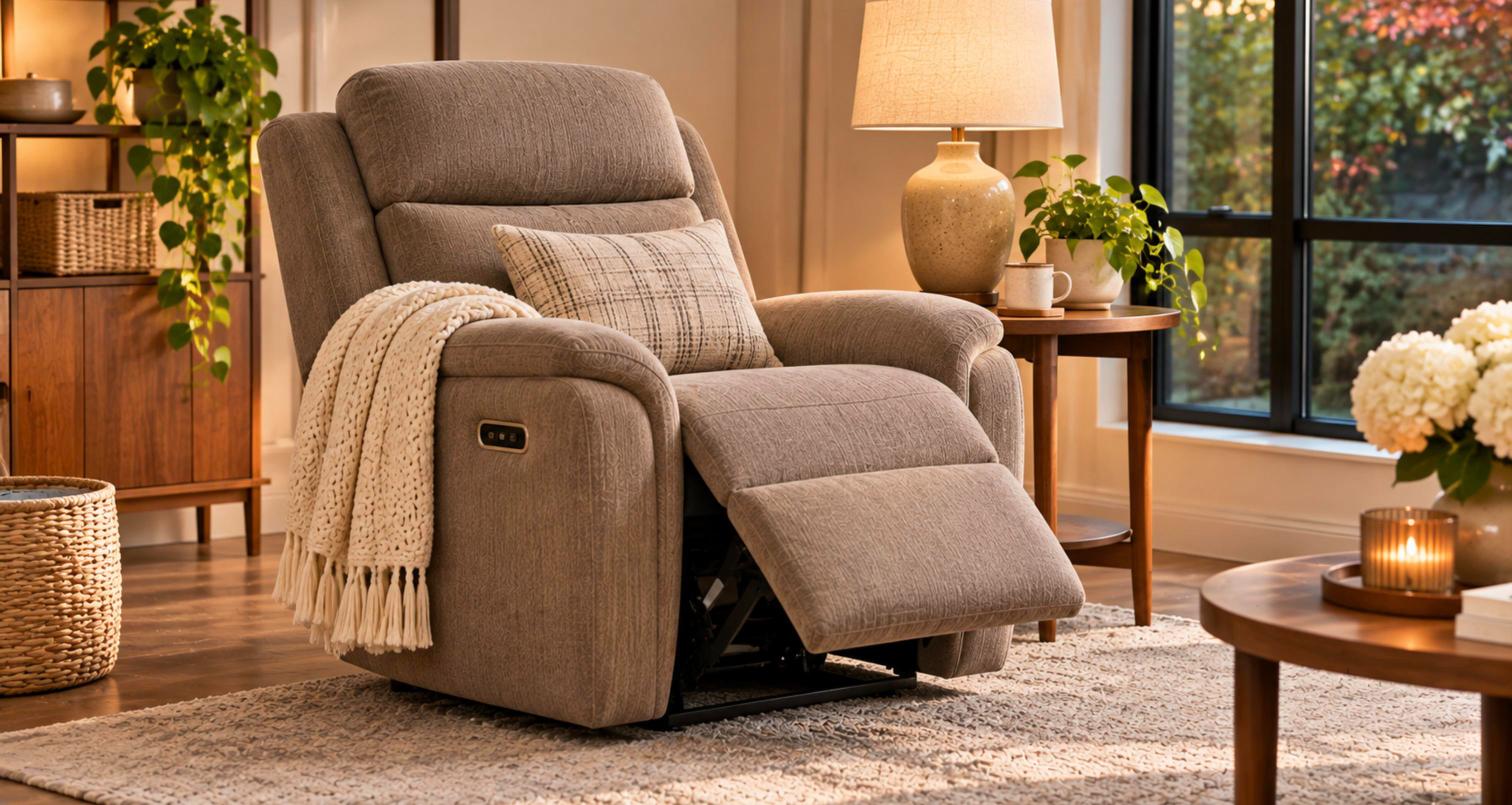
Manual recliners use a lever, handle or body pressure; they are cheaper, have fewer parts to fail and need no outlet. Power recliners use a motor controlled by buttons, as in the photo, and can stop at any position. Many include power headrests, lumbar support, USB charging and battery packs for placement away from outlets. They cost more and need access to power.
Sizing and space
- Measure the reclined length and the wall clearance listed by the manufacturer.
- Sit in the chair and recline fully: your head should rest on the headrest and your feet should not hang off the footrest.
- Check the seat height and depth suit your height; petite and big-and-tall models exist.
- Leave a clear path in front for the footrest.
Construction and quality
Look for a hardwood or steel frame, a smooth, quiet mechanism, high-density foam, and a good warranty on the mechanism and motor. Top-grain leather and performance fabrics stand up best to daily use. Avoid bonded leather, which tends to peel.
Reclining sofas and sectionals
Many sofas and sectionals now include reclining seats, often power-operated, sometimes with consoles and cup holders. They are ideal for home theatres. In condos, choose wall-hugger mechanisms and slimmer arms to save space.
Safety
Keep children and pets clear of the mechanism when closing the footrest, and unplug power recliners when not in use if young children are present. Choose lift chairs with a stable base and easy controls for older users.
Related terms
Frequently asked questions
What is a wall-hugger recliner?
A recliner whose seat slides forward as it reclines, so it can be placed close to a wall.
Is a power or manual recliner better?
Power recliners are easier to adjust and stop at any position; manual recliners are cheaper and have fewer parts to fail.
How much space does a recliner need?
Allow about 12 inches behind a standard recliner and enough space in front for the footrest, roughly 60–70 inches total depth when reclined.
What is a lift chair?
A power recliner that tilts forward to help the user stand up.
Part of the Vancouver Furniture glossary of furniture, design and mattress terms. Browse furniture stores across Metro Vancouver or our mattress store guide.