Sectional Sofa Guide: Types, Configurations, Sizes & Buying Tips
Sectional sofas became popular in the mid-20th century as living rooms grew more informal and families gathered around the television. By combining several seats into one large piece, a sectional provides more seating than a sofa and loveseat in a similar footprint, and its corner seat is a favourite spot for curling up. Today sectionals range from compact apartment L-shapes to huge modular systems, and they are one of the most common sofa purchases in Metro Vancouver.
Sectional configurations
- L-shaped: two sections meeting at a corner; the most common shape.
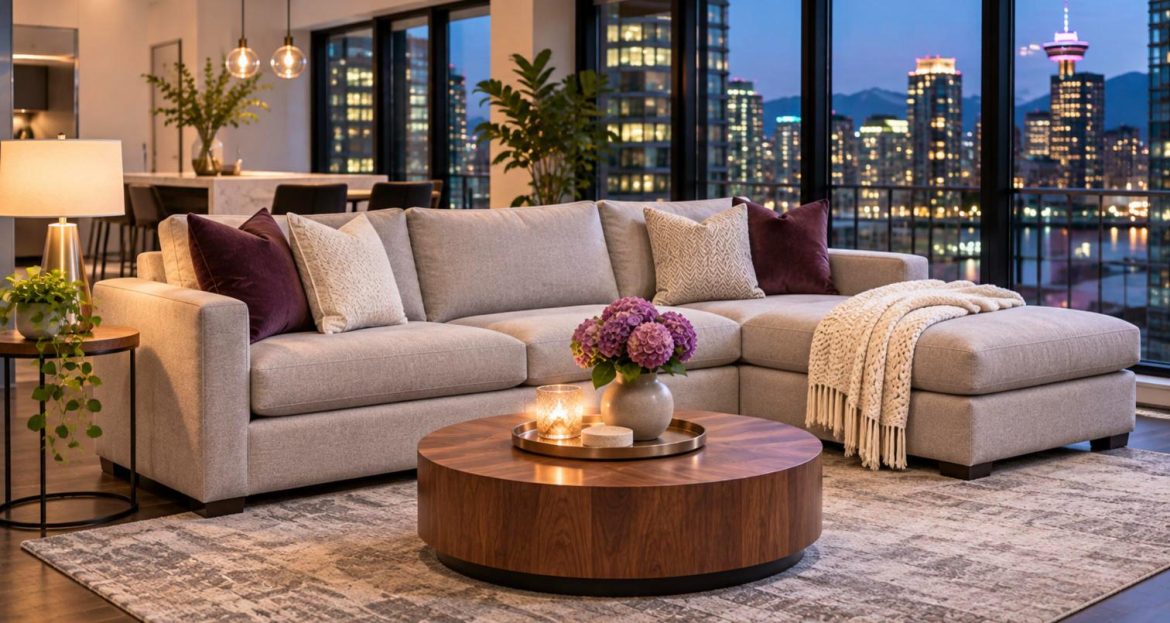
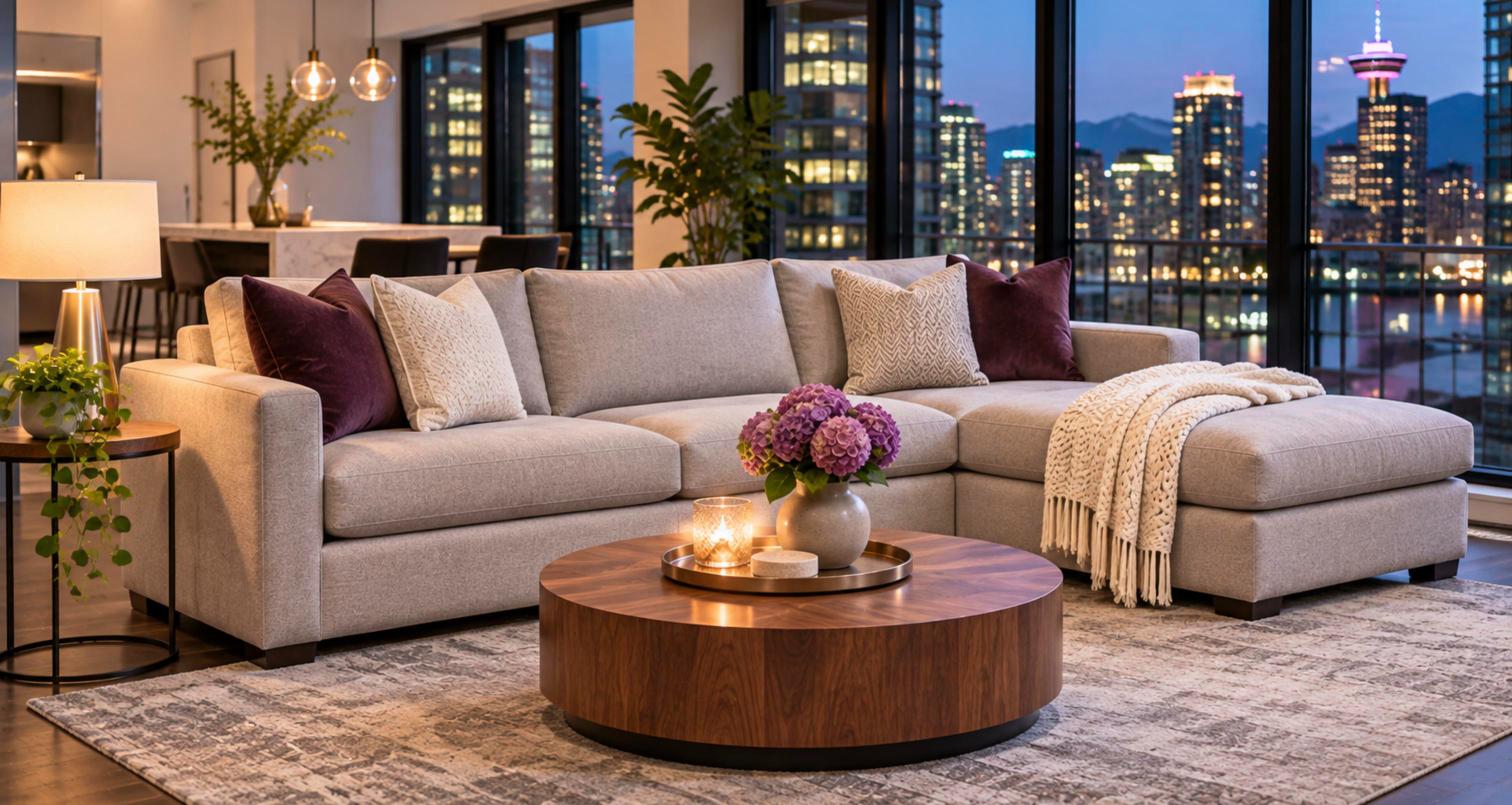
- Chaise sectional: a sofa with an extended chaise on one end, as in the photo.
- U-shaped: three sides of seating, ideal for large family rooms.
- Curved: a sweeping arc that encourages conversation.
- Modular: individual units (armless chairs, corners, ottomans) that can be rearranged or expanded.
- Sleeper sectional: includes a pull-out bed (see sofa bed).
- Reclining sectional: with power or manual recliners (see recliner).
Left-facing vs. right-facing
Sectional pieces are labelled LAF (left-arm facing) or RAF (right-arm facing). The direction is determined while facing the sofa, not sitting on it. An RAF chaise sectional has the chaise on your right as you look at it. Getting this wrong is one of the most common sectional ordering mistakes, so sketch your room and confirm before you buy.
Sizing a sectional
- Measure the room and mark the sectional’s footprint on the floor with painter’s tape.
- Leave 30 to 36 inches (76–91 cm) for walkways and 16 to 18 inches (41–46 cm) to the coffee table.
- Keep it off windows and radiators where possible.
- Measure doors, hallways, stairwells and elevators. Sectional pieces usually travel separately, which helps in condos.
- Check seat depth: 21–22 inches (53–56 cm) for upright sitting, 24 inches (61 cm) or more for lounging.
Modular vs. fixed sectionals
A fixed sectional is sold as a set configuration. A modular sectional lets you add, remove and rearrange pieces, which is valuable if you move often, an increasingly common situation in Vancouver’s rental market. Modular pieces are also easier to deliver and can be split into separate seating later.
Fabric and construction
Sectionals see heavy use, so choose durable upholstery such as performance fabric or top-grain leather. Removable, washable covers or slipcovers help with pets and children. Look for kiln-dried hardwood frames, sinuous or coil springs and high-density foam cushions, and check how sections connect so they do not drift apart.
Sectionals in condos
Compact “apartment-size” sectionals around 80 to 95 inches (203–241 cm) wide suit most Vancouver condos. Low backs and slim arms keep the view open toward the windows, while a chaise can replace a separate ottoman. Pick a modular design if you may move to a different floor plan.
Related terms
Frequently asked questions
What is a sectional sofa?
A sofa made of two or more joined pieces, usually forming an L-shape, U-shape or a sofa with a chaise.
What does RAF and LAF mean?
Right-arm facing and left-arm facing, determined while facing the sofa.
Is a sectional good for a small space?
A compact apartment-size or chaise sectional can work well and often seats more than a sofa and chair.
What is a modular sectional?
A sectional made of individual units that can be rearranged, added to or separated.
Part of the Vancouver Furniture glossary of furniture, design and mattress terms. Browse furniture stores across Metro Vancouver or our mattress store guide.