Transitional Interior Style: Definition, Key Elements & How to Mix Old and New
Transitional design became widely popular in North America from the late 20th century as homeowners looked for a middle ground: the warmth of traditional rooms without heavy ornament, and the freshness of modern design without feeling cold. Today it is one of the most common styles in furniture stores and new homes, because it is versatile, timeless and easy to live with.
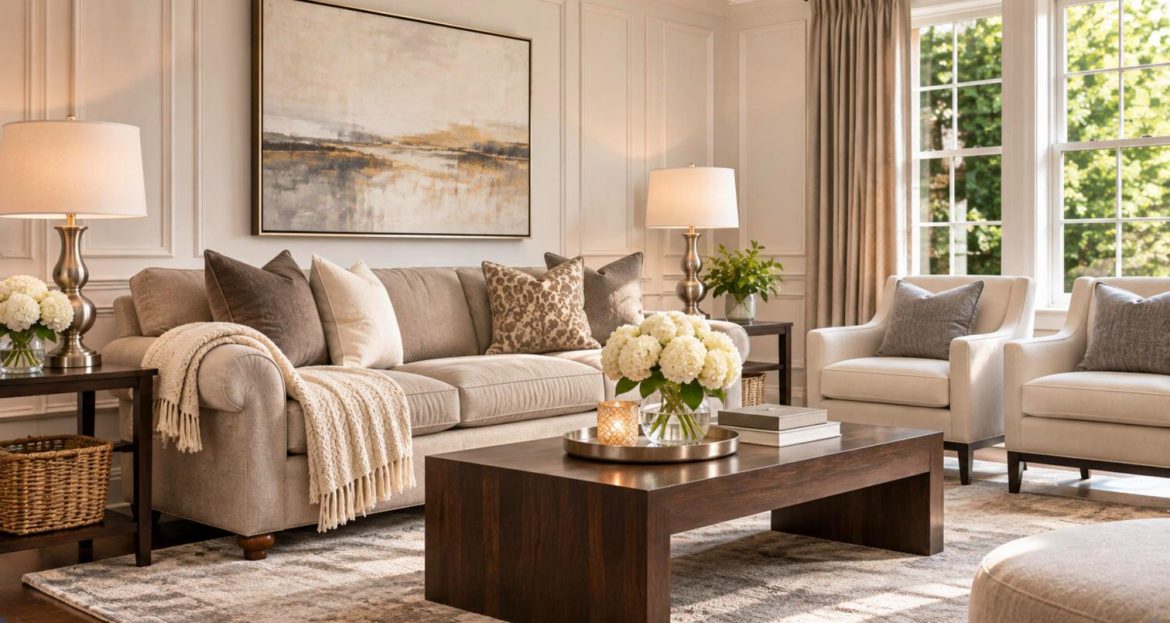
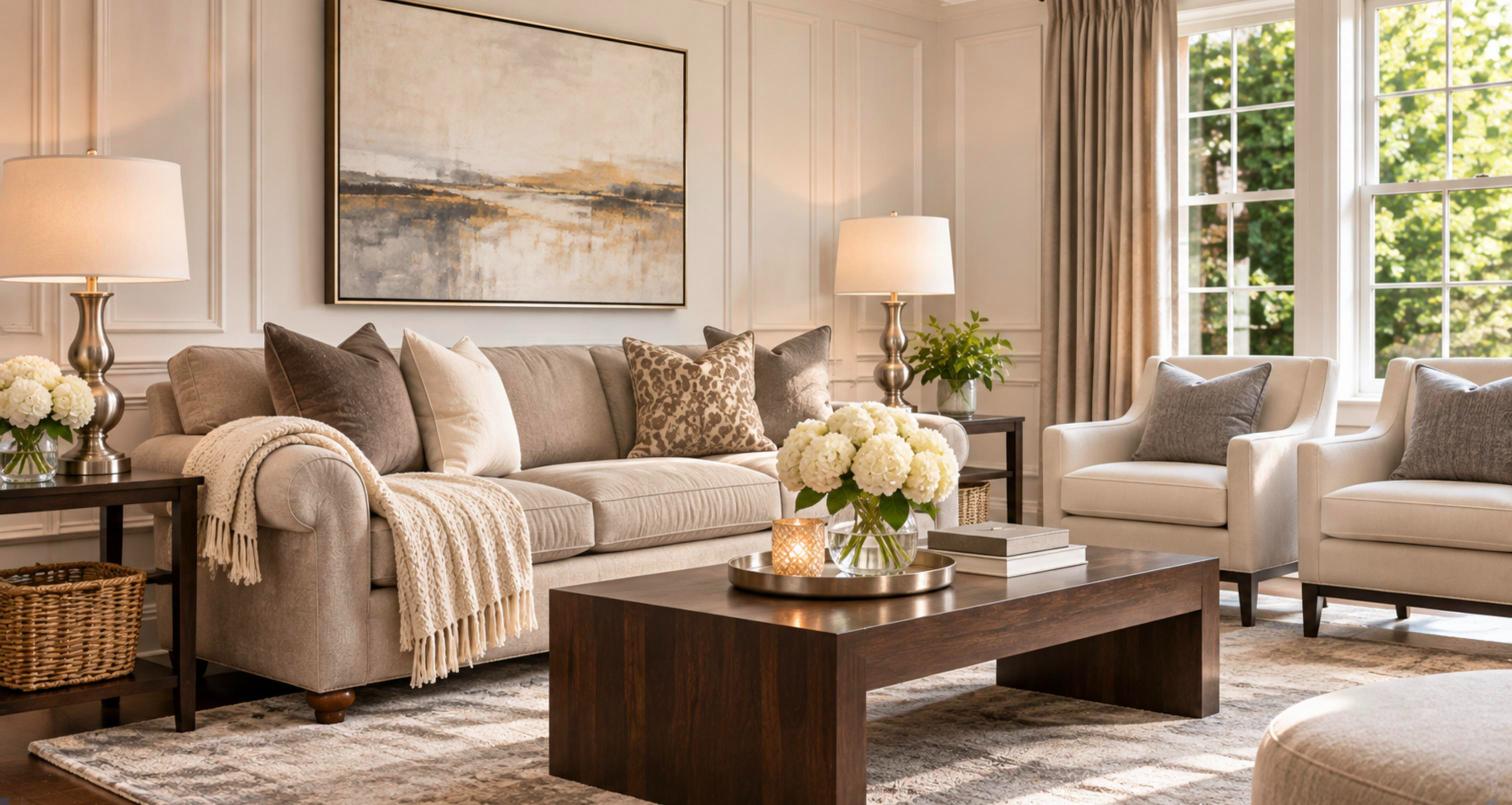
The room in the photo shows the balance: a rolled-arm sofa on turned feet (traditional), sleek track-arm chairs and a simple block coffee table (modern), classic wall panel moulding, and an abstract landscape painting. The neutral greige, cream and brown palette ties it together.
Key elements
- Neutral palette: greige, taupe, cream and grey, with colour in small doses.
- Mixed silhouettes: curved, classic furniture alongside straight, simple lines.
- Layered textures: linen, wool, leather, wood, metal and glass instead of busy patterns.
- Restrained ornament: classic mouldings but little carving or fussy detail.
- Balanced, symmetrical arrangements such as matching lamps or chairs.
- Mixed metals: brushed nickel, brass or iron.
Transitional furniture
- Rolled-arm or track-arm sofas in neutral fabrics.
- Upholstered dining chairs with simple legs.
- Wood tables with clean, chunky forms or subtle tapers.
- Pieces with understated traditional details, such as simplified cabriole legs or turned feet.
- Shaker-style cabinetry (see Shaker style).
- Glass, metal and stone accent tables.
Transitional vs. traditional vs. contemporary
- Traditional: ornate furniture, rich colours, patterns and formal arrangements.
- Contemporary: current trends, bold forms and minimal detail.
- Transitional: sits in between; classic comfort with modern simplicity.
- Modern farmhouse and modern French are cousins that add rustic elements to a transitional base.
How to create a transitional room
- Start with a neutral base for walls, large furniture and rugs.
- Choose one or two classic shapes and pair them with modern pieces.
- Layer texture through throws, cushions, rugs and natural materials.
- Keep accessories edited and purposeful.
- Add contemporary art to a traditional room, or classic mirrors to a modern one.
- Use warm, layered lighting: table lamps, sconces and a statement fixture.
Why it suits Metro Vancouver homes
Transitional design works across Vancouver Specials, heritage homes and new condos. It adapts to mixed architecture, ages well, and allows homeowners to combine inherited or vintage pieces with new furniture. Neutral palettes also help rooms stay bright during grey winters.
Related terms
Frequently asked questions
What is transitional style?
A blend of traditional and contemporary design with a neutral palette and layered textures.
What colours are used in transitional design?
Neutrals such as greige, taupe, cream and warm grey, with colour used sparingly.
What is the difference between transitional and contemporary?
Contemporary follows current trends with minimal detail; transitional mixes in classic shapes and comfort.
Can I mix antiques in a transitional room?
Yes, mixing classic or vintage pieces with modern furniture is central to the style.
Part of the Vancouver Furniture glossary of furniture, design and mattress terms. Browse furniture stores across Metro Vancouver or our mattress store guide.