Cabriole Leg: Definition, History, Foot Styles & How to Identify It
The name comes from the French cabriole, a leaping dance step, because the leg resembles the bent leg of a leaping animal. Curved animal-inspired legs appeared in ancient Greek, Roman and Chinese furniture, and Chinese influence through trade helped bring the form to Europe. The cabriole leg became fashionable in the late 17th and early 18th centuries in Dutch and English furniture, reaching its height in the Queen Anne, Georgian, Chippendale and French Louis XV styles.
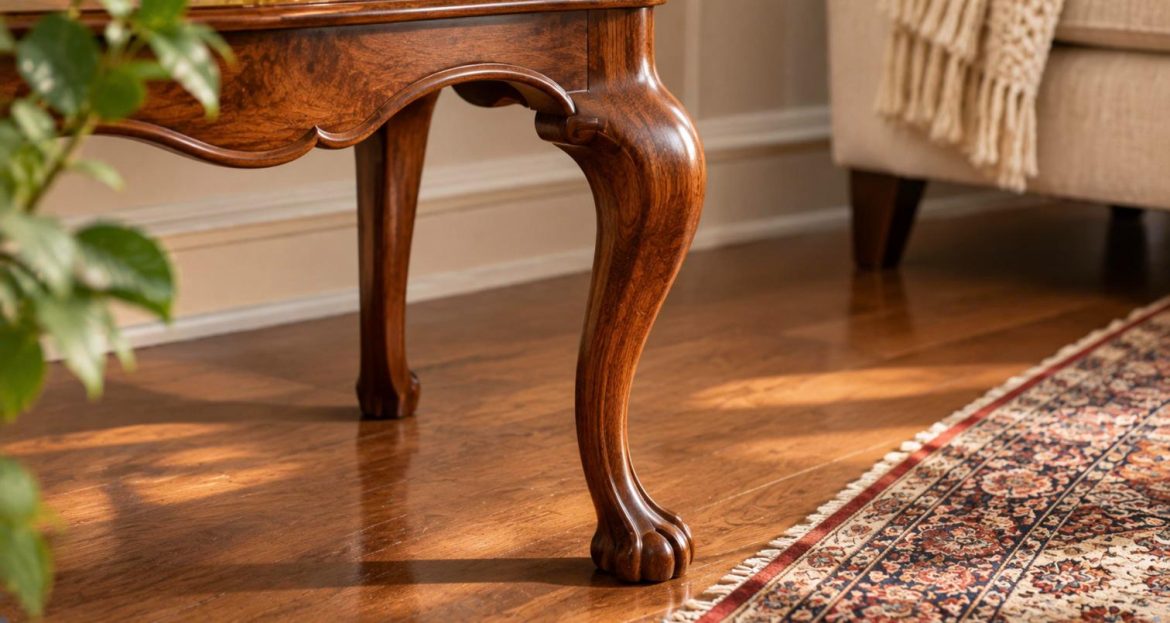
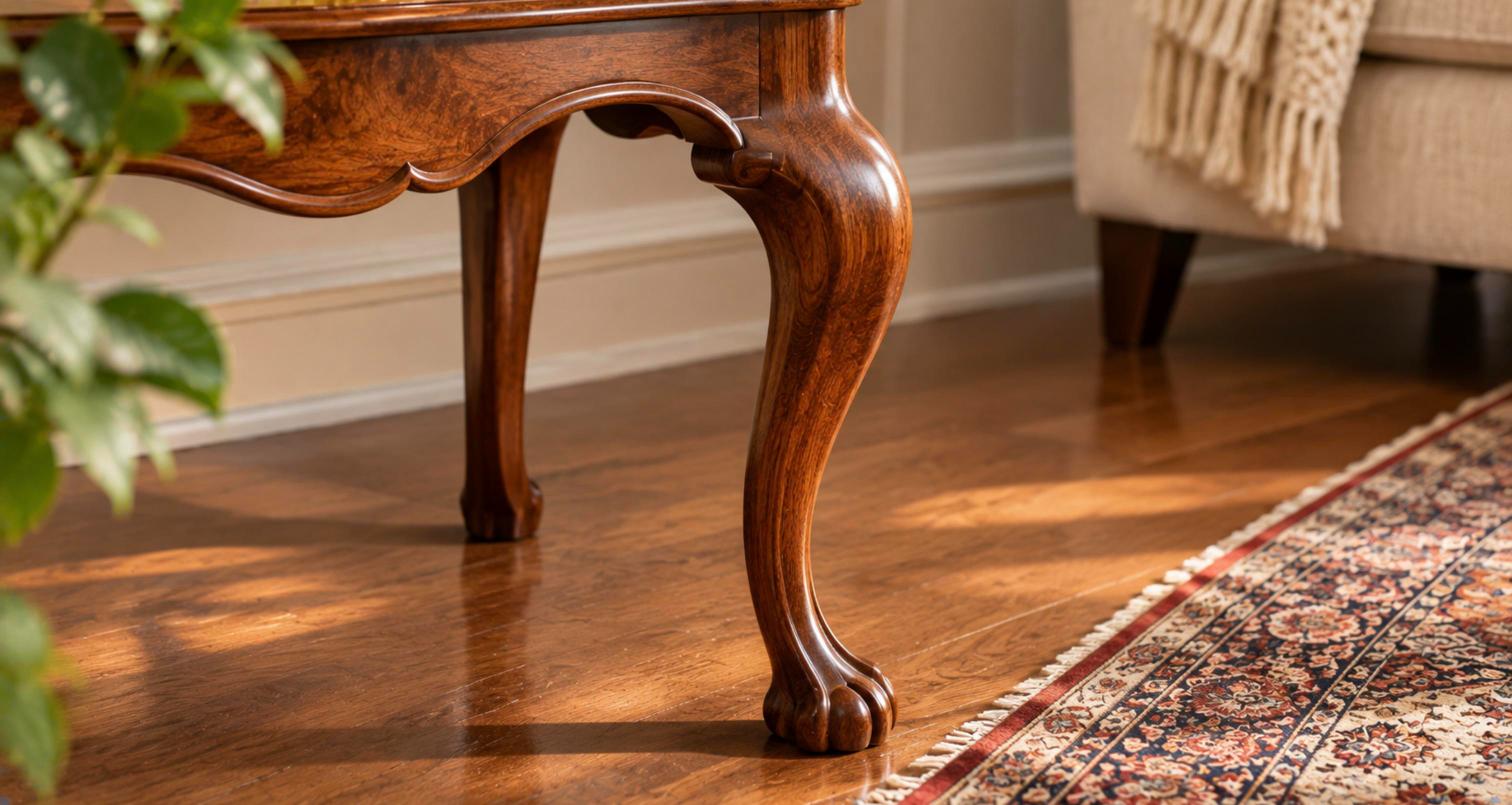
The leg in the photo shows the classic profile: a full, rounded knee joined to a shaped apron, a slender ankle and a carved foot. That combination of grace and strength is why the cabriole leg remains popular in traditional and transitional furniture today.
Anatomy of a cabriole leg
- Knee: the upper, outward curve, sometimes carved with shells, acanthus leaves or scrolls.
- Knee blocks or brackets: small shaped pieces connecting the knee to the apron.
- Ankle: the narrow, inward curve.
- Foot: the decorative end that rests on the floor.
Foot styles
- Pad or club foot: a simple rounded foot, common on Queen Anne furniture.
- Ball-and-claw foot: a carved bird’s or dragon’s claw gripping a ball, typical of Chippendale furniture.
- Scroll foot: a curling scroll, typical of French Louis XV pieces.
- Hoof foot: shaped like an animal’s hoof, on early examples.
- Slipper or trifid foot: elongated or three-lobed variations.
- Paw foot: carved like an animal paw.
Cabriole legs by style
- Queen Anne (c. 1700–1755): graceful, restrained curves with pad feet.
- Chippendale (c. 1750–1790): more robust, often with carved knees and ball-and-claw feet.
- Louis XV: slender, flowing curves, often with scroll feet and gilding.
- French country: simpler, painted or rustic versions.
- Modern interpretations: streamlined cabriole legs without carving, used in transitional furniture.
How cabriole legs are made
A cabriole leg is typically cut from a single thick block of wood. The maker draws the profile on two adjacent faces, cuts one profile with a band saw, tapes the waste back on, then cuts the second profile. The leg is then shaped and rounded with spokeshaves, rasps and files, and the foot is carved. Because of the work and wood involved, a hand-made cabriole leg signals quality craftsmanship.
Identifying and buying
- Look for a smooth, continuous S-curve that flows into the apron.
- Check knee blocks and joinery for tightness.
- On antiques, hand-carved feet show slight irregularities; machine-made ones are uniform.
- Ensure the legs are not loose, since the curve puts stress on the joint.
- Match the foot style to the period if you are collecting.
Related terms
Frequently asked questions
What is a cabriole leg?
An S-shaped furniture leg with an outward-curving knee and inward-curving ankle.
Why is it called cabriole?
From the French word for a leaping dance step, which the leg resembles.
What styles use cabriole legs?
Queen Anne, Chippendale, Louis XV and French country furniture.
What is a ball-and-claw foot?
A carved claw gripping a ball, typical of Chippendale cabriole legs.
Part of the Vancouver Furniture glossary of furniture, design and mattress terms. Browse furniture stores across Metro Vancouver or our mattress store guide.