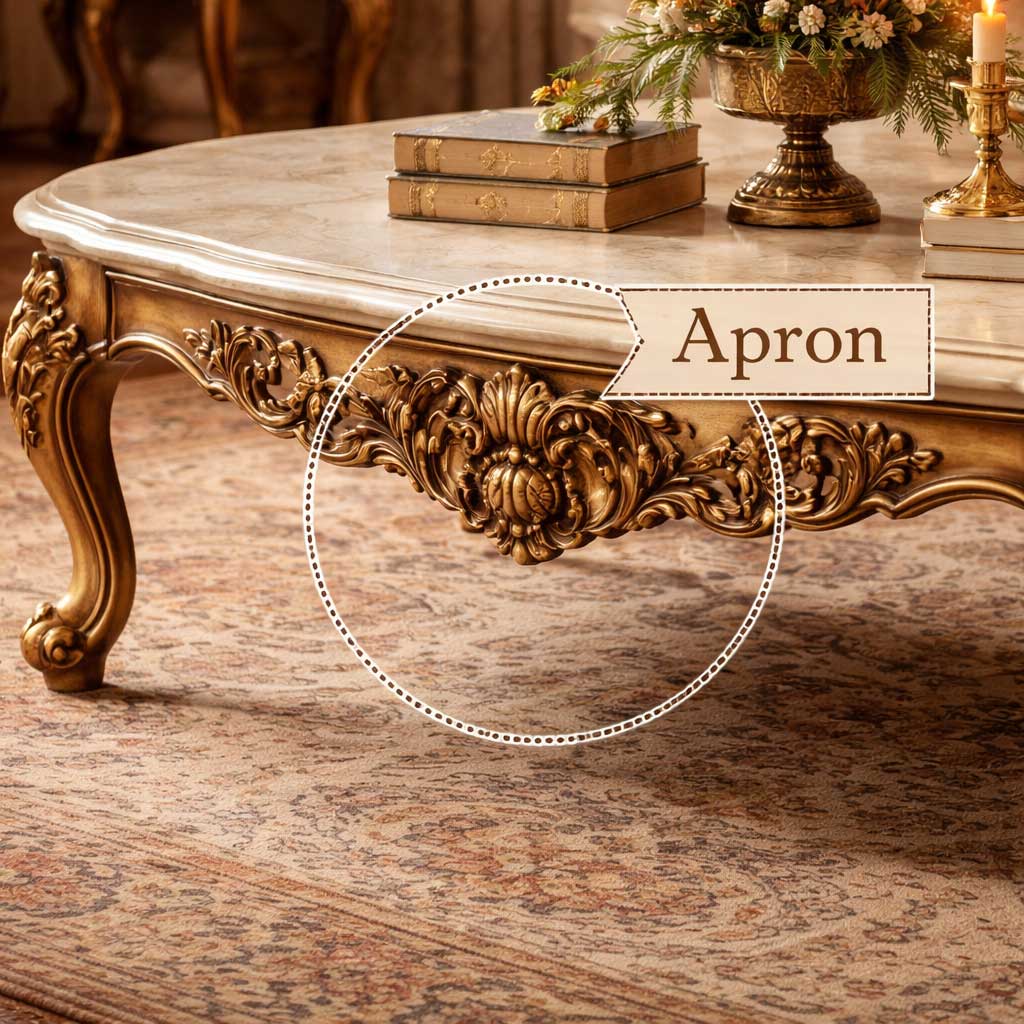
An apron (furniture) is a horizontal structural element located beneath the top surface of a table, desk, or chair, connecting the legs and providing support and stability. It is typically positioned just below the tabletop or seat and runs along the perimeter between the legs. In addition to its structural role, the apron may also serve a decorative function depending on the design.
Aprons are commonly found in tables, desks, and some seating furniture, where they help reinforce the frame and prevent movement or warping. In traditional and modern furniture design, aprons contribute to both durability and visual structure.
Definition
In furniture construction, an apron refers to a horizontal support panel or frame that connects the legs of a piece of furniture just below its top or seat.
An apron typically:
- provides structural reinforcement
- connects and stabilizes the legs
- supports the tabletop or seating surface
- may include decorative detailing
It is an integral component in many types of wood furniture.
Etymology
The term “apron” originates from clothing terminology, referring to a protective garment worn over the front of the body. In furniture, the term was adopted to describe the panel that “covers” or runs along the front and sides beneath a surface.
The name reflects its position and function as a supporting and enclosing element beneath the top of a furniture piece.
Design Characteristics
Aprons vary in design depending on the type of furniture and style.
Structural Support
The primary function of an apron is to reinforce the furniture structure by connecting the legs and distributing weight evenly.
Horizontal Placement
Aprons are typically located:
- directly beneath tabletops
- under chair or bench seats
- around the perimeter between legs
This placement helps stabilize the overall frame.
Decorative Variation
In some furniture styles, aprons are designed with decorative elements such as:
- carved patterns
- curved or scalloped edges
- moldings or inlays
These details are often found in traditional or classical furniture.
Thickness and Depth
Aprons can vary in thickness and depth depending on the design. Larger or heavier furniture pieces often feature deeper aprons for additional strength.
Use in Furniture Design
Aprons are commonly used in various types of furniture to improve durability and structure.
They are typically found in:
- dining tables
- coffee tables
- desks
- benches
- chairs
In modern furniture, aprons may be minimized or hidden to create a cleaner, more minimalist appearance.
Materials and Construction
Aprons are usually constructed from the same materials as the furniture frame.
Common materials include:
- solid wood
- engineered wood
- metal (in modern designs)
They are often joined to the legs using traditional joinery methods such as mortise and tenon or dowel joints.
Apron in Interior Design
While primarily structural, the apron can also influence the visual style of furniture. Decorative aprons are often used to:
- enhance traditional or classical aesthetics
- add detail and craftsmanship
- create visual balance between the top and legs
In minimalist and contemporary designs, aprons are often simplified or omitted for a cleaner look.
Related Terms
Several furniture construction terms are related to aprons:
- table frame
- skirt (furniture)
- leg support
- joinery
- stretcher
See Also: Furniture Glossary
Table Frame
Wood Joinery
Dining Table
Coffee Table
Furniture Construction