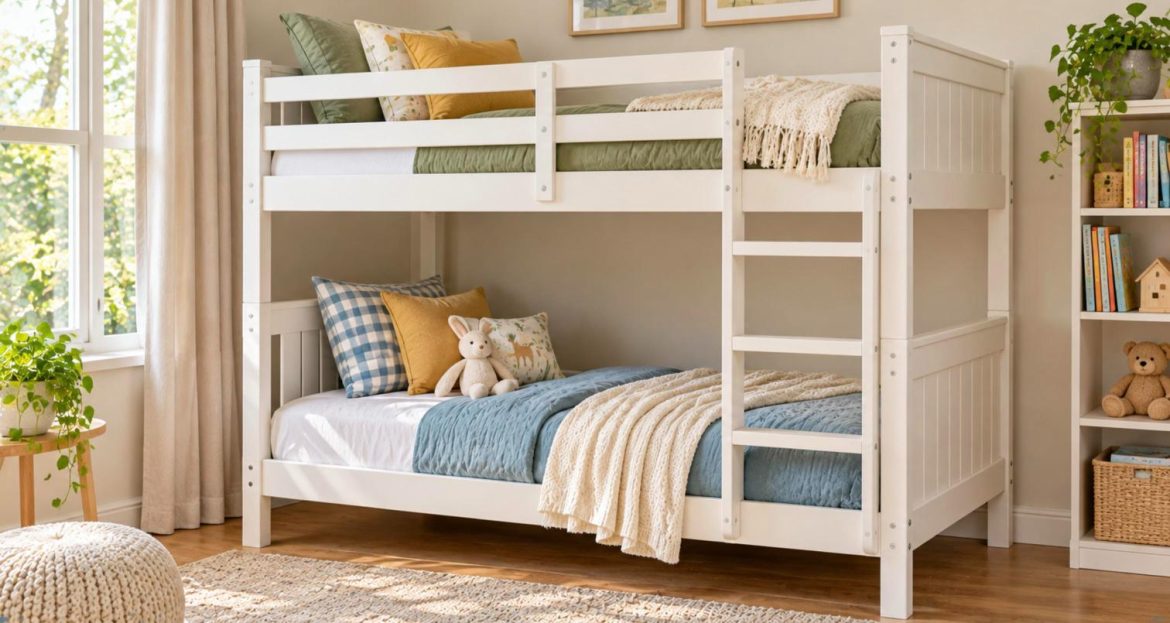
Bunk Bed Guide: Types, Safety Rules, Sizes & Ceiling Height
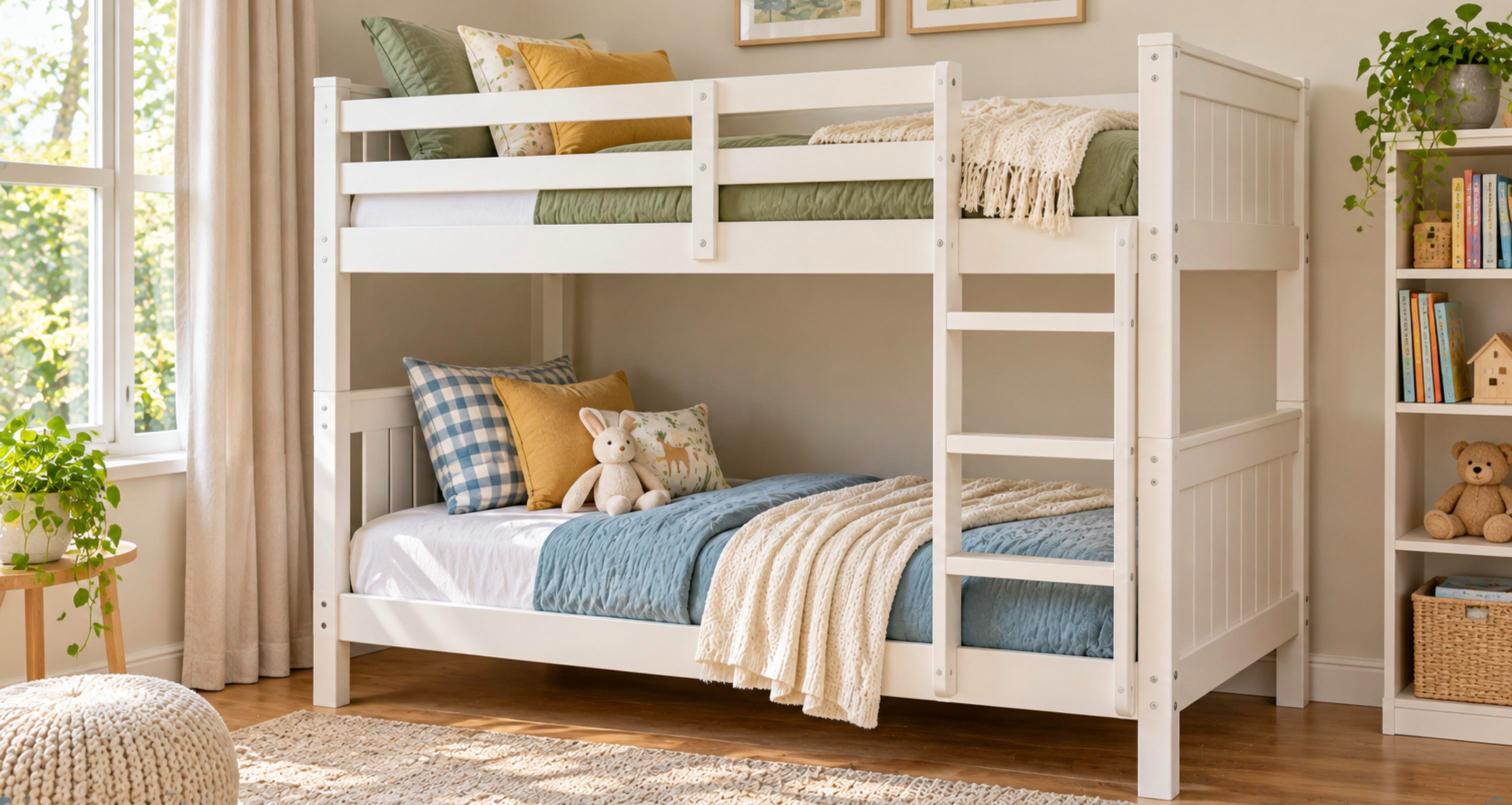
Bunk beds have long been used where space is tight, on ships, in military barracks, dormitories and cabins, and they remain a favourite for children’s rooms, cottages and guest rooms. In Metro Vancouver homes, where siblings often share bedrooms, a bunk bed can free up valuable floor space for play, study or storage. Because the top bunk is elevated, safety and quality matter more than with any other bed.
Types of bunk beds
- Twin over twin: the most common and compact.
- Twin over full: a larger lower bunk for an older child or adult.
- Full over full: for larger kids, teens or guests.
- Loft bed: one elevated bed with a desk, play area or storage below.
- L-shaped: the lower bunk sits perpendicular, creating space beneath.
- Triple bunk: three sleepers, in stacked or L-shaped layouts.
- Trundle and storage bunks: add a pull-out bed or drawers.
- Convertible: separates into two single beds as children grow.
Bunk bed safety
- Follow age guidance: Health Canada advises that children under six should not sleep on the top bunk.
- Use guardrails on both sides of the top bunk, including the wall side.
- Use a mattress of the size and thickness the manufacturer specifies so guardrails remain high enough above the mattress surface.
- Secure the ladder and check it regularly.
- Place away from ceiling fans, windows and light fixtures.
- Do not let children play or jump on the top bunk, or hang belts, cords or scarves from the bed.
- Tighten bolts periodically and register the product for recalls.
Bunk beds sold in Canada must meet federal safety requirements; look for products that state compliance with Canadian regulations.
Ceiling height and room size
Most standard bunk beds are around 60 to 70 inches (152–178 cm) tall. Allow at least about 30 to 36 inches (76–91 cm) between the top mattress and the ceiling so the child can sit up, which typically requires a ceiling of about 8 feet (2.4 m). Low-profile bunks are available for basement suites and rooms with lower ceilings.
Choosing a bunk bed
- Material: solid wood is sturdy and quiet; metal frames are lighter and more affordable.
- Ladder or stairs: stairs are easier for younger climbers and often include storage.
- Weight limits: check limits for each bunk, especially if adults will use them.
- Convertibility: beds that separate into two singles offer long-term value.
Mattresses for bunk beds
Top bunks typically require low-profile mattresses, often 6 to 8 inches (15–20 cm) thick, to keep guardrails effective. Foam mattresses are lighter and easier to make up on a top bunk. Use a mattress that fits the frame snugly with no gaps at the edges.
Related terms
Frequently asked questions
What age is safe for a top bunk?
Health Canada advises children under six should not sleep on the top bunk.
How high should the ceiling be for a bunk bed?
Generally about 8 feet, leaving around 30 to 36 inches above the top mattress.
How thick should a top bunk mattress be?
Usually 6 to 8 inches, or as specified by the manufacturer, so guardrails stay effective.
What is the difference between a bunk bed and a loft bed?
A bunk bed has two beds stacked; a loft bed has one elevated bed with open space below.
Part of the Vancouver Furniture glossary of furniture, design and mattress terms. Browse furniture stores across Metro Vancouver or our mattress store guide.