Memory Foam: What It Is, How It Works, Types, Pros & Cons
Memory foam was developed in the 1960s under a NASA-funded research program to improve the safety of aircraft seat cushions. Its ability to absorb impact and distribute pressure later found uses in medical products and, from the 1990s, in mattresses and pillows. Today memory foam is one of the most common materials in mattresses, mattress toppers, sofa cushions and pillows, used either as an all-foam mattress or as comfort layers in a hybrid mattress.
How memory foam works
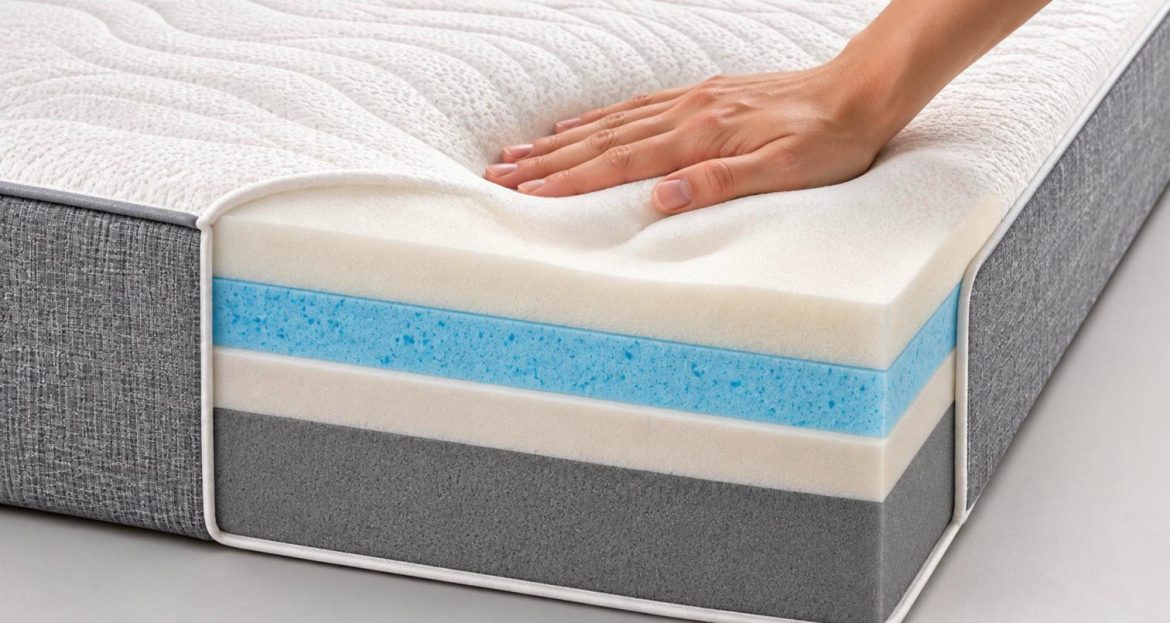
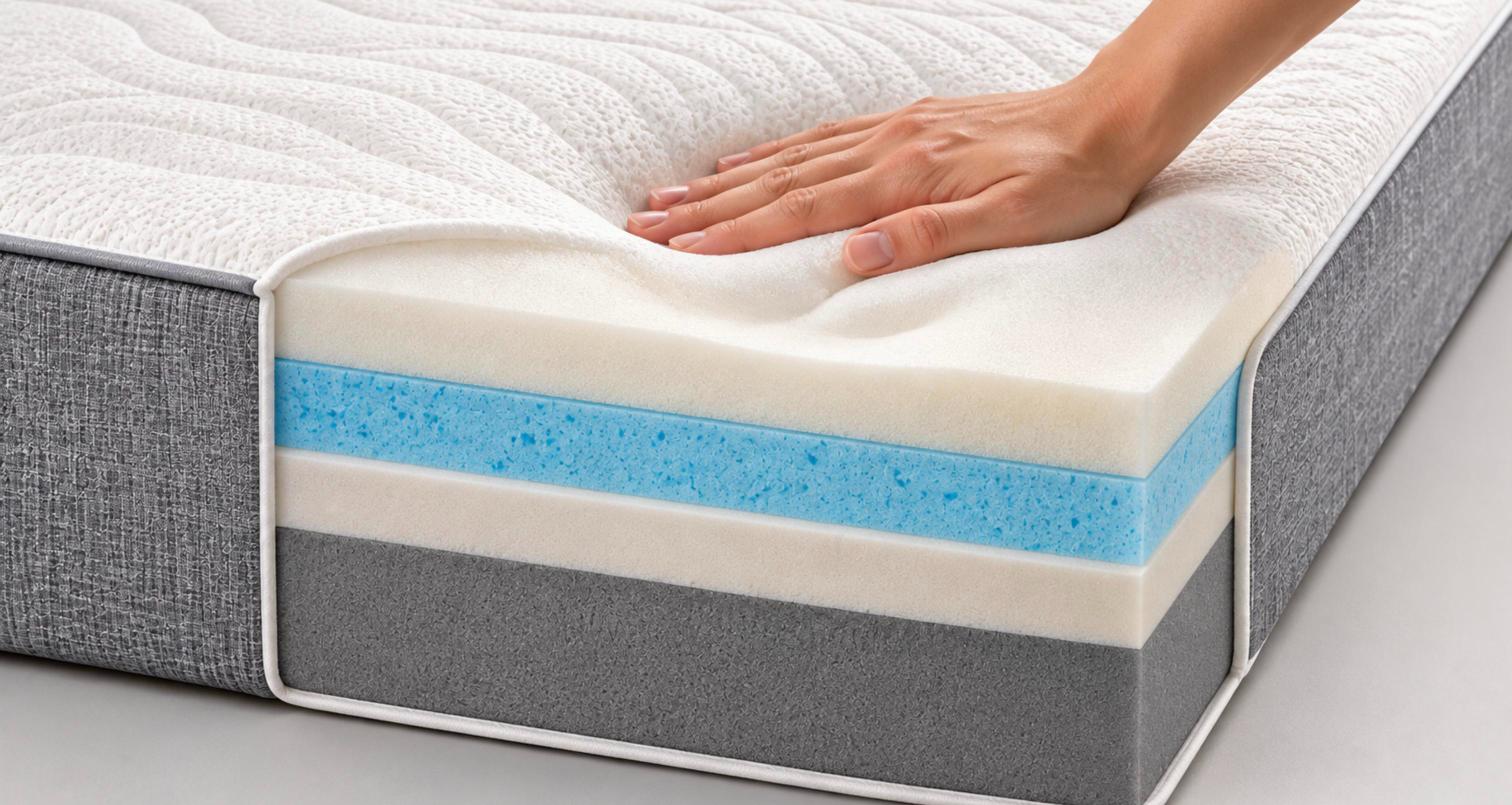
Memory foam is viscoelastic: it is both viscous (it flows slowly) and elastic (it returns to shape). Body heat and weight soften the foam where you press, letting it contour closely to shoulders, hips and the curve of the spine. This spreads your weight over a larger area and reduces pressure points. It also absorbs motion, so a partner moving on the other side is less likely to disturb you.
Types of memory foam
- Traditional memory foam: the original formula; dense and contouring but prone to retaining heat.
- Open-cell memory foam: a more open internal structure that improves airflow.
- Gel-infused memory foam: gel beads or swirls added to draw heat away, as in the blue layer in the photo.
- Copper, graphite or charcoal-infused foam: additives marketed for cooling or odour control.
- Plant-based memory foam: part of the petroleum content replaced with plant oils.
Density and firmness
Density (weight per cubic foot) indicates durability, not firmness. Low-density foam (under 3 lb/ft³) is cheaper and softer but wears faster; medium density (3–5 lb/ft³) balances comfort and durability; high density (5+ lb/ft³) is the most durable and contouring but can sleep warmer. Firmness is measured separately, often as ILD (indentation load deflection).
Pros and cons
Pros: excellent pressure relief, strong motion isolation, quiet, no springs to wear out, good for side sleepers and couples. Cons: can retain heat, slow response can feel “stuck” when changing positions, heavy, may have an initial odour (off-gassing), and low-density foams can develop body impressions.
Off-gassing and certifications
New foam may release a chemical smell for a few days to weeks as volatile organic compounds (VOCs) dissipate. Air out new foam in a ventilated room. Look for third-party certifications such as CertiPUR-US, which tests foams for certain chemicals and emissions limits.
Choosing a memory foam mattress
- Pick firmness by sleeping position: side sleepers usually prefer medium-soft; back and stomach sleepers medium-firm.
- Choose medium- or high-density foam for longevity.
- If you sleep hot, look for gel, open-cell or hybrid designs.
- Check the trial period and warranty.
- Use a supportive base: a platform bed or slatted bed frame with narrow gaps; a traditional box spring is usually not recommended.
Related terms
Frequently asked questions
What is memory foam?
Viscoelastic polyurethane foam that softens with heat and pressure and contours to the body.
Does memory foam sleep hot?
Traditional memory foam can retain heat; gel-infused, open-cell and hybrid designs sleep cooler.
How long does a memory foam mattress last?
Typically 7 to 10 years, longer with higher-density foams.
Is memory foam good for back pain?
Many people find its pressure relief and support helpful, but the right firmness for your body and sleeping position matters most.
Can you put a memory foam mattress on a box spring?
Usually not recommended; use a solid or closely slatted base.
Part of the Vancouver Furniture glossary of furniture, design and mattress terms. Browse furniture stores across Metro Vancouver or our mattress store guide.