Latex Mattress: Natural vs. Synthetic, Dunlop vs. Talalay, Pros & Cons
Latex foam was developed in the early 20th century, and latex mattresses have been made since the 1930s. Natural latex comes from the milky sap of Hevea brasiliensis rubber trees, which is tapped, whipped into a froth, moulded and cured. Latex has become popular with people looking for natural materials and with those who find memory foam too slow or warm. It is used in all-latex mattresses and as a comfort layer in hybrids.
Natural, synthetic and blended latex
- Natural latex: made mainly from rubber tree sap; durable, breathable and popular with eco-conscious shoppers. Certifications such as GOLS (Global Organic Latex Standard) indicate organic natural latex.
- Synthetic latex: made from petroleum-based styrene-butadiene rubber; cheaper but less durable and less resilient.
- Blended latex: a mix of natural and synthetic, balancing cost and performance.
Dunlop vs. Talalay
Dunlop latex is poured into a mould and baked in one step, making it denser and firmer at the bottom; it is often used for support layers. Talalay adds vacuum-sealing and flash-freezing steps, producing a more uniform, lighter and softer foam; it is often used in comfort layers. Both can be natural or blended.
How latex feels
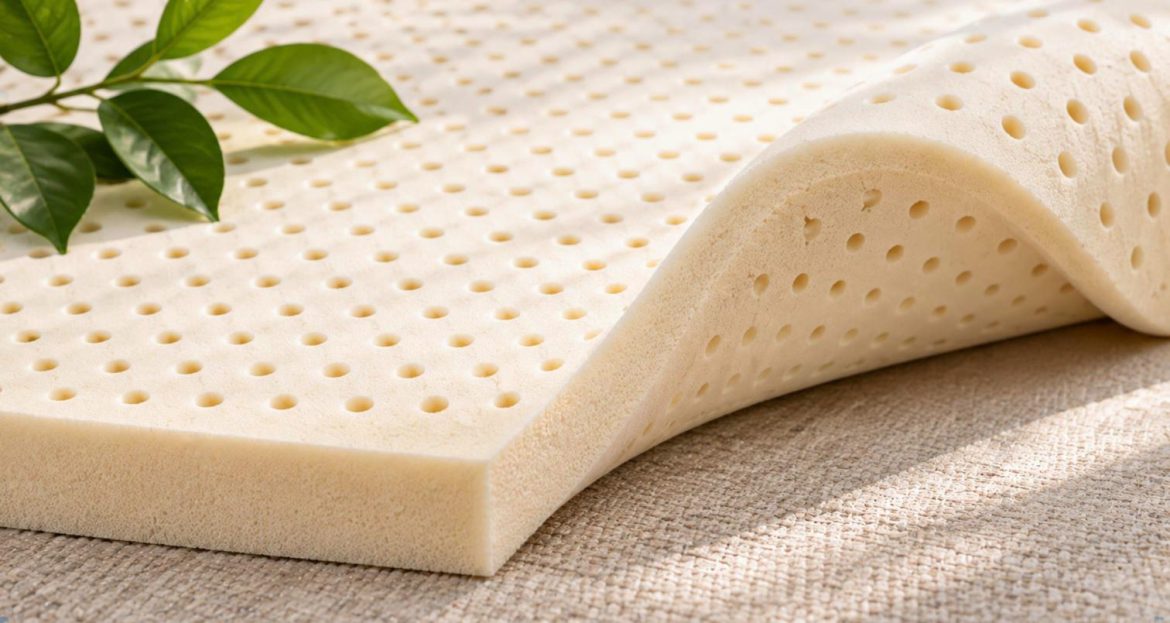
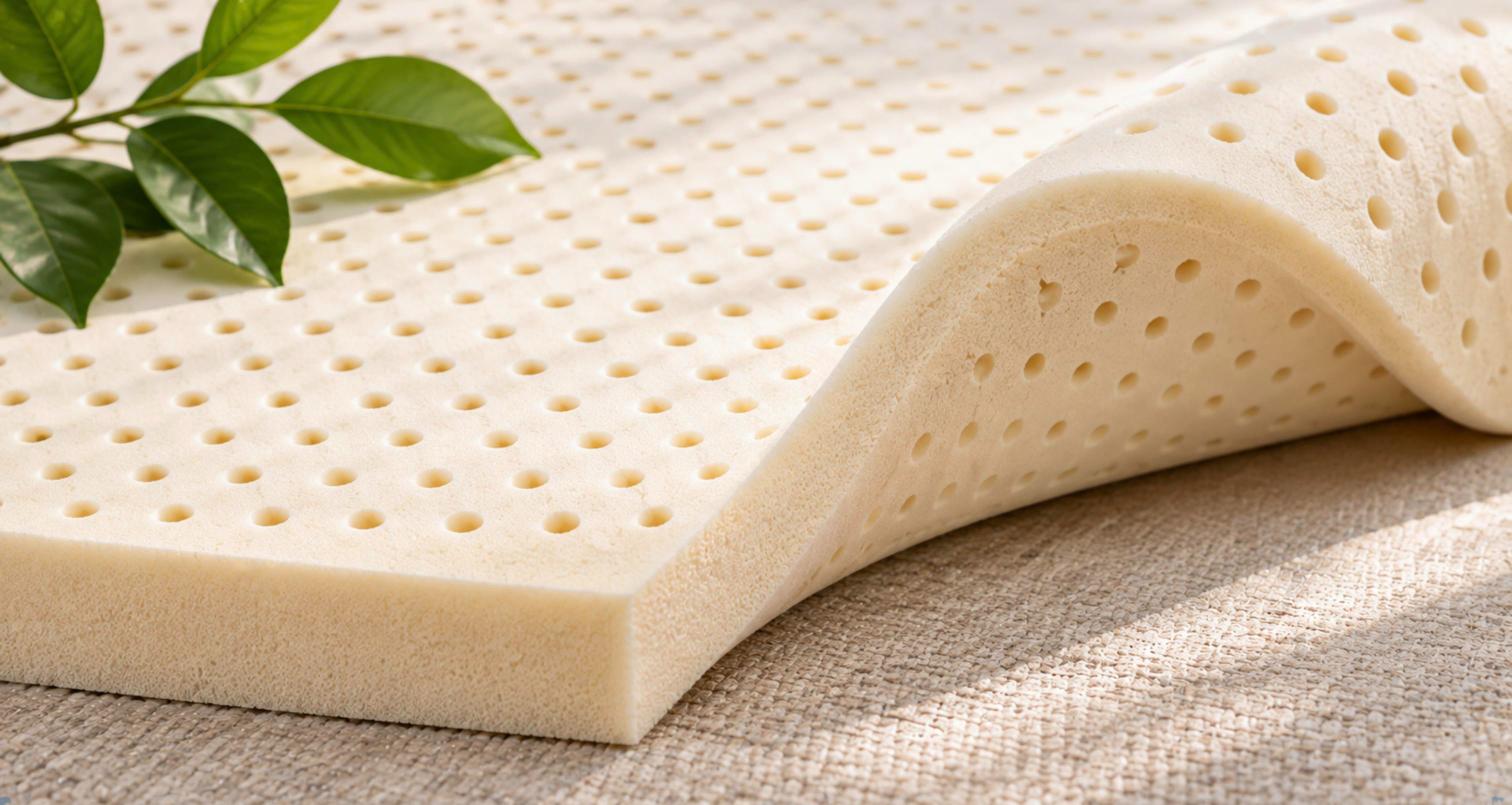
Latex contours to the body like foam, but pushes back quickly, so you feel lifted “on” rather than sunk “in” the mattress. It is easy to change positions on, and the open-cell structure and pinholes, as in the photo, help it sleep cooler than traditional memory foam.
Pros and cons
Pros: very durable, responsive, good pressure relief, sleeps relatively cool, natural options available, quiet. Cons: expensive, heavy, can feel too bouncy for people who like a deep hug, and natural latex is unsuitable for people with latex allergies; ask the manufacturer about allergy considerations.
Choosing a latex mattress
- Decide between all-latex and latex hybrid.
- Check whether it is natural, blended or synthetic.
- Look for certifications for organic or low-emission materials.
- Pick firmness by sleep position; many latex mattresses allow swapping layers.
- Use a supportive base such as a platform bed with closely spaced slats.
Related terms
Frequently asked questions
What is a latex mattress?
A mattress made with latex foam from rubber tree sap, synthetic rubber or a blend.
What is the difference between Dunlop and Talalay latex?
Dunlop is denser and firmer; Talalay is lighter, more uniform and usually softer.
Is latex better than memory foam?
Latex is bouncier, cooler and more durable; memory foam offers a deeper hug and more motion isolation.
How long does a latex mattress last?
Often 10 to 15 years or more for natural latex.
Part of the Vancouver Furniture glossary of furniture, design and mattress terms. Browse furniture stores across Metro Vancouver or our mattress store guide.