Minimalist Interior Design: Principles, Furniture & How to Live With Less
Minimalist design draws on several influences: traditional Japanese architecture and Zen aesthetics, the early 20th-century modernist idea that “less is more”, often attributed to architect Ludwig Mies van der Rohe, and the minimalist art movement of the 1960s. Since the 2010s, the lifestyle side of minimalism, owning fewer things, has also shaped how people furnish their homes.
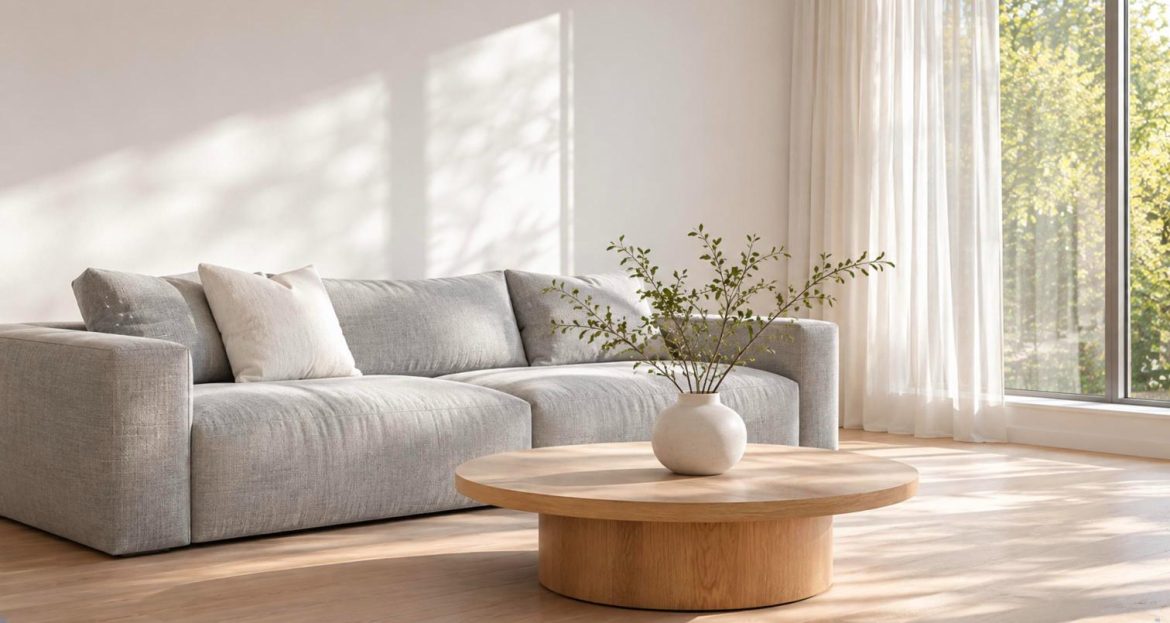
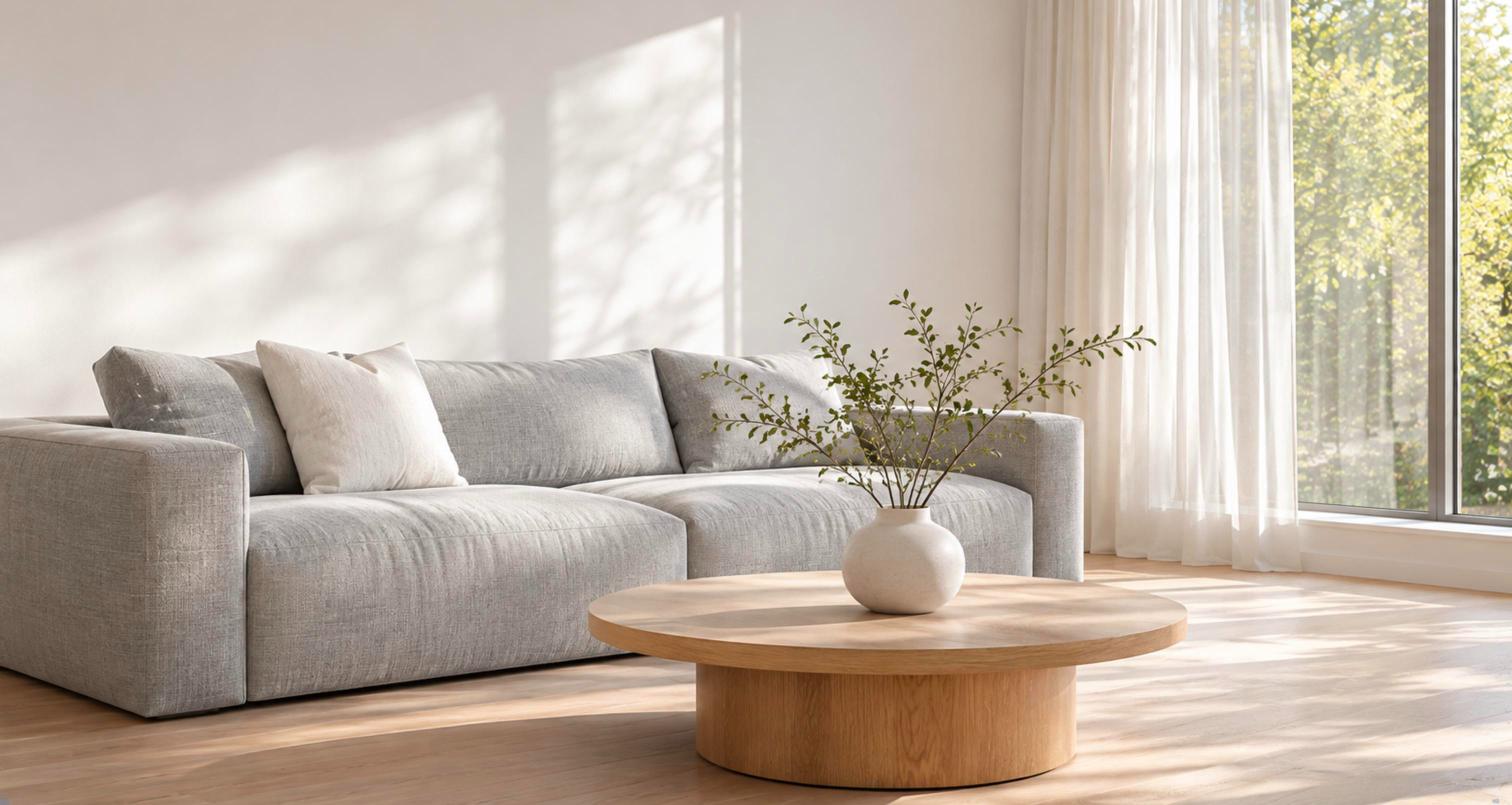
The room in the photo shows the essentials: white walls, a low, clean-lined sofa, a single round oak coffee table with one vase of branches, a bare floor and a wall of natural light. Nothing competes for attention, so the room feels calm and spacious.
Core principles
- Function first: every piece should earn its place.
- Clean lines and simple forms: little ornament or carving.
- Restrained palette: neutrals, with colour used sparingly.
- Negative space: empty walls and floor are part of the design.
- Quality over quantity: fewer pieces of better craftsmanship.
- Light: maximise natural light with sheer or minimal window treatments.
- Concealed storage: clutter is put away, not displayed.
Minimalist furniture
- Low-profile sofas with slim arms or none.
- Platform beds with integrated storage.
- Flat-front cabinets and handle-less doors.
- Simple dining tables in solid wood or stone.
- Multi-functional pieces, such as storage benches and extendable tables.
- Furniture with visible legs to keep rooms airy.
Minimalism vs. related styles
- Scandinavian: minimal but cosier, with light woods, textiles and hygge.
- Japandi: a blend of Japanese and Scandinavian design; minimal, natural and craft-focused.
- Warm minimalism: minimalist structure with earthy colours, texture and natural materials.
- Mid-century modern: clean lines but more colour, pattern and statement pieces.
Making minimalism feel warm
- Layer textures: linen, wool, bouclé and wood.
- Use warm whites and earthy neutrals instead of stark white.
- Add one or two plants or branches.
- Choose a large rug to soften hard floors.
- Use warm, indirect lighting in the evening.
- Include one meaningful piece of art or a handmade object.
Minimalism in Metro Vancouver condos
Minimalism suits compact condos: fewer, well-scaled pieces make small rooms feel larger, and built-in or hidden storage keeps surfaces clear. Light colours and open layouts help maximise daylight during grey winters. Many local stores specialise in clean-lined, space-saving furniture.
Common mistakes
- Making rooms feel cold and sterile.
- Choosing furniture that is too small for the room.
- Removing all personality.
- Hiding clutter without decluttering first.
- Neglecting comfort for looks.
Related terms
Frequently asked questions
What is minimalist interior design?
A style that reduces spaces to essentials, with clean lines, neutral colours, few objects and open space.
How do you make a minimalist home feel warm?
Layer natural textures, use warm neutrals, add plants and use soft lighting.
What is the difference between minimalism and Scandinavian design?
Scandinavian design is minimal but cosier, with more textiles and light woods.
Is minimalism good for small spaces?
Yes, fewer, well-scaled pieces and hidden storage make small rooms feel larger.
Part of the Vancouver Furniture glossary of furniture, design and mattress terms. Browse furniture stores across Metro Vancouver or our mattress store guide.