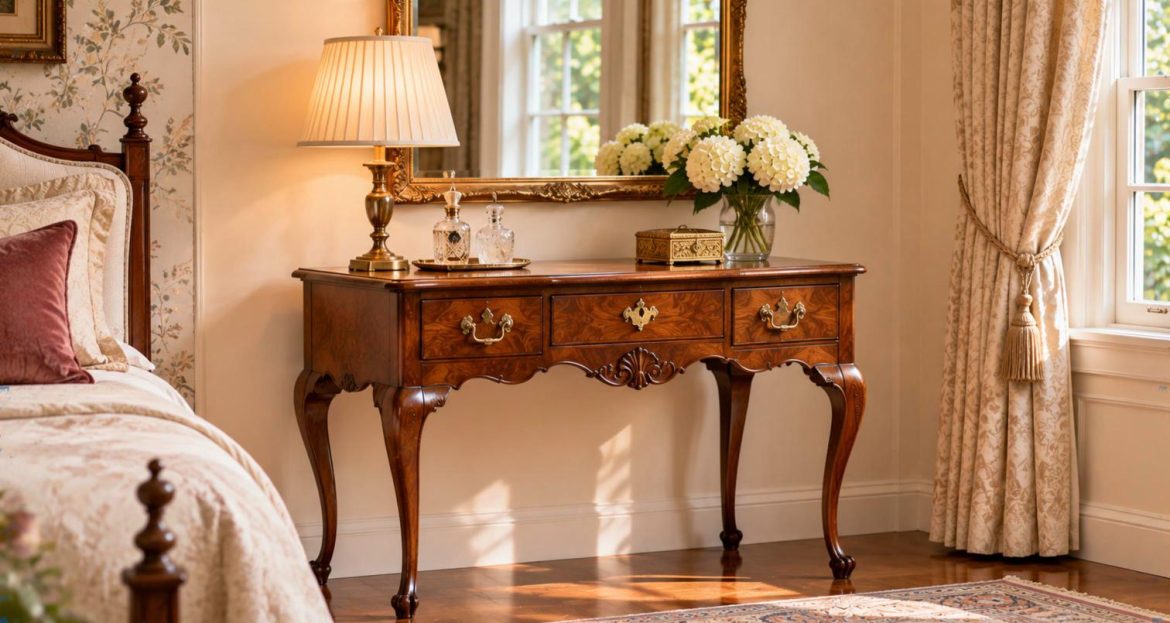
Lowboy: Definition, History, Uses & Lowboy vs. Highboy
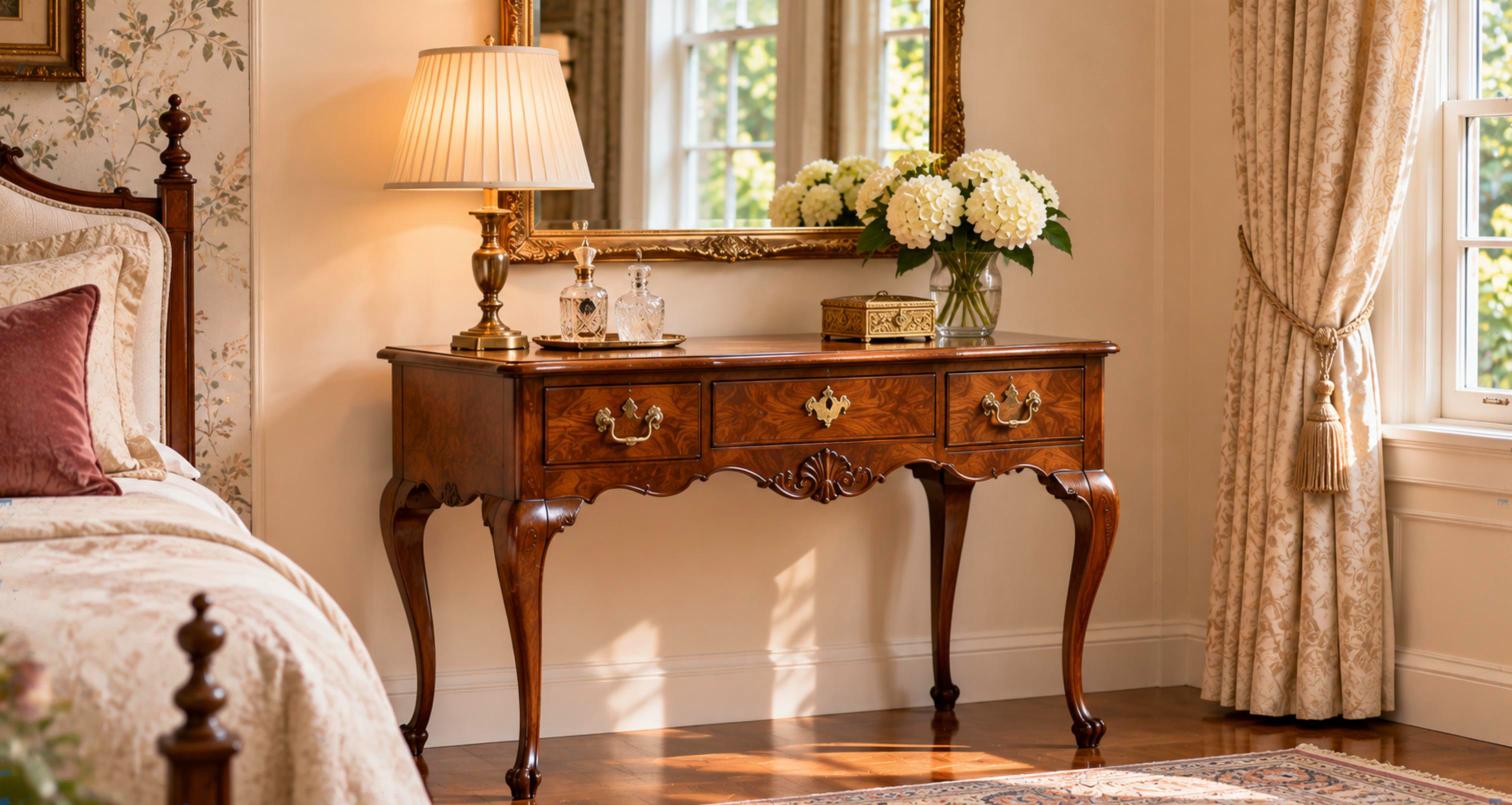
Lowboys emerged in England in the late 17th century and flourished in 18th-century America alongside the highboy, often made as a matching pair: the highboy for clothes storage and the lowboy as a dressing table in the same bedroom. With a mirror hung or placed above, the lowboy was where people dressed hair, applied powder and kept small toiletries in its drawers.
Today, lowboys are valued for their graceful proportions and versatility. They work as vanities, hall tables, side tables in a living room or small writing desks, adding a touch of traditional craftsmanship to any style of home.
Lowboy vs. highboy
A highboy is a tall chest in two parts: an upper case of drawers on a legged lower base. A lowboy is essentially that lower base used on its own as a table. Lowboys and highboys from the same workshop often share identical legs, aprons and carving.
Typical design features
- Cabriole legs with pad, slipper or claw-and-ball feet.
- A shaped, often carved apron, sometimes with a scallop shell, as in the photo.
- Three small drawers across the front, or a long drawer over two or three small ones.
- Brass batwing or bail pulls.
- Figured woods: walnut, mahogany, cherry, sometimes with veneer and inlay.
Modern uses for a lowboy
- Vanity: its original purpose, with a mirror above (see vanity table).
- Entry or hall table: drawers for keys and mail.
- Side table: beside a sofa or armchair.
- Small desk: enough room for a laptop in a bedroom or living room.
- Nightstand alternative: generous width for a lamp and books.
Buying antique or reproduction
- Check legs and knee blocks for repairs, a common weak point.
- Look for hand-cut dovetails in drawers on antiques.
- Original brasses and finish add value.
- Reproductions offer the look with modern stability and lower cost.
Styling tips
Hang a mirror or artwork about 6 to 10 inches above the top, add a lamp for warm light, and keep the surface fairly clear so the shape stands out. A lowboy pairs well with modern art and lighting in a transitional room.
Related terms
Frequently asked questions
What is a lowboy?
A low side or dressing table with shallow drawers, raised on legs.
What was a lowboy used for?
Originally as a dressing table, often paired with a matching highboy.
What is the difference between a lowboy and a highboy?
A highboy is a tall two-part chest; a lowboy is the low, legged base used alone as a table.
Can a lowboy be used as a desk?
Yes, it works well as a small writing or laptop desk.
Part of the Vancouver Furniture glossary of furniture, design and mattress terms. Browse furniture stores across Metro Vancouver or our mattress store guide.