Microfiber Sofa Fabric: Pros, Cons, Pets & How to Clean It
Microfibres were developed in Japan and elsewhere in the 1970s and 1980s, and one of the first famous applications was a synthetic suede introduced in that era. By the 2000s microfiber sofas and recliners were everywhere, marketed as affordable, family-friendly alternatives to leather and natural fabrics.
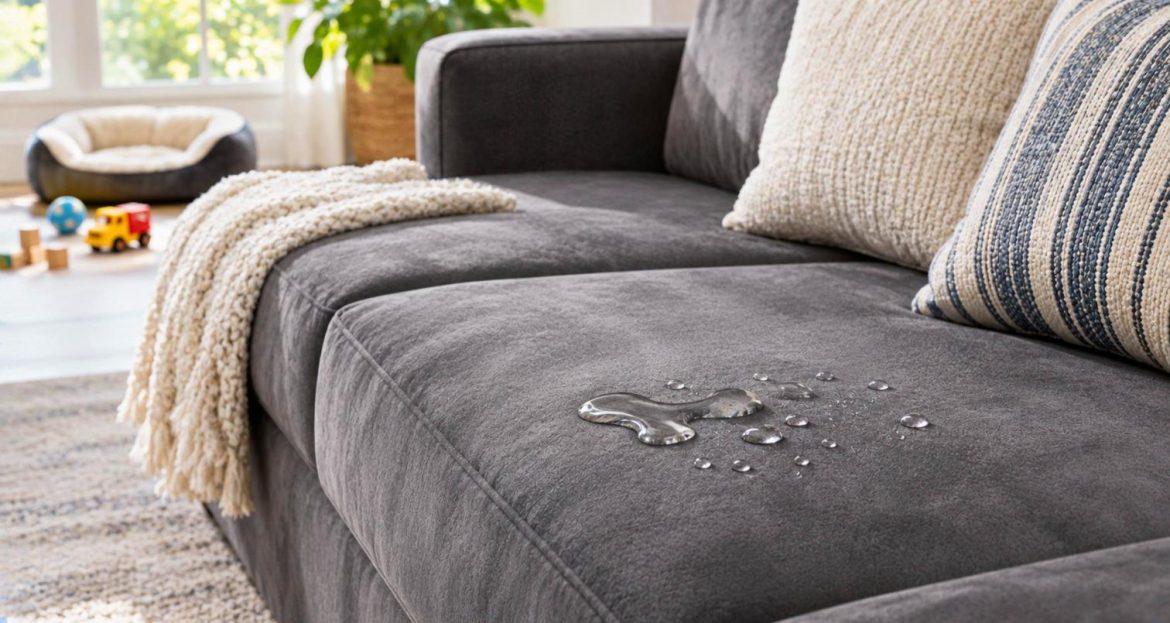
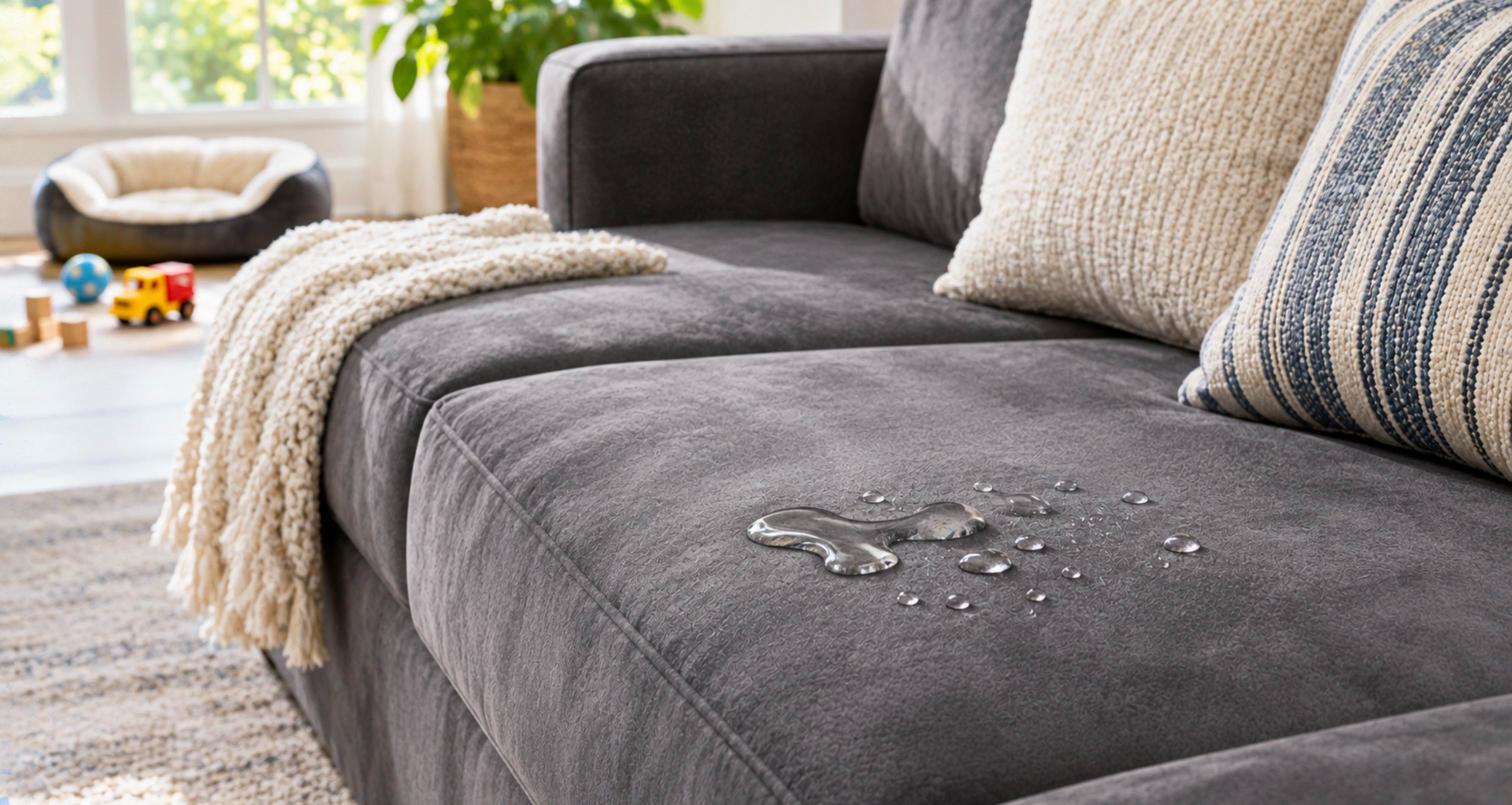
The photo shows why: water beads on the tightly woven surface instead of soaking in, giving you time to blot it away. With pets and children in the background, it captures the kind of household for which microfiber is designed.
How microfiber works
Because the fibres are so fine, many more of them fit into each square inch of fabric. This tight weave leaves little space for liquids, dirt or pet hair to penetrate, so spills tend to sit on the surface. The density also makes the fabric strong and resistant to pilling and tearing compared with many natural fabrics.
Types of microfiber upholstery
- Microsuede: brushed to resemble suede leather, with a soft nap.
- Smooth microfiber: flat, slightly sheened and very easy to wipe.
- Plush or velvety microfiber: with a short pile similar to velvet.
- Performance microfiber: with additional stain and water-repellent treatments.
Pros
- Resists stains and liquids when tightly woven.
- Pet hair brushes off easily, and claws struggle to snag it.
- Soft and comfortable year-round.
- Durable and fade-resistant.
- Affordable compared with leather.
- A good alternative for people avoiding animal products.
Cons
- Attracts lint and static.
- Water spots can appear if cleaned with the wrong method.
- Nap can show marks when brushed in different directions.
- Lower-quality versions can pill or look dated.
- Synthetic fibres shed microplastics when washed.
- Less breathable than cotton or linen.
Cleaning codes matter
Check the cleaning code tag on the furniture before cleaning:
- W: water-based cleaners are fine.
- S: solvent only; many microfibers are S-code, and rubbing alcohol is often used because it evaporates without leaving water rings.
- W/S: either.
- X: vacuum only; professional cleaning required.
How to clean a microfiber couch
- Vacuum with an upholstery brush.
- For S-code fabric, lightly spray rubbing alcohol on a stain and blot with a white cloth or sponge.
- Let it dry, then brush with a soft-bristled brush to restore the nap.
- Test any cleaner on a hidden area first.
- Avoid soaking the fabric.
Microfiber vs. other fabrics
- vs. velvet: microfiber is easier to clean; velvet looks more luxurious.
- vs. chenille: microfiber is smoother and more pet-proof.
- vs. leather: microfiber is cheaper and warmer to sit on; leather lasts longer and develops patina.
- vs. performance fabric: many performance fabrics are microfibers with added treatments.
Related terms
Frequently asked questions
Is microfiber good for pets?
Yes, it resists claws and pet hair brushes off easily.
Is microfiber the same as microsuede?
Microsuede is a type of microfiber brushed to look like suede.
How do you clean a microfiber couch?
Check the cleaning code; for S-code fabric, blot stains with rubbing alcohol and brush the nap once dry.
Does microfiber pill?
High-quality microfiber resists pilling; cheaper versions may pill over time.
Part of the Vancouver Furniture glossary of furniture, design and mattress terms. Browse furniture stores across Metro Vancouver or our mattress store guide.