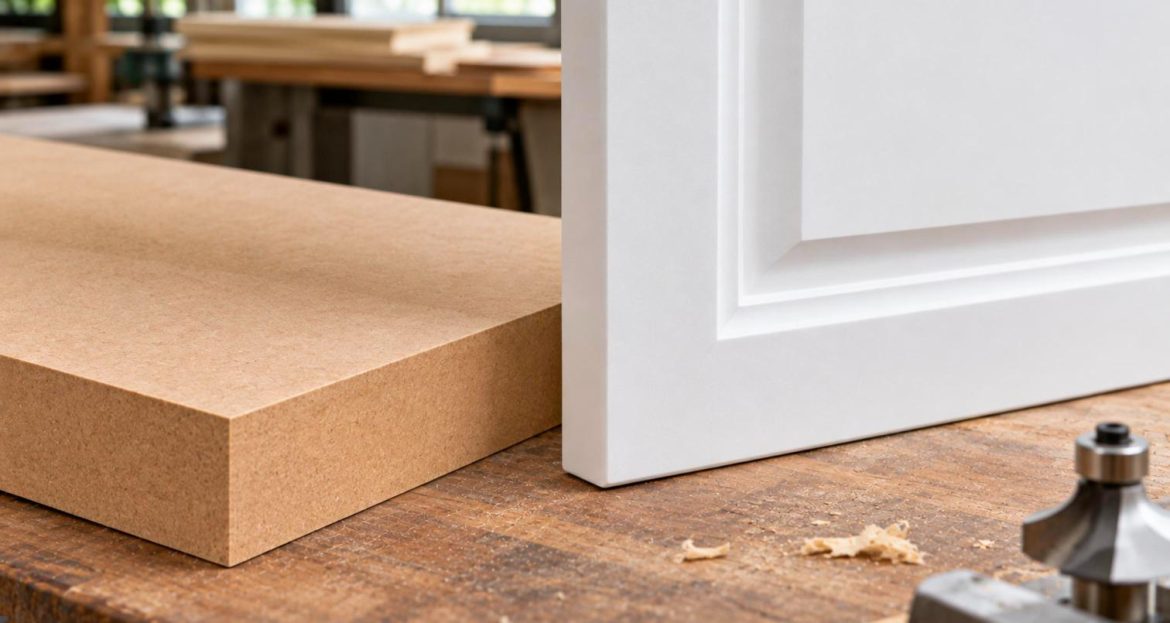
MDF (Medium-Density Fibreboard): What It Is, Pros & Cons in Furniture
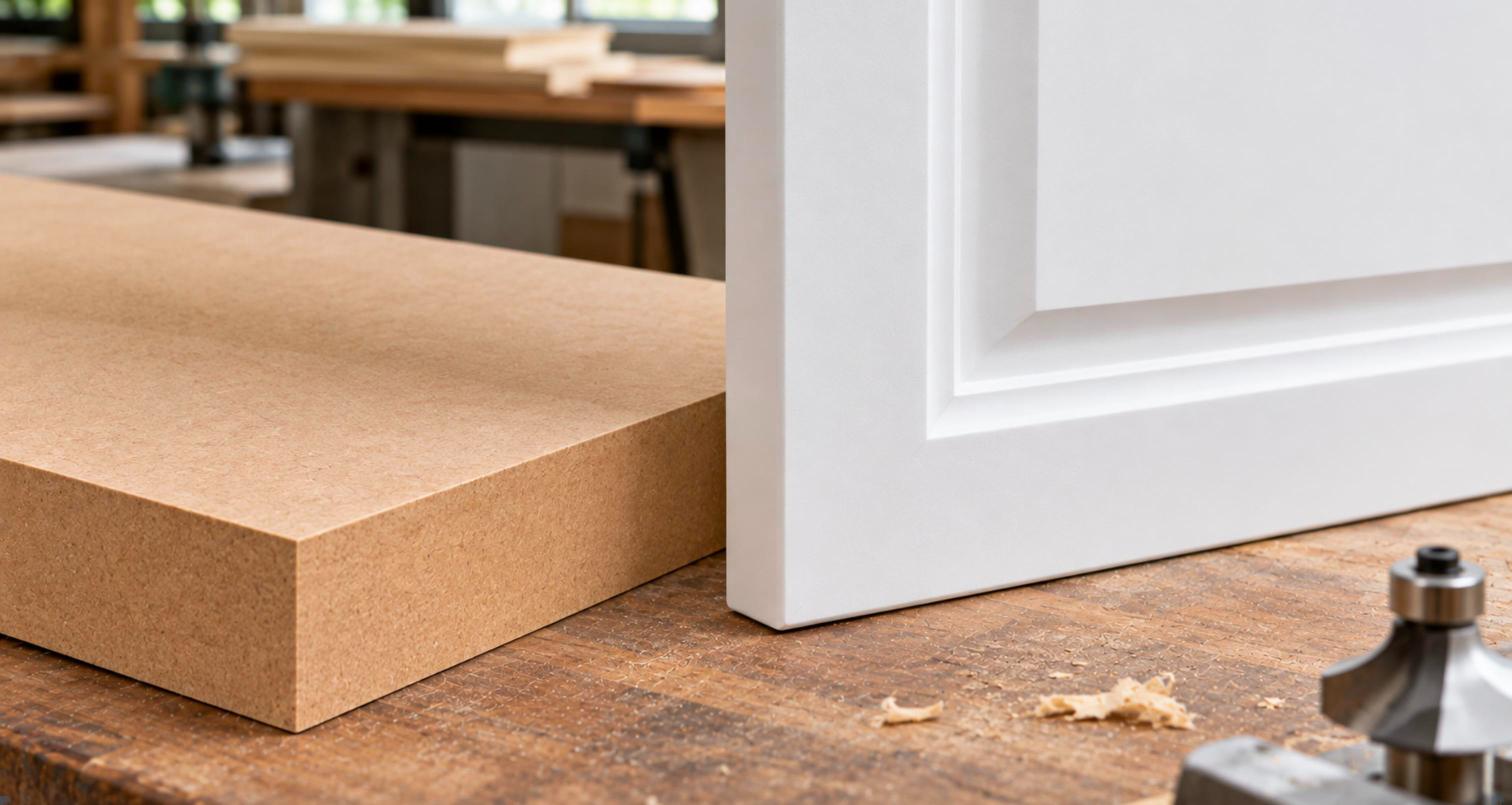
MDF was developed in the mid-20th century and is now one of the most widely used materials in furniture, cabinetry and millwork. Because it has no grain, knots or voids, MDF is extremely smooth and stable, perfect for painted finishes, crisp routed details and as a core for veneer. It is also a big part of why affordable flat-pack furniture exists. Understanding MDF’s strengths and weaknesses helps you decide where it is a sensible choice and where solid wood or plywood is worth paying for.
How MDF is made
- Wood chips and sawmill residues are softened and broken down into fine fibres.
- Fibres are dried and mixed with resin and wax.
- The mixture is formed into a mat and hot-pressed into dense panels.
- Panels are sanded smooth and cut to size.
Pros of MDF
- Very smooth surface, ideal for paint and lacquer.
- Dimensionally stable; does not warp or split like wide solid boards.
- No knots or grain, so it machines cleanly into routed profiles, as on the cabinet door in the photo.
- Affordable and widely available.
- Excellent substrate for veneer and laminate.
Cons of MDF
- Water sensitivity: swells and crumbles if exposed edges get wet.
- Weak screw holding: screws can strip out, especially on repeated assembly.
- Heavy: denser and heavier than plywood.
- Hard to repair: dents and chips cannot be sanded out like solid wood.
- Sags under load: long MDF shelves bow over time.
MDF vs. particleboard vs. plywood vs. solid wood
- Particleboard: made from larger chips; cheaper, lighter and weaker than MDF.
- MDF: finer fibres, smoother, denser and stronger than particleboard.
- Plywood: cross-laminated wood layers; stronger, lighter and better at holding screws than MDF.
- Solid wood: natural lumber; most repairable and long-lasting, but moves with humidity.
Formaldehyde and health
Many MDF products use urea-formaldehyde resins, which can release small amounts of formaldehyde, especially when new. In Canada, the Formaldehyde Emissions from Composite Wood Products Regulations set emission limits for composite wood products such as MDF and particleboard sold in the country. Look for products labelled as compliant, low-emission or NAF/ULEF (no-added or ultra-low-emitting formaldehyde), and ventilate rooms when new furniture arrives.
When MDF is a good choice
MDF is a sensible choice for painted cabinet doors, wardrobes, media units, wall panelling and as the core of veneered pieces. For items exposed to moisture, heavy loads or frequent assembly, such as kitchen sink bases, long bookshelves or bed frames that move often, plywood or solid wood is usually better.
Related terms
Frequently asked questions
What is MDF?
Medium-density fibreboard, an engineered panel made from fine wood fibres, wax and resin pressed into sheets.
Is MDF furniture good quality?
It is fine for painted and veneered pieces used indoors, but less durable than plywood or solid wood under moisture and heavy loads.
Is MDF better than particleboard?
Yes. MDF is denser, smoother and stronger than particleboard.
Is MDF waterproof?
No. Standard MDF swells when wet; moisture-resistant grades exist for damp areas.
Part of the Vancouver Furniture glossary of furniture, design and mattress terms. Browse furniture stores across Metro Vancouver or our mattress store guide.