Mattress Topper: Types, Thickness, Benefits & How to Choose
Mattress toppers are one of the most cost-effective upgrades in the bedroom. Instead of replacing a mattress that feels slightly too firm or a little tired, a topper can adjust the feel for a fraction of the price. They are also popular for guest beds, dorm and rental mattresses, and for couples who want to fine-tune comfort without buying a new bed.
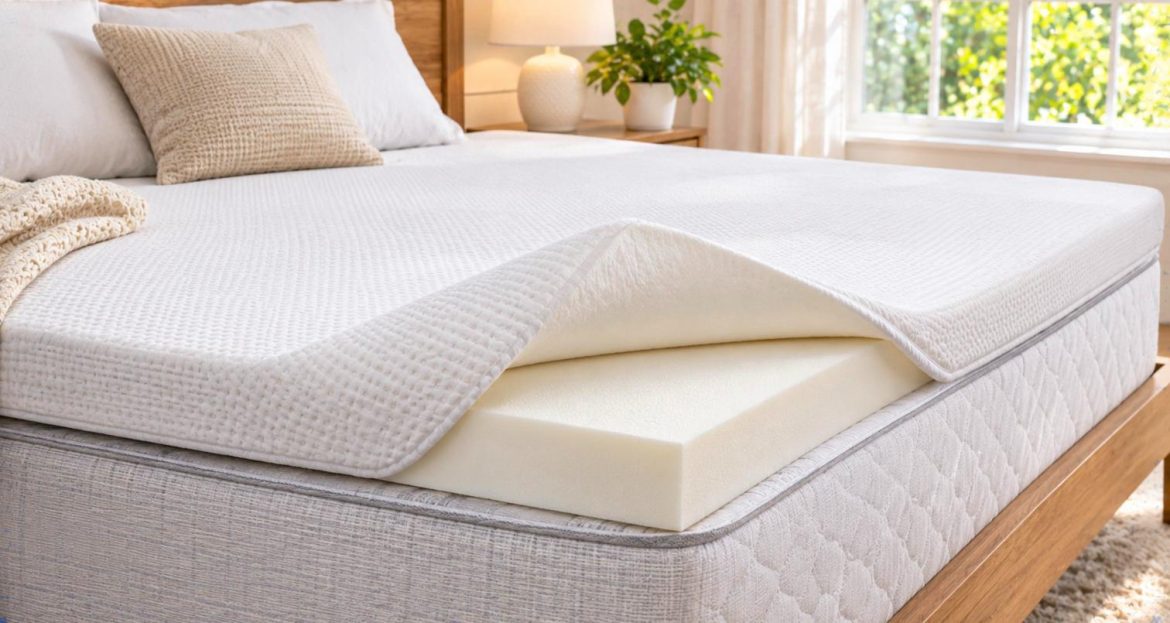
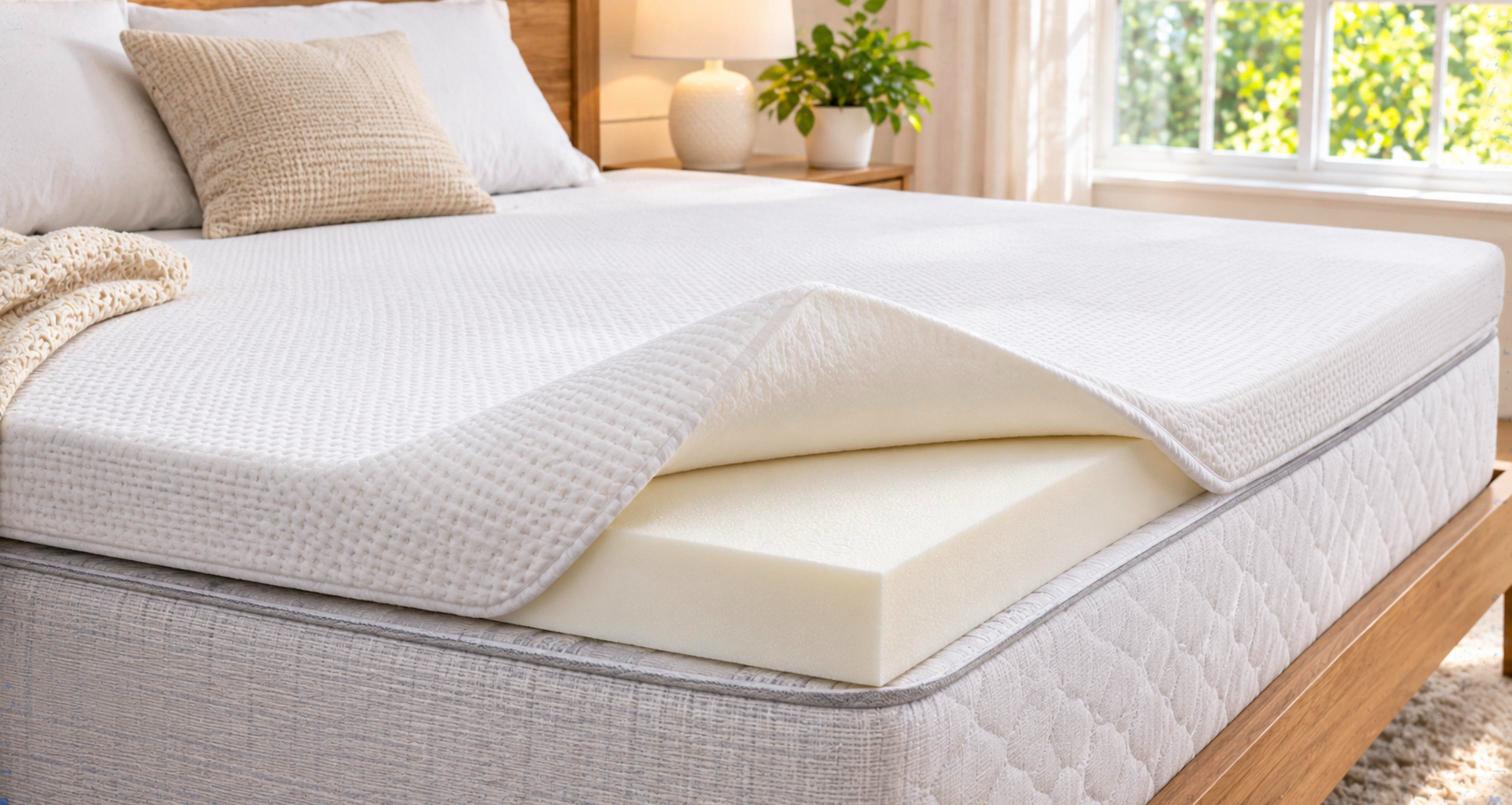
The topper in the photo is a thick memory-foam slab in a removable knit cover, folded back at the corner to show its depth. Covers like this keep the foam clean and can usually be removed for washing.
Types of toppers
- Memory foam: contours closely and relieves pressure; can sleep warm unless gel-infused or open-cell (see memory foam).
- Latex: buoyant, responsive and durable; sleeps cooler than memory foam and comes in soft or firm versions.
- Polyfoam: affordable but less durable.
- Wool: regulates temperature and wicks moisture, adding cushioning rather than deep softness.
- Feather or down: plush and soft, but needs regular fluffing and can trigger allergies.
- Fibre or down alternative: soft, hypoallergenic and washable, but compresses over time.
Choosing thickness
- 1–2 inches: a subtle change, adding a bit of softness or cooling.
- 2–3 inches: the most popular range; a noticeable change in feel.
- 3–4 inches: major softening or pressure relief, popular with side sleepers.
Thicker toppers can make fitted sheets too tight, so check sheet pocket depth.
Topper vs. mattress pad vs. protector
A topper changes how the bed feels. A mattress pad is a thinner quilted layer that adds a little cushioning and protection. A mattress protector is a thin, often waterproof cover that guards against spills, sweat, dust mites and allergens, and does not change feel. Many people use a protector over their topper.
Can a topper fix a bad mattress?
A topper can make a firm mattress softer or a slightly soft mattress feel more supportive, depending on the material. It cannot fix a mattress with deep sagging, broken coils or a body impression more than about an inch and a half deep: the topper will sink into the dip too. In that case, it is time to replace the mattress.
Benefits by sleeper type
- Side sleepers: a soft 3-inch memory foam or latex topper relieves shoulder and hip pressure.
- Back sleepers: a medium latex topper adds comfort without too much sink.
- Hot sleepers: latex, wool or gel foam.
- Allergy sufferers: latex or fibre, with a protector.
Care tips
- Use a removable cover and a protector.
- Rotate the topper regularly.
- Air out new foam toppers for a day or two to reduce off-gassing smell.
- Spot-clean foam; never put it in a washing machine.
- Use straps or a non-slip base if the topper shifts.
Related terms
Frequently asked questions
What does a mattress topper do?
It changes the feel of a mattress, making it softer, firmer, cooler or more pressure-relieving.
How thick should a mattress topper be?
Two to three inches suits most people; 3 to 4 inches for significant softening.
Is a topper the same as a mattress pad?
No, a pad is thinner and mostly protective; a topper changes comfort.
Can a topper fix a sagging mattress?
Not if the sag is deep; the topper will sink into it.
Part of the Vancouver Furniture glossary of furniture, design and mattress terms. Browse furniture stores across Metro Vancouver or our mattress store guide.