Innerspring Mattress: Coil Types, Pros & Cons and Buying Guide
Coil-spring mattresses became widely available in the early 20th century, replacing mattresses stuffed with straw, cotton, horsehair or feathers. Their bounce, airflow and durability made them the standard for decades, and they remain common today, especially in guest rooms, children’s rooms and budget-to-mid-priced lines.
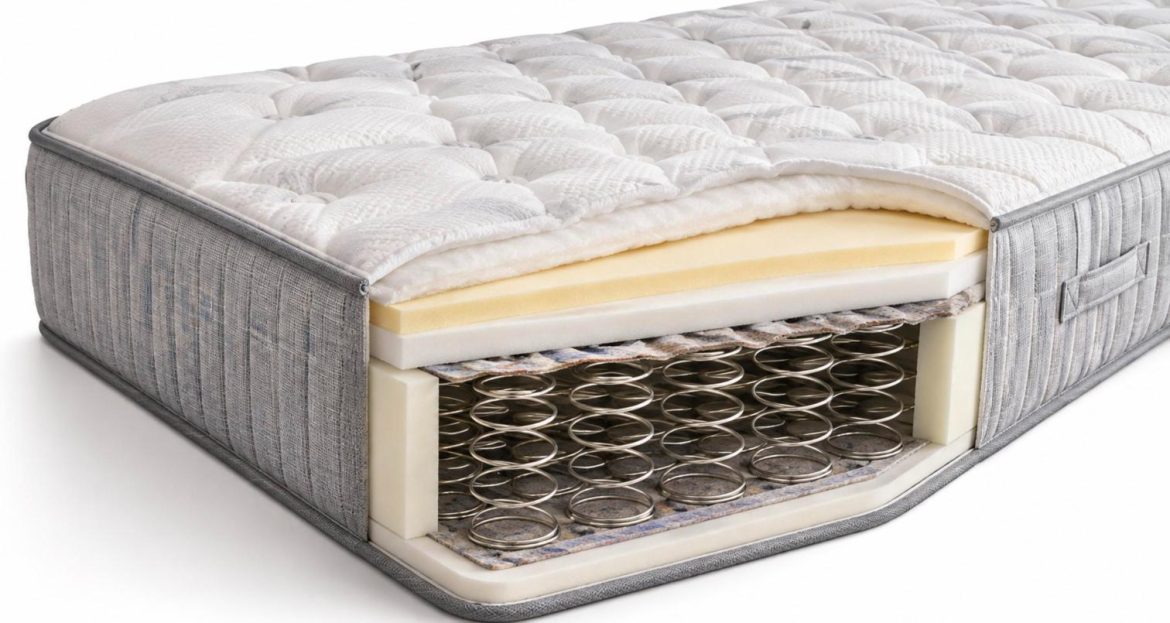
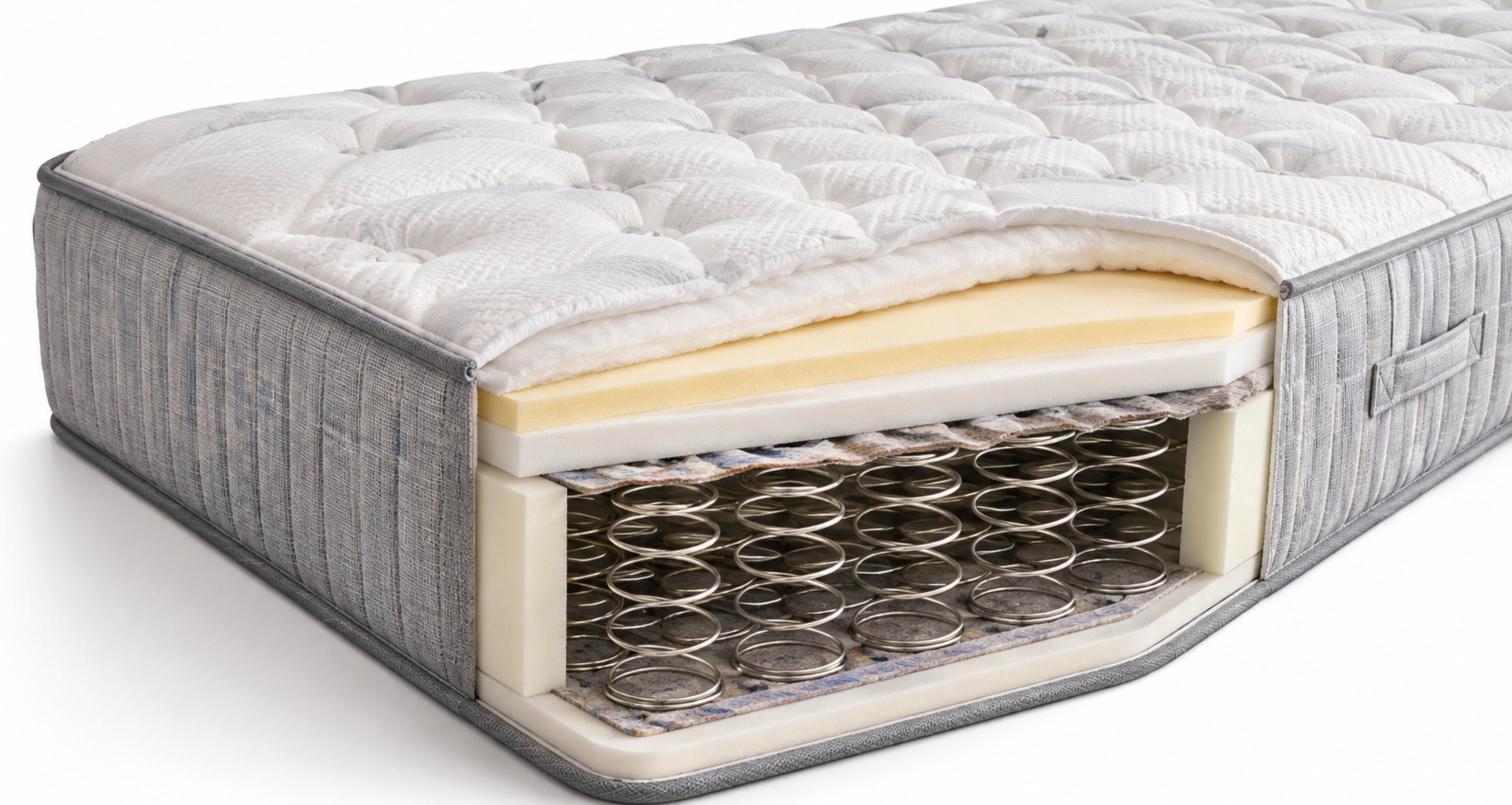
The cutaway in the photo shows the classic layering: a coil unit in the centre, a foam border around it for edge support, insulating padding over the springs, foam comfort layers above and a quilted top. Understanding these layers makes it much easier to compare mattresses in a showroom.
Types of coils
- Bonnell coils: hourglass-shaped coils laced together; the oldest and most affordable design.
- Offset coils: hourglass coils with flattened tops that hinge, giving a more contouring feel.
- Continuous coils: rows formed from a single length of wire; durable but transmit more motion.
- Pocketed coils (also called individually wrapped or Marshall coils): each spring is sewn into its own fabric pocket and moves independently, reducing motion transfer between partners.
Coil count and gauge
Coil count is the number of coils in the mattress. A queen with fewer than about 400 coils may provide limited support, but beyond a certain point a higher count adds little; coil design matters more. Gauge is wire thickness: a lower number means thicker, firmer wire (about 12–13 gauge), a higher number thinner, softer wire (about 15–16). Many mattresses use zones, with firmer coils under the hips and softer ones under the shoulders.
Innerspring vs. hybrid vs. foam
- Innerspring: coil support with a relatively thin comfort layer; bouncy and cool.
- Hybrid: pocketed coils plus a thicker comfort layer of foam or latex (usually at least 2–3 inches); combines bounce with pressure relief.
- All-foam: no coils; strong contouring and motion isolation but can sleep warmer (see memory foam).
Pros
- Responsive, bouncy feel that makes it easy to change positions.
- Good airflow through the coils, so it sleeps cooler.
- Strong edge support on models with reinforced borders.
- Wide range of prices.
- Familiar feel for people used to traditional mattresses.
Cons
- More motion transfer than foam, especially with Bonnell or continuous coils.
- Thin comfort layers can sag or develop body impressions.
- Less pressure relief for side sleepers on firmer models.
- Older designs can squeak as they age.
- Often not suitable for an adjustable base.
Who it suits
Back and stomach sleepers who like a firmer, bouncier surface, people who sleep hot, and those who dislike the sinking feel of foam. Side sleepers and couples sensitive to movement often prefer a pocketed-coil hybrid or a pillow top.
Buying tips
- Ask what type of coil is used, not just the coil count.
- Check the thickness and type of comfort layers.
- Lie on it in your usual sleep position for at least several minutes.
- Choose a matching foundation or box spring if the warranty requires it.
- Check the sleep trial and warranty terms, including what depth of sagging is covered.
Related terms
Frequently asked questions
What is an innerspring mattress?
A mattress with a support core of steel coil springs under layers of foam or fibre.
What is the difference between innerspring and hybrid?
A hybrid has a thicker comfort layer of foam or latex, usually at least 2–3 inches, on top of pocketed coils.
How long does an innerspring mattress last?
Typically about 5 to 8 years, longer for well-made models.
Are pocketed coils better?
They reduce motion transfer and contour better, which suits couples and side sleepers.
Part of the Vancouver Furniture glossary of furniture, design and mattress terms. Browse furniture stores across Metro Vancouver or our mattress store guide.