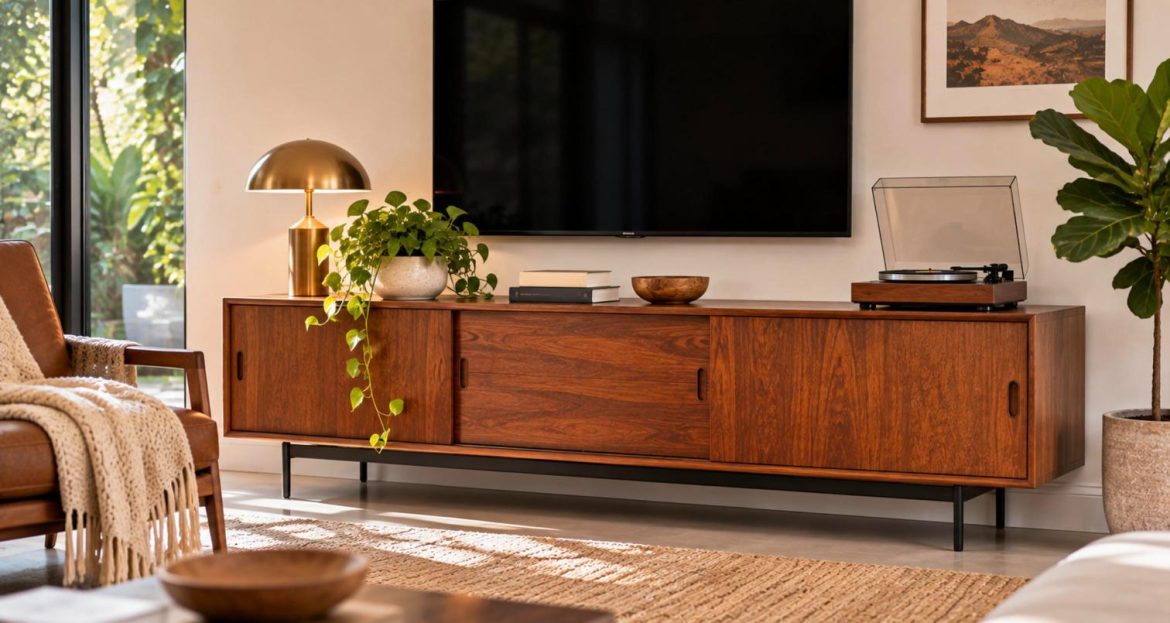
Credenza: Definition, History, Uses & How It Differs from a Sideboard
The word comes from the Italian credenza, meaning “belief” or “trust”. In Renaissance Italy a credenza was a side table where food was placed before serving, and where a servant would taste it to confirm it was not poisoned, earning the trust of the household. The piece evolved into a dining storage cabinet and, in the 20th century, into the low, sleek cabinet beloved by mid-century modern designers and corporate offices. Today, the credenza is one of the most versatile storage pieces you can buy, equally at home under a TV, in a dining room or behind a desk.
Credenza vs. sideboard vs. buffet
The three terms are often used interchangeably, but there are typical differences. A sideboard or buffet tends to be taller (30–36 inches) and is usually on legs, intended mainly for dining-room serving. A credenza is generally lower and sleeker, often with sliding or flush doors and a plinth or very short legs, and is used in many rooms, including offices. In practice, retailers apply all three labels loosely, so compare dimensions and features.
Uses for a credenza
- Media unit: the low height suits a wall-mounted or standing TV, with room for components behind doors.
- Dining storage: dishes, glassware and linens.
- Office: files and supplies behind a desk; the traditional executive credenza.
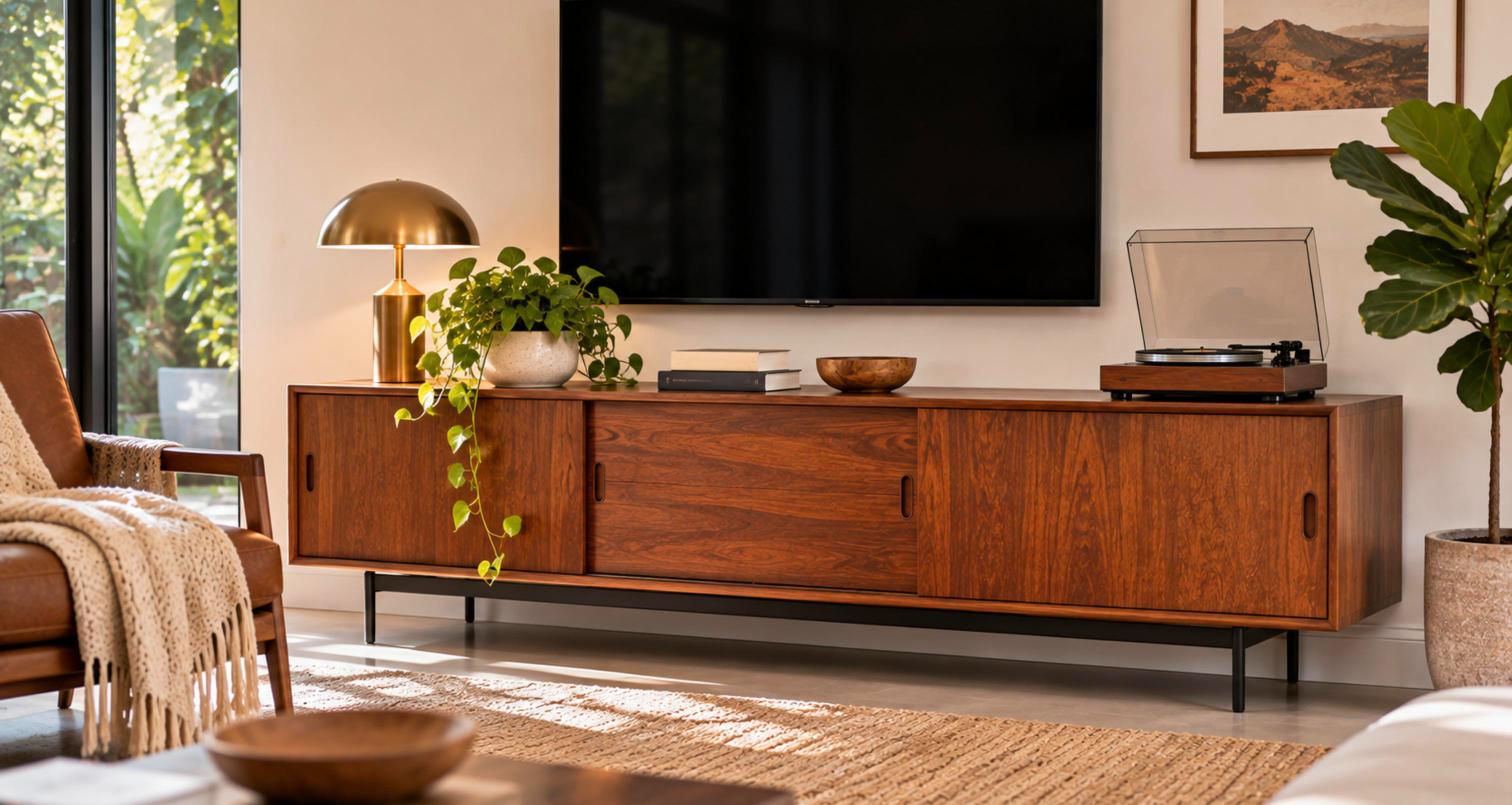
- Record console: vinyl inside, turntable on top, as in the photo.
- Entryway or bedroom: a long, low alternative to a dresser.
Using a credenza as a TV stand
- Choose a credenza at least as wide as the TV, ideally wider.
- Check depth (16 inches or more) if the TV will stand on top.
- Look for cable cut-outs and ventilation for electronics.
- For a wall-mounted TV, centre the screen 4 to 12 inches (10–30 cm) above the credenza top.
Materials and quality
Credenzas are made in solid wood, wood veneer over plywood or MDF, lacquer and metal. Mid-century originals typically use teak, walnut or rosewood veneers. Check for smooth sliding doors, adjustable shelves, solid backs and well-made drawers with dovetail joints.
Mid-century credenzas
The low, horizontal credenza is a signature piece of mid-century modern design, with tapered or hairpin legs, sliding doors and warm teak or walnut. Danish and American originals from the 1950s to 1970s are highly collectable, and many manufacturers produce reproductions.
Credenzas in Vancouver homes
A credenza is ideal in condo living rooms that also serve as dining and work spaces: one piece can store dishes, hide office supplies and hold the TV. Wall-hung credenzas keep floors clear in small rooms. Vintage teak credenzas are frequently found through Vancouver’s mid-century specialists.
Related terms
Frequently asked questions
What is a credenza?
A long, low storage cabinet, often with sliding doors, used for storage, display or as a media unit.
What does credenza mean?
It comes from the Italian word for “belief” or “trust”.
What is the difference between a credenza and a sideboard?
A credenza is usually lower and sleeker, often with sliding doors, and used in many rooms; a sideboard is usually taller and on legs for dining rooms.
Can a credenza be used as a TV stand?
Yes. Its low height makes it one of the best options for a TV.
Part of the Vancouver Furniture glossary of furniture, design and mattress terms. Browse furniture stores across Metro Vancouver or our mattress store guide.