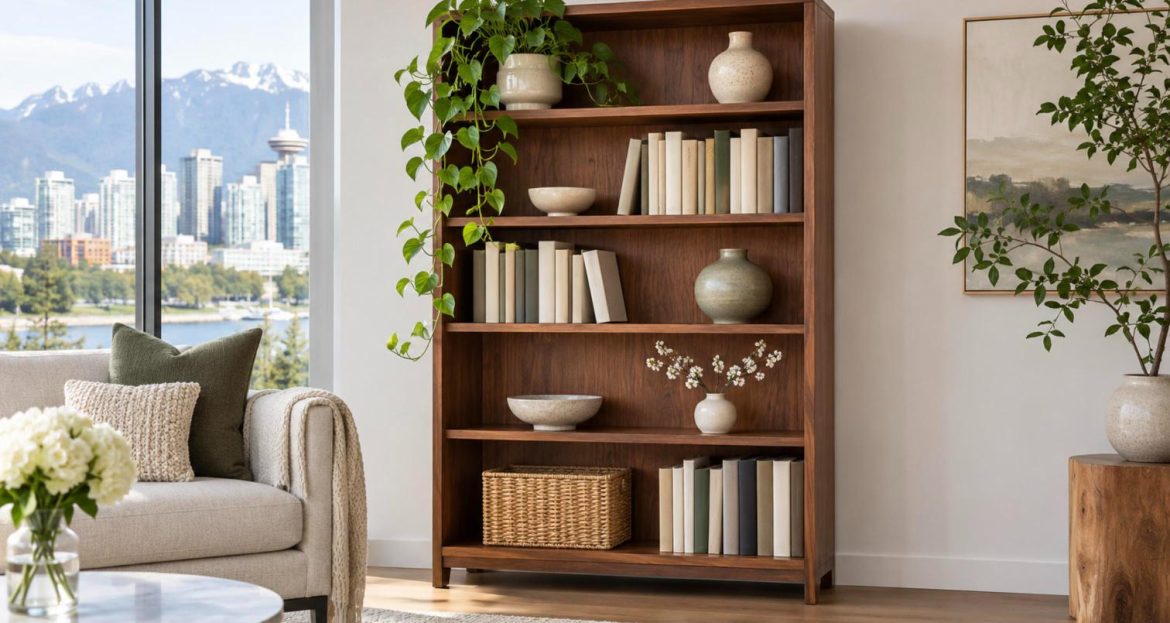
Bookcase: Definition, Types, Materials & Buying Guide
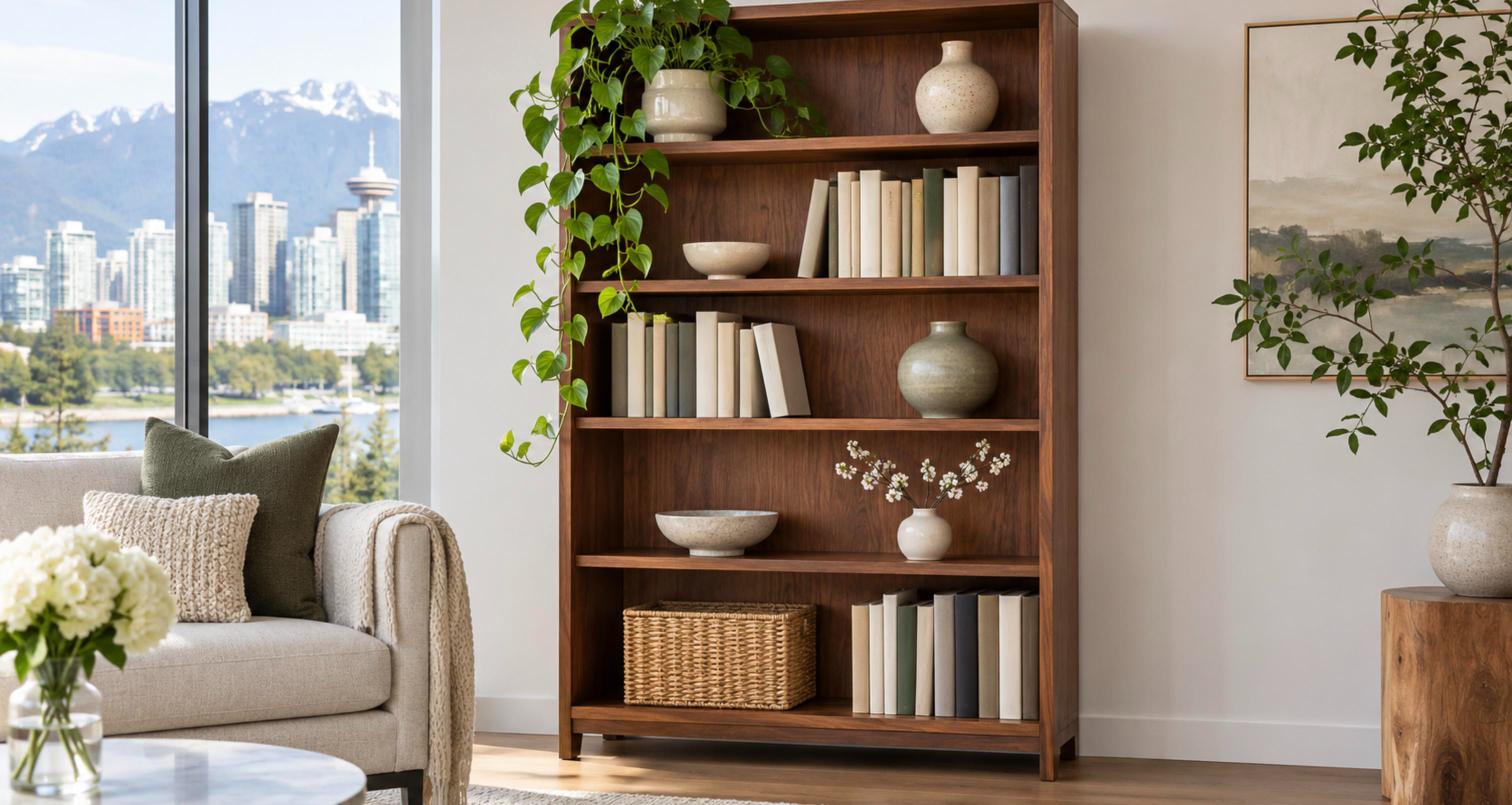
Few pieces of furniture work as hard as a bookcase. It stores books, of course, but in most homes it also holds plants, photographs, records, baskets of toys and the objects that make a room feel lived-in. Because it is often the tallest piece in a room, a bookcase also shapes how a space looks: it can anchor a wall, divide an open-plan room or make a low ceiling feel taller. This entry explains the main types of bookcase, the materials they are made from, standard dimensions and how to choose and place one safely.
Bookcase vs. bookshelf
In everyday use the words overlap, but there is a useful distinction. A bookshelf can mean a single shelf, such as a wall-mounted ledge, while a bookcase is a complete case: a box-like frame with sides, a top and several shelves, sometimes with a back panel and doors. Retailers often use “bookshelf” for both, so check the product photos and dimensions rather than the name.
A brief history
Early books were valuable enough to be stored flat in chests or locked cupboards. As printing made books more common from the 17th century onward, wealthy households commissioned glazed bookcases with doors to protect volumes from dust and light; English furniture makers of the 18th century produced elaborate breakfront bookcases with projecting centre sections. In the 20th century, modernist designers favoured open, modular shelving, and mass-produced flat-pack units later made bookcases affordable for almost every home.
Common types of bookcase
- Standard freestanding bookcase: a rectangular case with fixed or adjustable shelves.
- Barrister bookcase: stacked sections with glass doors that lift and slide back, originally designed for lawyers’ libraries.
- Ladder or leaning bookcase: shelves on a frame that leans against the wall, narrowing toward the top; light-looking but less stable.
- Cube or modular shelving: grid units that can be stacked or arranged horizontally and fitted with baskets or doors.
- Étagère: an open, airy frame of shelves without solid sides, often in metal and glass, used mainly for display.
- Built-in bookcase: custom joinery fitted wall-to-wall or around a window or fireplace.
- Low or horizontal bookcase: waist-height shelving that doubles as a console or room divider.
- Corner bookcase: shaped to fit into a corner and use otherwise dead space.
Materials and construction
Solid wood such as oak, walnut or pine is the most durable and can be refinished, but it is heavy and moves slightly with humidity. Plywood is stable and strong for its weight; good-quality birch plywood is popular in Scandinavian design. MDF and particleboard, usually with a veneer or laminate finish, are inexpensive but sag under heavy loads over long spans and are damaged by water. Metal frames are slim and strong and suit industrial interiors.
The most important detail for a bookcase is shelf sag. Books are heavy: a metre of hardcovers can weigh 20 to 25 kg. As a rule of thumb, shelves made from particleboard should not span much more than about 75 to 80 cm without support, while solid wood or thick plywood can span further. A back panel that is screwed or glued in place, rather than tacked, makes the whole case far more rigid.
Standard sizes
Bookcase depth is usually between 25 and 40 cm. About 28 to 30 cm suits most paperbacks and hardcovers; deeper shelves are better for art books, records and display. Shelf spacing of roughly 25 to 30 cm fits most books, while 33 cm or more is needed for vinyl records and large-format books. Heights range from low units around 75 to 90 cm to tall bookcases over 2 m. Adjustable shelves, on pegs or tracks, make a bookcase far more flexible.
How to choose a bookcase
- Measure the wall, ceiling height and any baseboards or heating vents, and leave a little space at the top for anchoring.
- Decide what it will hold. Heavy book collections need strong, short-spanning shelves; display shelving can be lighter.
- Check the shelves: thickness, material and whether they are adjustable.
- Consider closed storage. Lower doors or baskets hide clutter while keeping open shelves above for display.
- Think about scale. In a small condo, a tall, narrow bookcase uses vertical space well; a low, wide one can double as a TV console.
Safety: anchor tall bookcases
Tall, narrow furniture can tip over if a child climbs it or if heavy items are loaded on upper shelves. Health Canada advises securing furniture such as bookcases and dressers to the wall, and most bookcases come with an anti-tip kit. Fix the strap into a wall stud or use anchors rated for your wall type. Load the heaviest items on the lowest shelves. In earthquake-prone British Columbia, anchoring also helps keep tall furniture in place during shaking.
Styling a bookcase
A bookcase looks best when it is not packed solid. Mix vertical rows of books with horizontal stacks, leave some breathing space, and repeat colours or materials across shelves. Plants, framed photos and a few larger objects break up long rows of spines. Baskets on the bottom shelf hide everyday clutter. For a calm, minimal look, see our entries on Scandinavian design and Japandi.
Bookcases in Vancouver homes
In compact Vancouver condos, vertical storage is valuable, so a tall bookcase or a wall of built-in shelving can replace several smaller pieces. In older houses and basement suites, keep bookcases slightly away from exterior walls to allow air to circulate; damp, cold walls can cause musty smells and mould on books in our wet winters. Solid wood and good plywood handle humidity changes better than particleboard.
Related terms
Frequently asked questions
What is the difference between a bookcase and a bookshelf?
A bookshelf can be a single shelf, while a bookcase is a complete case with sides, a top and several shelves. In practice, retailers often use the terms interchangeably.
How deep should a bookcase be?
About 28 to 30 cm suits most books. Choose 33 to 40 cm for large art books, records or display items.
How much weight can a bookcase shelf hold?
It depends on material, thickness and span. Particleboard shelves sag over long spans, while solid wood or thick plywood carry more. Keep heavy books on short spans and low shelves.
Should I anchor a bookcase to the wall?
Yes. Tall bookcases can tip, especially if climbed by children. Use the anti-tip kit and fix it into a stud or suitable wall anchor.
What is a barrister bookcase?
A stacking bookcase with glass doors on each section that lift and slide back into the case, originally made for lawyers’ libraries.
Part of the Vancouver Furniture glossary of furniture, design and mattress terms. Browse furniture stores across Metro Vancouver or our mattress store guide.