Patina in Furniture: What It Is, Why It Matters & How to Protect It
The word patina comes from Italian, originally referring to the coating that forms on bronze. In furniture, collectors and dealers use it to describe the accumulated evidence of age: oxidation and colour change in the wood, layers of wax and polish, the rubbing of hands on arms and drawer edges, and fine scratches and dents. Genuine patina takes decades to develop and cannot be fully faked.
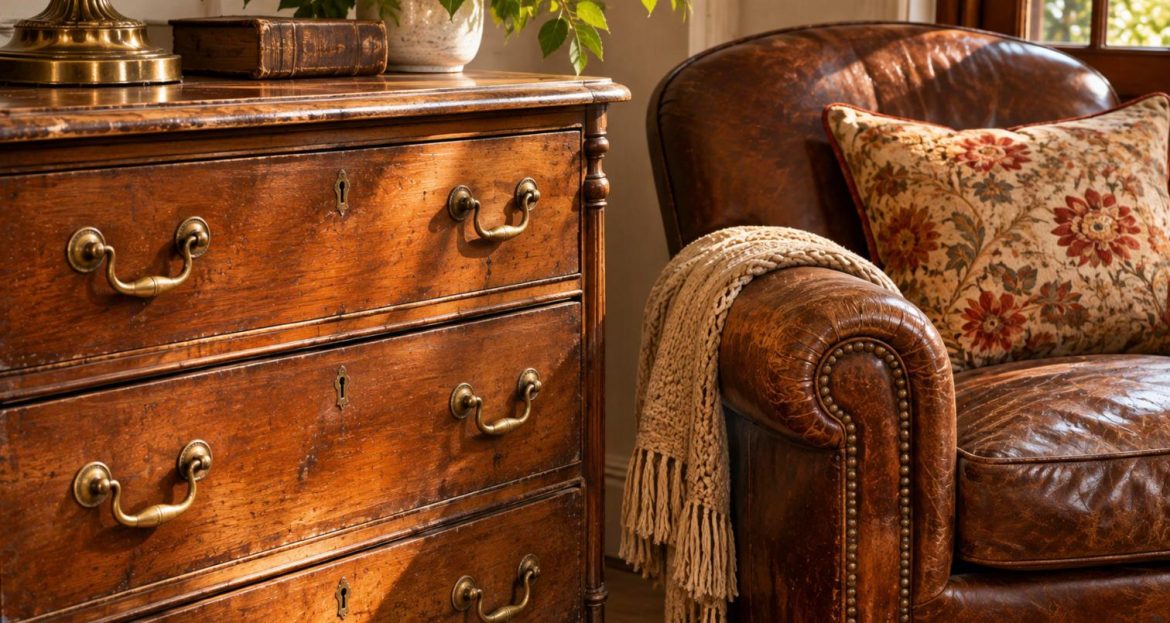
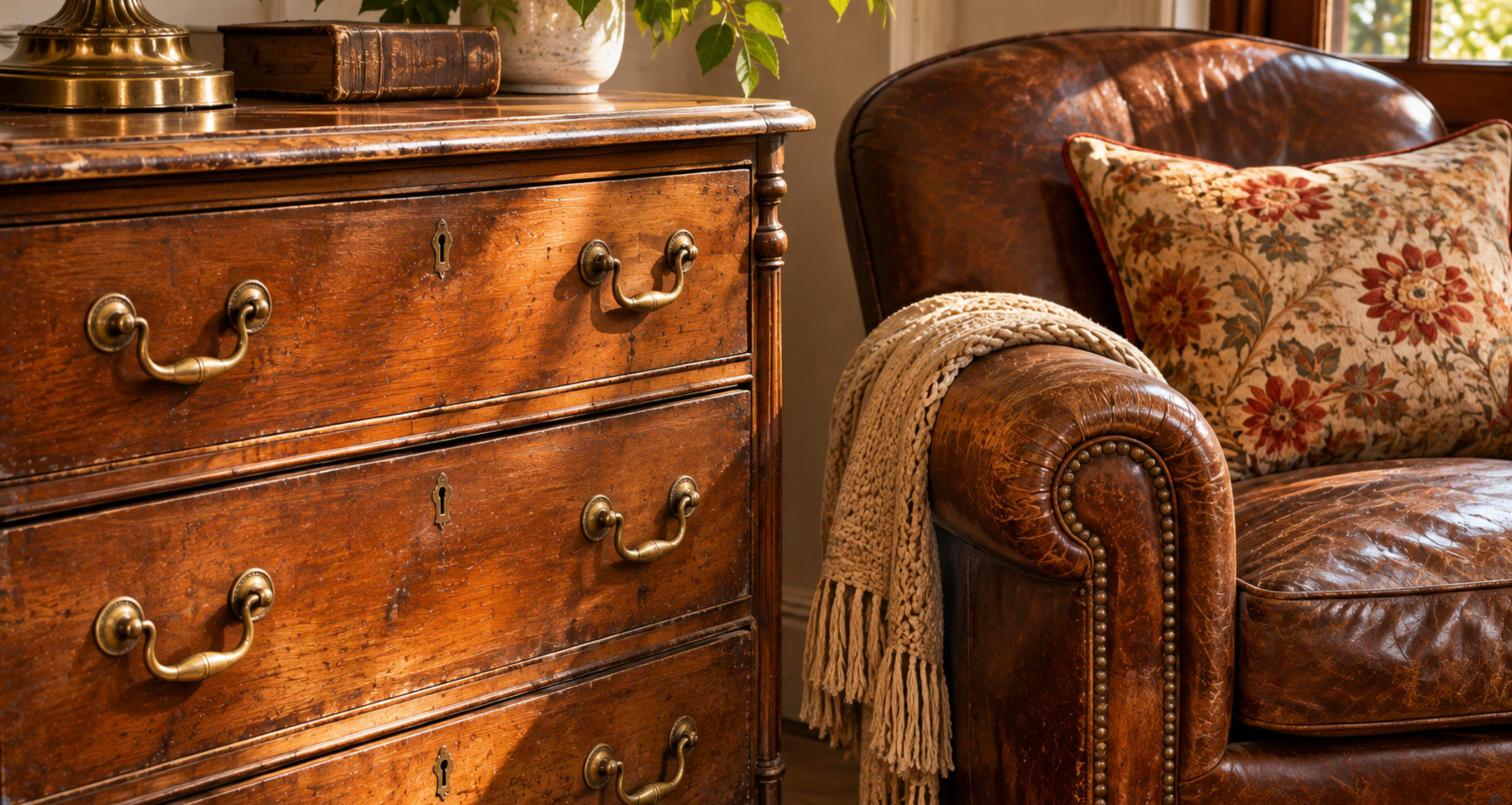
The pair in the photo shows patina on two materials at once: a chest whose wood has developed a deep glow, softened edges and burnished brass handles, and a leather club chair whose hide has darkened and crackled with use. For many people, this lived-in character is what makes vintage pieces worth owning.
How patina forms on different materials
- Wood: light and oxygen change the colour (many woods darken; some, like walnut, lighten), while wax, oils and handling build a soft glow. Edges and corners round off with use.
- Leather: body oils, light and use darken, soften and crease full-grain and aniline leathers.
- Brass and bronze: oxidise to a warm, dull brown, or green verdigris outdoors.
- Marble: develops fine etching and a softer sheen.
- Teak outdoors: weathers to silver-grey.
Why patina matters for antiques
For antique furniture, original surface and patina are central to value. Stripping and refinishing an antique can remove evidence of age and reduce its value considerably. Dealers and appraisers look for consistent wear in logical places, such as drawer fronts, arms and feet, as one sign of authenticity.
Patina vs. damage vs. distressing
- Patina: natural, gradual and generally attractive ageing.
- Damage: structural problems, water rings, deep burns, broken joints or flaking finish that need repair.
- Distressing: artificial ageing applied to new furniture, such as dents, sanded edges and glazes, to imitate patina. It can look attractive but tends to be uniform and less convincing up close.
Caring for patina
- Clean gently: dust with a soft cloth; avoid harsh cleaners and strippers.
- Use a good paste wax occasionally on wood rather than silicone sprays.
- Condition leather with a suitable product to prevent cracking.
- Leave brass hardware unpolished on antiques if you want to keep the aged look.
- Keep furniture out of strong sun and away from heat to avoid unwanted fading and drying.
- Consult a professional restorer before any refinishing.
Choosing new furniture that will age well
Materials that develop attractive patina include solid wood with oil or wax finishes, full-grain and aniline leather, unlacquered brass and natural stone. Laminates, painted MDF and bonded leather do not develop patina; they simply wear out.
Related terms
Frequently asked questions
What is patina on furniture?
The surface character that develops with age and use, such as a soft sheen on wood or creasing on leather.
Does patina add value?
For antiques, original patina usually adds value; stripping it can reduce value.
How do you clean furniture without removing patina?
Dust gently, use paste wax sparingly and avoid harsh cleaners and strippers.
Can new furniture develop patina?
Yes, if it is made of natural materials like solid wood, full-grain leather or brass.
Part of the Vancouver Furniture glossary of furniture, design and mattress terms. Browse furniture stores across Metro Vancouver or our mattress store guide.