Performance Fabric: What It Is, How It Works & Is It Worth It?
Performance fabrics began in commercial and outdoor furniture, for restaurants, hotels, hospitals and patios where upholstery had to survive heavy use and frequent cleaning. Over the past decade they have moved into homes, as families with children and pets looked for sofas that could survive juice, muddy paws and red wine. Today almost every major furniture retailer offers a performance option, and many look and feel just like linen, velvet, chenille or even bouclé.
How performance fabrics work
There are two main approaches. Inherently stain-resistant fibres, such as solution-dyed acrylic, olefin and some polyesters, have colour and resistance built into the fibre itself, so the protection does not wash or wear away. Treated fabrics receive a finish or coating that repels liquids and stains; these work well but can lose effectiveness over years of use and cleaning. Some fabrics combine both. Many performance fabrics also have tight weaves that resist pilling and abrasion.
Benefits
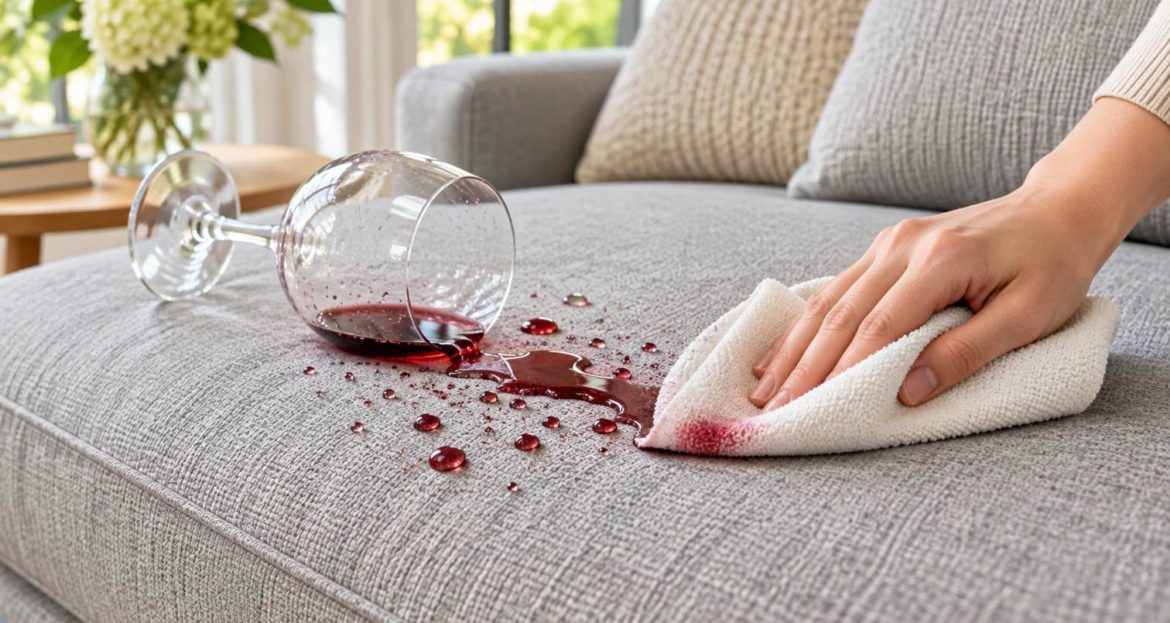
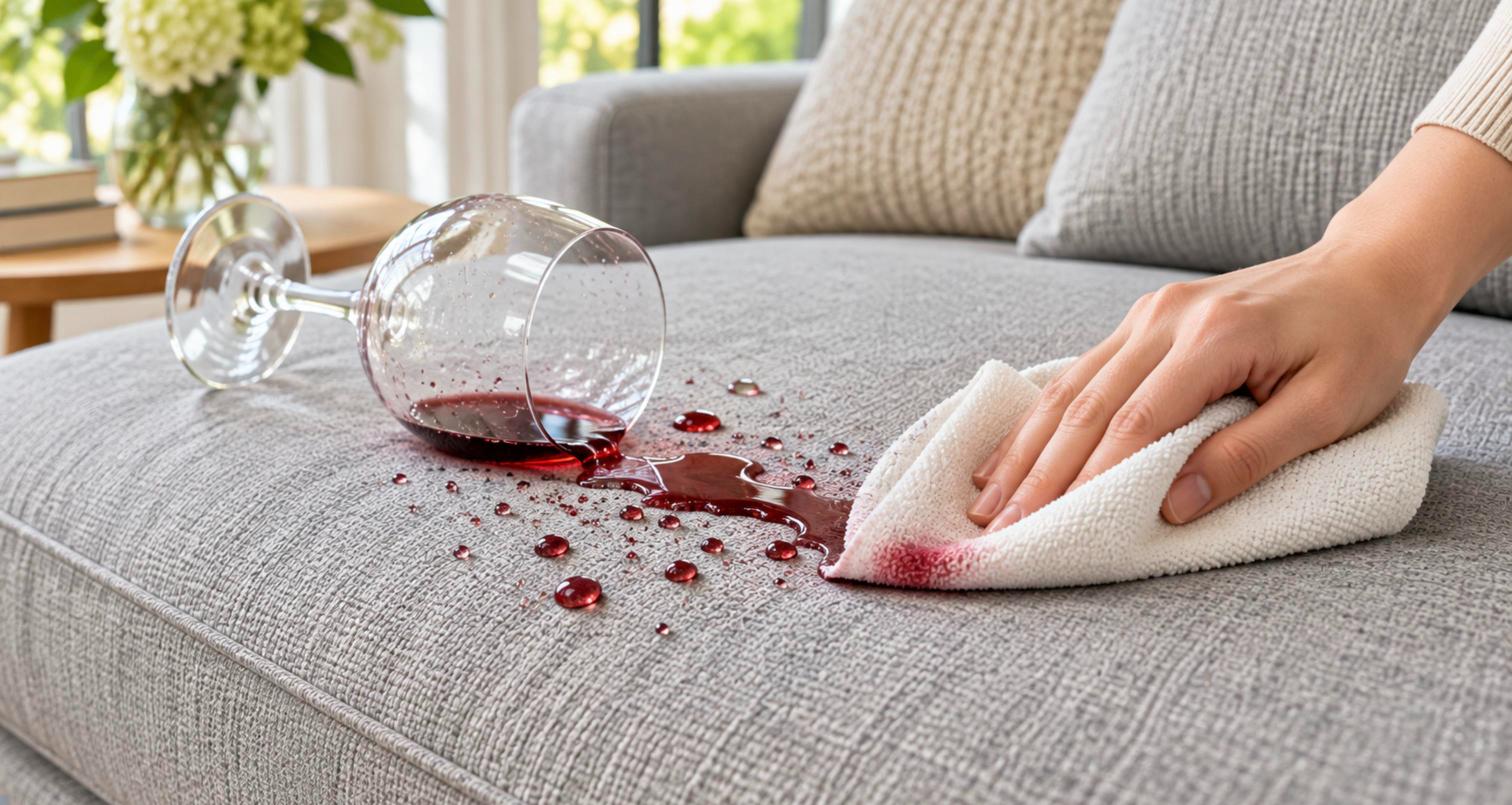
- Stain resistance: spills bead up and can be blotted, as in the photo.
- Easy cleaning: many can be cleaned with mild soap and water; some even allow diluted bleach.
- Durability: high abrasion ratings for daily use.
- Fade resistance: solution-dyed fabrics resist sunlight, useful by big windows.
- Odour and moisture resistance: helpful with pets.
Limitations
- Some treated finishes wear off over time.
- Not all performance fabrics are equally pet-friendly; loose weaves can still snag.
- Some feel slightly synthetic compared with natural linen or wool.
- “Performance” is a marketing term with no single standard, so check the specifications.
How to compare durability
Look for the abrasion rating. In North America, the Wyzenbeek test measures “double rubs”: 15,000+ is suitable for residential use, and 30,000+ is heavy-duty. The Martindale test, common in Europe, gives cycles: 20,000+ for general domestic use and 40,000+ for heavy use. Also check the cleaning code: W (water-based cleaners), S (solvent only), W/S (either) or X (vacuum only).
Performance fabric for pets and kids
Tightly woven microfibre and solution-dyed performance fabrics are the most practical for pets: claws are less likely to snag and hair is easy to brush off. Avoid loose loops and nubby weaves. For young children, pair performance fabric with removable, washable cushion covers or slipcovers.
Caring for performance fabric
- Blot spills quickly with a clean, absorbent cloth.
- Use the cleaning method allowed by the fabric code.
- Vacuum regularly to remove grit that wears fibres.
- Rotate and flip cushions for even wear.
- Test any cleaner on a hidden area first.
Related terms
Frequently asked questions
What is performance fabric?
Upholstery fabric engineered to resist stains, moisture, fading and wear.
Is performance fabric good for dogs and cats?
Tightly woven performance fabrics are among the best choices for pets.
Is performance fabric worth it?
For families, pets, dining chairs and everyday sofas, it usually is.
How durable should sofa fabric be?
Aim for at least 15,000 double rubs (Wyzenbeek) or 20,000 Martindale cycles for home use; more for heavy use.
Does performance fabric feel synthetic?
Many modern performance fabrics feel very close to natural linen, velvet or chenille.
Part of the Vancouver Furniture glossary of furniture, design and mattress terms. Browse furniture stores across Metro Vancouver or our mattress store guide.