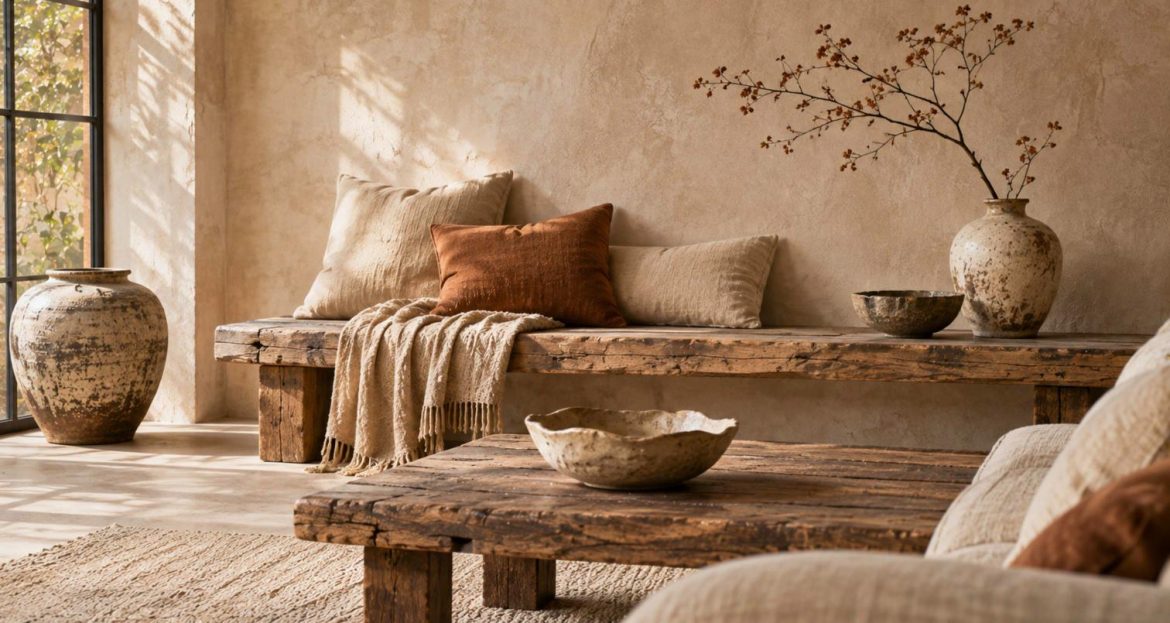
Wabi-Sabi Interior Design: Meaning, Principles & Furniture
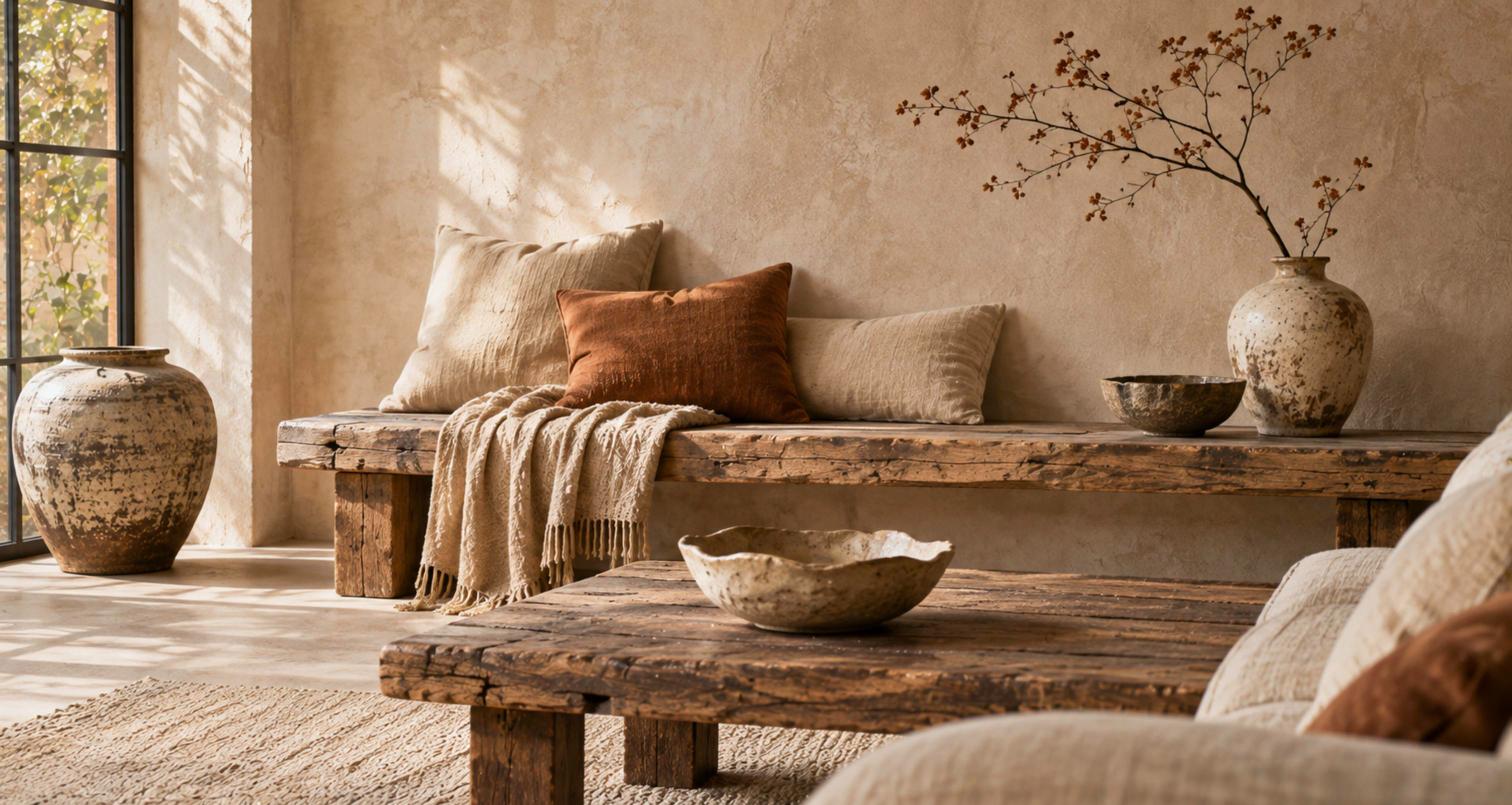
Wabi-sabi grew out of Zen Buddhism and the Japanese tea ceremony, where rustic, irregular tea bowls came to be prized over flawless imported porcelain. The two words have separate roots: wabi originally referred to the quiet simplicity of living close to nature, while sabi describes the beauty that comes with age, wear and the passage of time. Together they describe an outlook that values things that are modest, natural, aged and a little imperfect. In design, wabi-sabi offers an antidote to glossy, mass-produced perfection: homes that feel grounded, tactile and lived in.
Principles of wabi-sabi design
- Embrace imperfection: irregular shapes, uneven glazes and asymmetry are welcome.
- Honour age and wear: patina, cracks, knots and weathered surfaces tell a story.
- Use natural materials: wood, stone, clay, linen, cotton, wool and paper, finished simply.
- Keep it simple: fewer objects, chosen with care, and plenty of empty space.
- Favour handmade: craft objects over mass-produced ones.
- Connect with nature: branches, stones, dried flowers and seasonal changes.
Colours, textures and materials
Wabi-sabi palettes come from nature: warm whites, sand, clay, ochre, rust, moss green, stone grey and charcoal. Texture matters more than colour. Limewash and clay plaster walls, rough-sawn or reclaimed timber, raw linen, hand-thrown ceramics, natural stone and woven fibres all add depth. Finishes stay matte and natural rather than glossy.
Wabi-sabi furniture
- Solid-wood tables and benches that show grain, knots and tool marks.
- Reclaimed or antique furniture with natural patina.
- Low, simple seating with loose linen slipcovers.
- Open shelving with a few handmade ceramics (see bookcase).
- Woven baskets and stools in rattan, jute or seagrass.
- Paper lanterns and soft, low light rather than bright fixtures.
Wabi-sabi vs. Japandi vs. minimalism
Japandi takes wabi-sabi’s restraint and natural materials and polishes them with Scandinavian clean lines and comfort. Minimalism shares the love of empty space but often aims for crisp perfection, while wabi-sabi is softer, rougher and more organic. Hygge focuses on cosiness and togetherness more than on imperfection.
How to bring wabi-sabi home
- Declutter and keep only what is useful or meaningful.
- Swap synthetic finishes for natural materials over time.
- Choose one textured wall finish, such as limewash, as a backdrop.
- Display a few handmade objects with space around them.
- Let things age: keep furniture with marks and repair rather than replace.
- Bring in seasonal natural elements like branches and stones.
Wabi-sabi and sustainability
Wabi-sabi naturally supports sustainable living. Valuing patina means keeping furniture longer, buying vintage and repairing instead of discarding. In Metro Vancouver, that can mean reclaimed-timber furniture from BC makers, secondhand finds and local ceramics, all of which fit the philosophy and reduce waste.
Related terms
Frequently asked questions
What does wabi-sabi mean?
A Japanese aesthetic of finding beauty in imperfection, impermanence and simplicity.
What is wabi-sabi interior design?
A style using natural materials, handmade objects, earthy colours and visible patina in calm, uncluttered rooms.
What is the difference between wabi-sabi and Japandi?
Wabi-sabi is a rougher, more organic philosophy; Japandi blends it with cleaner Scandinavian lines and comfort.
What colours are wabi-sabi?
Natural earth tones such as sand, clay, rust, moss green, stone grey and charcoal.
Part of the Vancouver Furniture glossary of furniture, design and mattress terms. Browse furniture stores across Metro Vancouver or our mattress store guide.