Caning in Furniture: Hand Caning vs Pre-Woven Cane, Care & Repair
Rattan cane reached Europe through trade with Asia in the 17th century, and caned chairs became fashionable in England and the Netherlands from the 1660s, prized for being light, cool and comfortable. In the 19th century, bentwood café chairs with caned seats were produced in enormous numbers, and in the 20th century modernist designers used cane in chairs that are still made today. Cane has had a strong revival in recent years as part of the trend toward natural textures.
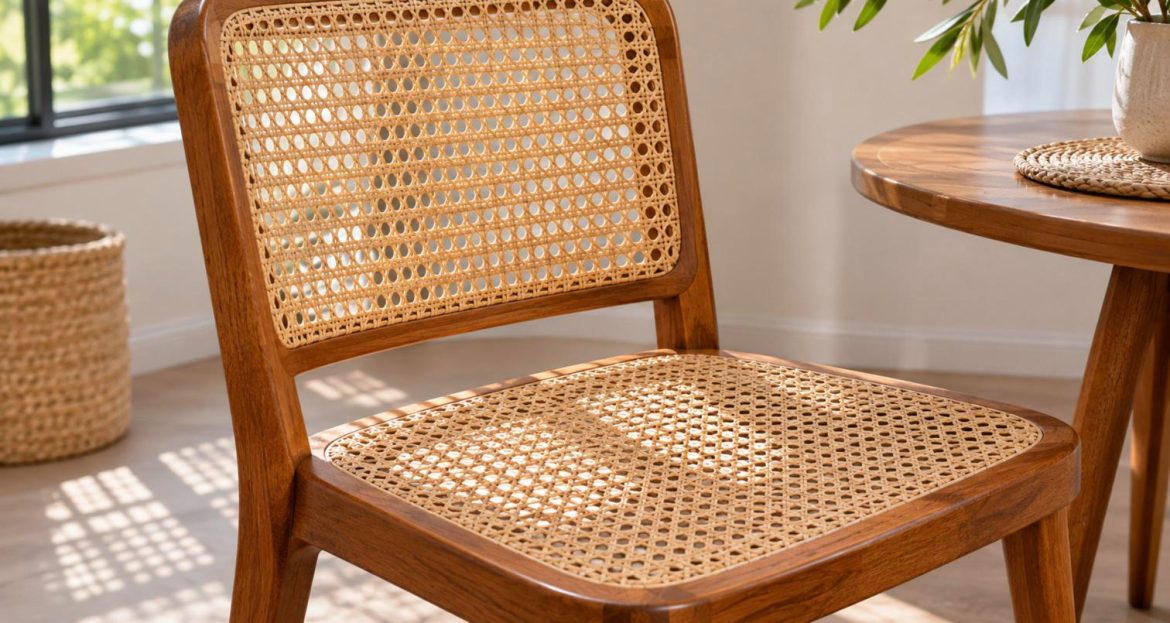
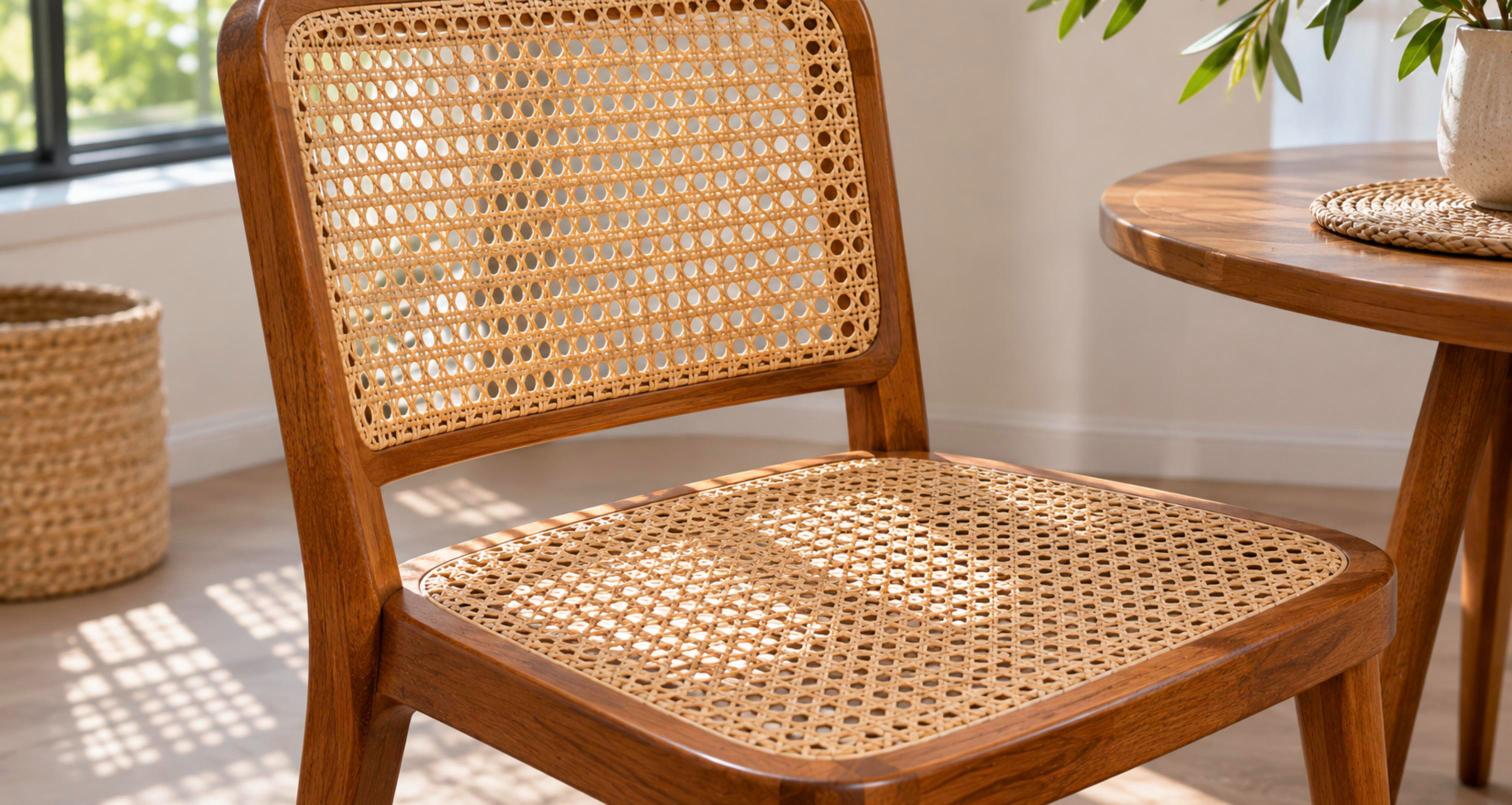
The chair in the photo pairs a warm wooden frame with seat and back panels in the classic octagonal pattern. The open weave lets light and air through, as the shadows show, which is why caned seats feel cooler than upholstery.
Hand caning vs. pre-woven cane
- Hand caning: individual strands are woven through a series of holes drilled around the seat frame. It is labour-intensive, traditionally done in a sequence of about seven steps, and extremely durable.
- Pre-woven (sheet) cane: machine-woven cane webbing pressed into a groove around the frame and held with a reed spline and glue. It is faster and cheaper, and is common on modern furniture.
To tell them apart, look for holes around the edge (hand caning) or a groove and spline (sheet cane).
Common patterns
- Traditional octagonal (seven-step): the classic open pattern shown in the photo.
- Close-woven or blind cane: a tighter mesh with smaller openings.
- Radio weave: a radiating pattern popular in mid-20th century pieces.
- Fishnet or sunburst variations for decorative panels.
Pros and cons
Pros: lightweight, breathable and cool, flexible and comfortable, natural and renewable, and visually light. Cons: can sag, crack or break under point loads such as kneeling or standing; dries out in heated homes; can catch on sharp objects; and repairs require skill.
Caring for cane
- Dust with a soft brush or vacuum attachment.
- Wipe with a damp cloth and mild soap; dry thoroughly.
- Keep away from heaters and direct sun, which make cane brittle.
- Occasionally lightly mist the underside to keep fibres supple.
- Never stand or kneel on a caned seat.
- Use a thin seat pad to spread the load if needed.
Fixing a sagging seat
Natural cane shrinks as it dries. To tighten a sagging seat, dampen the underside with warm water using a sponge or cloth, then let it dry slowly at room temperature, away from heat. The cane often tightens as it dries. Broken or badly worn cane should be replaced by a caning specialist or with new sheet cane.
Styling cane today
- Cane dining chairs pair well with oak or walnut tables.
- Caned headboards add texture in bohemian and coastal bedrooms.
- Cane-front sideboards and media consoles hide clutter while letting remotes signal through.
- Combine with linen, plants and natural wood for a warm, organic look.
Related terms
Frequently asked questions
What is caning in furniture?
Thin strips of rattan bark woven into an open mesh, used for seats, backs and panels.
What is the difference between cane and rattan?
Rattan is the plant and its solid stems; cane is the thin outer bark woven for seats.
How do you tighten a sagging cane seat?
Dampen the underside with warm water and let it dry slowly away from heat.
Is cane furniture durable?
Yes with care, but it can crack under point loads and when it dries out.
Part of the Vancouver Furniture glossary of furniture, design and mattress terms. Browse furniture stores across Metro Vancouver or our mattress store guide.