Windsor Chair: Definition, History, Types & How to Spot Quality
Windsor chairs appeared in England in the early 18th century, and the name is usually linked to the town of Windsor, through which many were shipped to London. Rural chairmakers, called bodgers, turned legs and spindles from green wood in the beech woods of the Chiltern Hills. The design crossed to America, where Philadelphia makers produced it in large numbers from the 1730s onward; Windsor chairs were used in Independence Hall and are associated with the founding era of the United States.
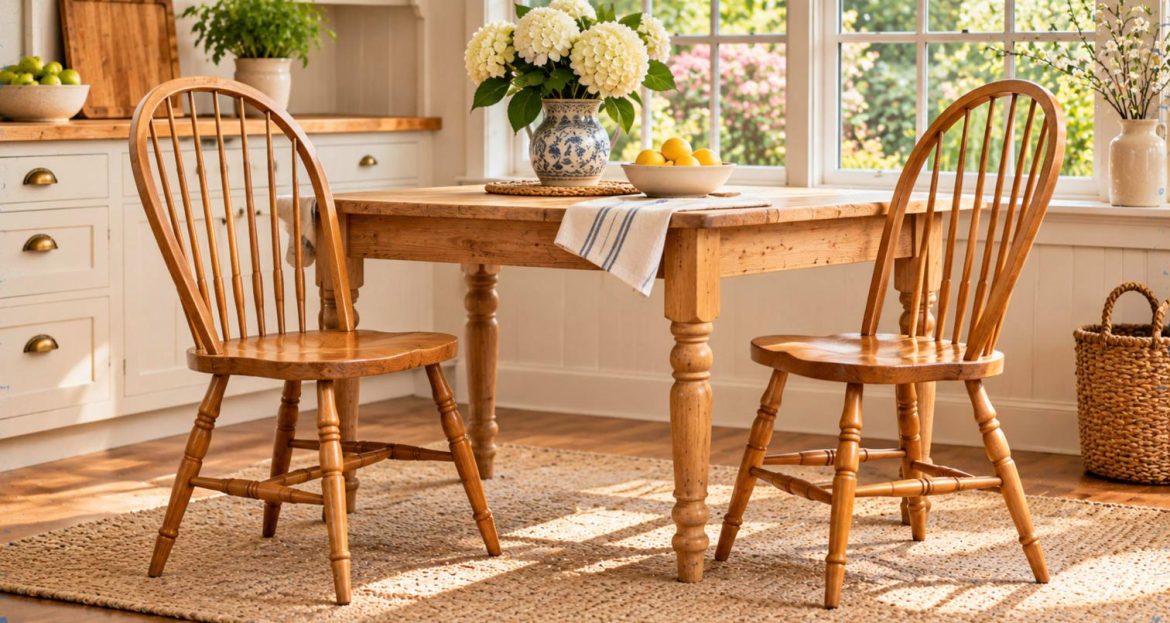
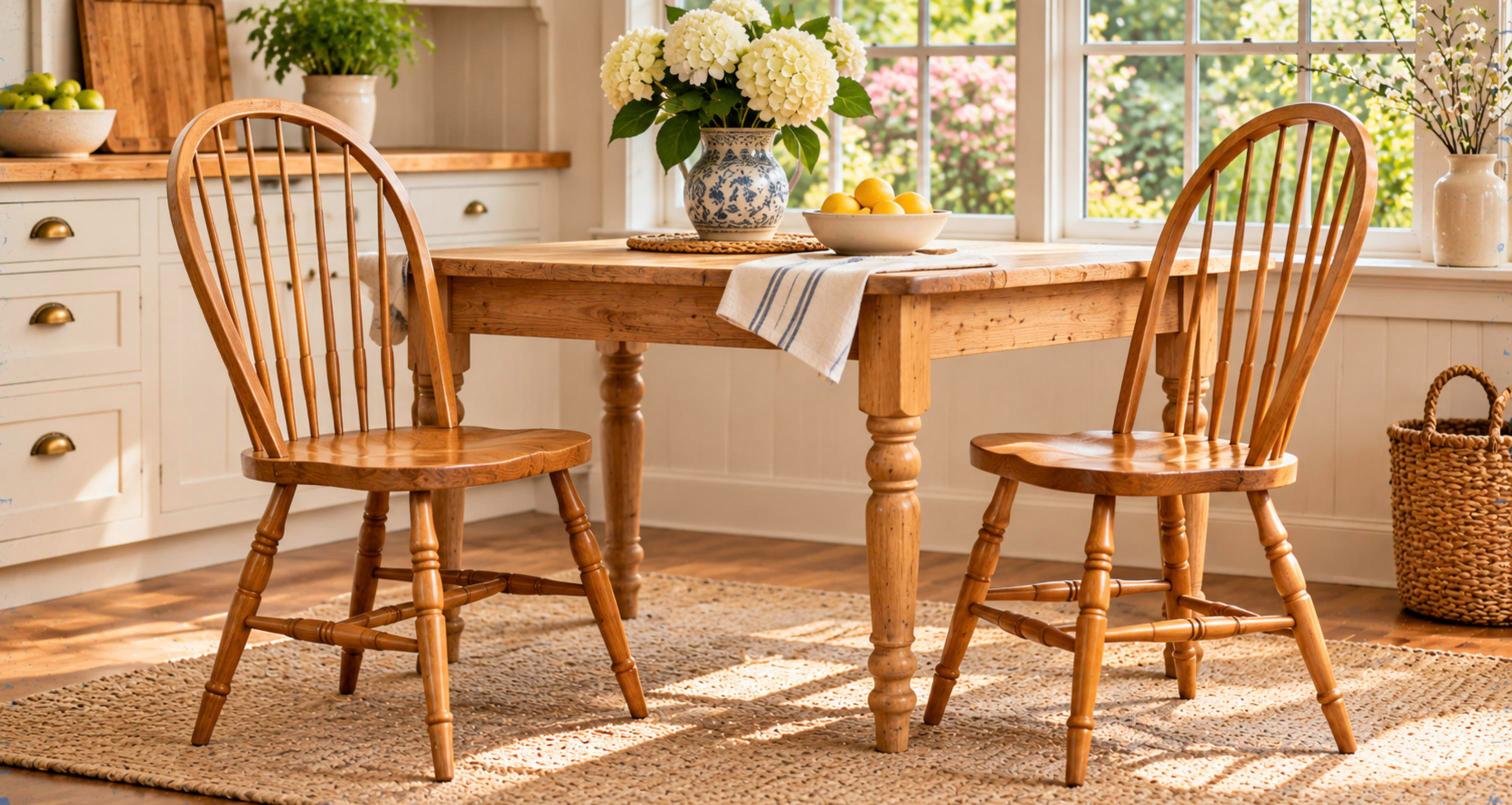
Three centuries later, the Windsor remains one of the most popular chair designs in the world, at home in farmhouse kitchens like the one in the photo, in country inns and in modern Scandinavian-style dining rooms.
How a Windsor chair is built
The heart of the chair is the seat, often carved into a “saddle” shape that dips in the middle and slopes toward the front, as in the photo. Holes are drilled into it at precise angles: underneath for the legs, which splay outward for stability, and on top for the back spindles and arm supports. Traditional makers combined woods for their strengths: a wide, soft plank such as elm or pine for carving the seat, and strong, flexible woods such as ash, oak or hickory for the bent and turned parts. Legs are often connected by stretchers, sometimes in an H pattern.
Main styles of Windsor chair
- Hoop-back or bow-back: a single bent piece forms an arch over the spindles, as shown in the photo.
- Comb-back: spindles rise to a separate curved crest rail that resembles a comb.
- Fan-back: the spindles fan outward toward a crest rail.
- Sack-back: a low arm rail with a smaller arched back above it.
- Continuous-arm: one bent piece forms both back and arms.
- Low-back or captain’s chair: a low curved back rail at arm height.
- Wheelback: an English type with a pierced splat shaped like a wheel in the centre of the back.
Why Windsor chairs are so durable
Socketed construction lets each part flex slightly under load, and traditional makers used wood of different moisture contents so that joints tightened as they dried. Wedged tenons through the seat lock the legs in place. Well-made Windsors can last for generations and are easy to repair if a joint loosens.
Pros and cons
Pros: lightweight yet strong, timeless, comfortable for an all-wood chair thanks to the shaped seat and flexing back, and easy to clean. Cons: hard seats may need a cushion for long meals; spindles take time to dust; cheap imitations with thin seats and glued-on legs are less durable.
How to judge quality
- Look for a thick seat (about 1.5–2 inches) with a deeply shaped saddle.
- Check that legs and spindles go into drilled sockets and, ideally, through the seat with wedges.
- Sit and lean back: the back should flex gently but feel secure.
- Prefer solid hardwood to veneered or particleboard seats.
- Inspect stretchers for tight joints with no rocking.
Styling Windsor chairs today
- Classic farmhouse: natural or painted chairs around a trestle table.
- Modern: black or white Windsors around a contemporary table.
- Eclectic: mix Windsor chairs in different colours.
- Add tie-on seat cushions for comfort.
Related terms
Frequently asked questions
What makes a chair a Windsor chair?
A solid wooden seat into which the legs and back spindles are socketed separately.
Why is it called a Windsor chair?
The name is usually linked to Windsor, England, through which many early chairs were shipped to London.
Are Windsor chairs comfortable?
Yes, for an all-wood chair; the saddle seat and flexing back help, and a cushion adds comfort for long meals.
What wood are Windsor chairs made from?
Traditionally an elm or pine seat with ash, oak, hickory or maple legs and spindles.
Part of the Vancouver Furniture glossary of furniture, design and mattress terms. Browse furniture stores across Metro Vancouver or our mattress store guide.