Plywood Furniture: How It’s Made, Grades, Plywood vs MDF vs Solid Wood
Layered wood has been used since ancient Egypt, but modern plywood took off in the late 19th and early 20th centuries with rotary veneer cutters and improved glues. In the mid-20th century, designers explored moulded plywood to create lightweight, curved chairs, and plywood became a symbol of modern, democratic design. Today it is the backbone of high-quality cabinetry, case goods and contemporary furniture.
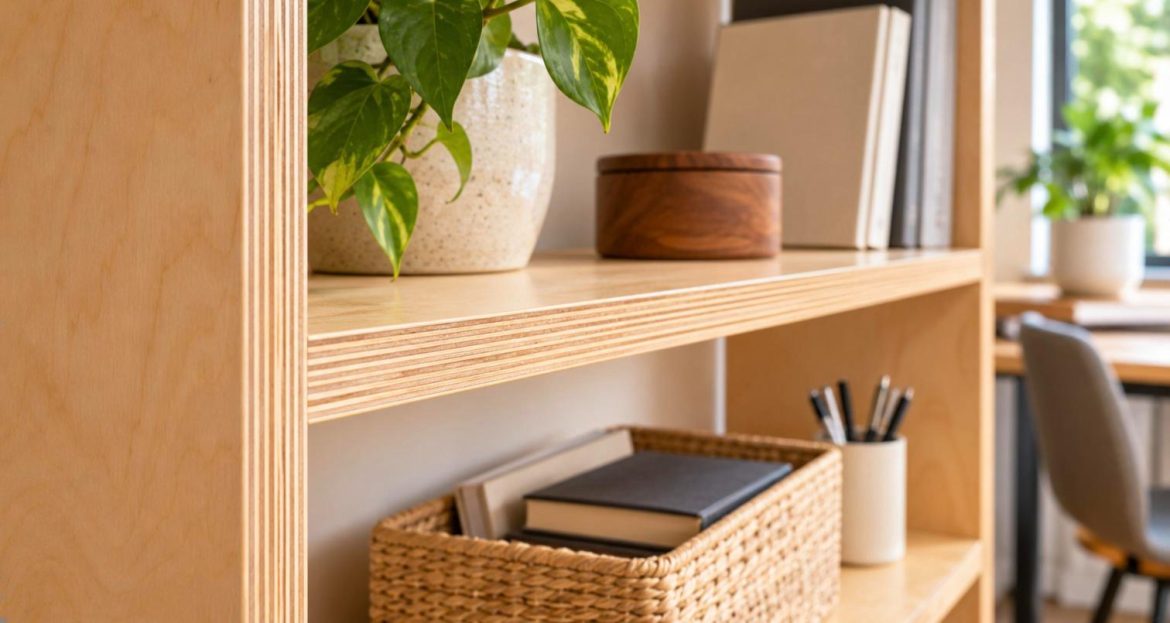
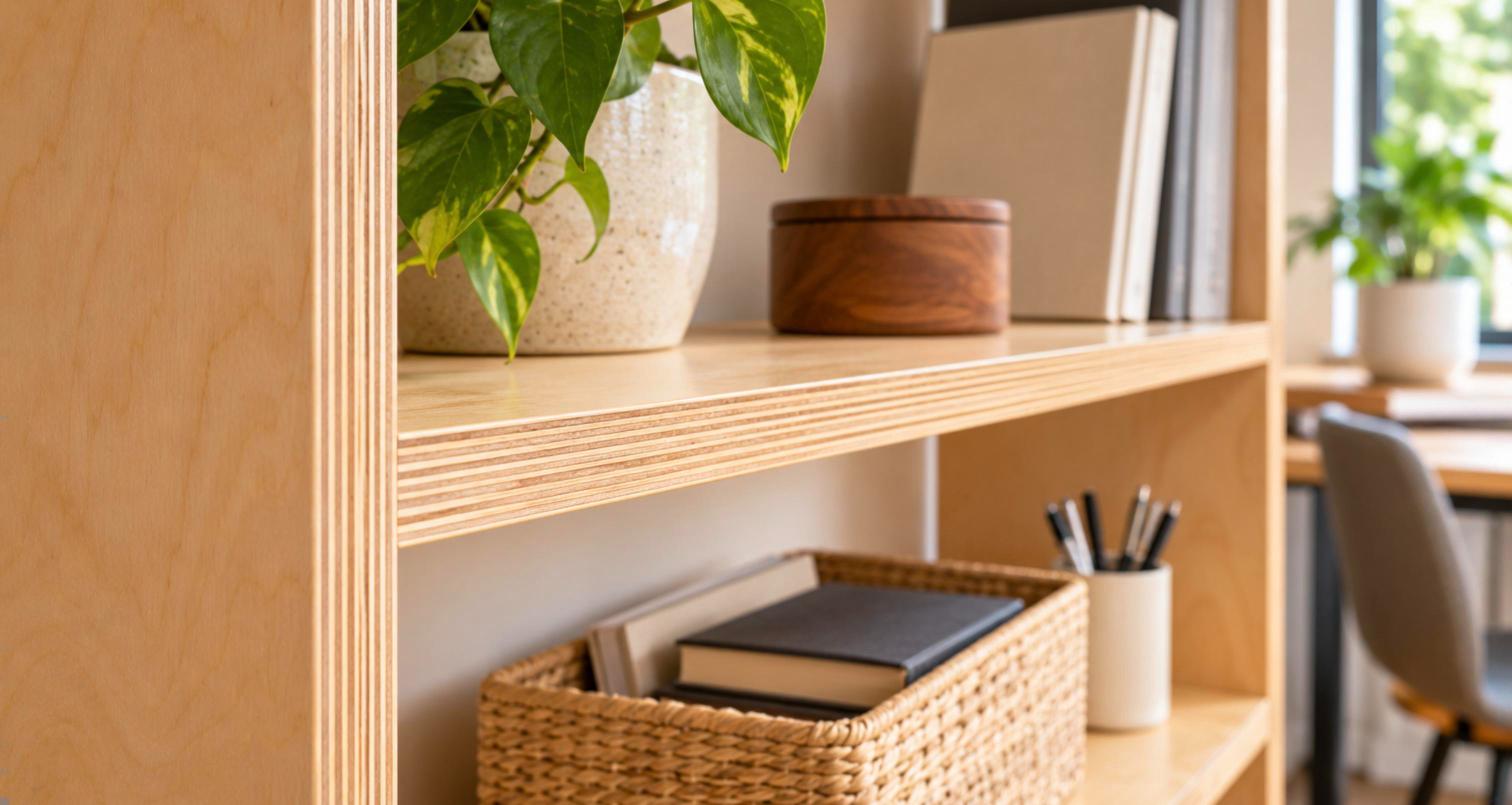
The shelving in the photo leaves its plywood edges exposed, celebrating the striped layers rather than hiding them. This look is popular in modern, Scandinavian-inspired and minimalist interiors and in home offices.
How plywood is made
Logs are peeled on a lathe into long, thin sheets of veneer. The sheets are dried, graded, glued and stacked with alternating grain directions, then pressed under heat and pressure. Most plywood has an odd number of plies so the panel stays balanced. The outer layers, or faces, can be a decorative hardwood such as oak, walnut or maple.
Types used in furniture
- Baltic birch: made entirely of birch plies, with more, thinner layers and few voids; very strong and attractive on edges; prized for drawers and exposed-edge designs.
- Hardwood plywood: a core of plywood, MDF or particleboard with a decorative hardwood face veneer.
- Softwood plywood: typically fir or pine; used in construction and structural parts.
- Marine plywood: made with waterproof glue and void-free plies; for boats and very humid areas.
- Formaldehyde-free plywood: uses low-emission adhesives; good for indoor air quality.
Plywood vs. MDF vs. particleboard vs. solid wood
- vs. MDF: plywood is stronger, lighter and holds screws better; MDF is smoother for paint and cheaper.
- vs. particleboard: plywood is much stronger and more moisture-tolerant.
- vs. solid wood: plywood is more dimensionally stable and less prone to warping; solid wood can be refinished more deeply and is often more valuable.
Grades
Hardwood plywood faces are graded by appearance, for example A (best, few defects) down to D. Two letters, such as A-B, describe the front and back faces. For furniture, look for high-grade faces and few internal voids, which can weaken edges and hardware connections.
Pros and cons
Pros: strong for its weight, stable, holds screws and joinery well, more water-tolerant than MDF or particleboard, and attractive layered edges. Cons: costs more than MDF or particleboard, visible edges need banding unless left exposed by design, thin face veneers limit sanding, and lower grades can have voids.
How to judge plywood furniture
- Look at drawer sides and backs: plywood is a sign of quality construction.
- Check exposed edges for gaps or voids.
- Ask about the glue and emissions (e.g., CARB Phase 2 compliant or formaldehyde-free).
- Look for solid-wood or veneer edge banding where edges are covered.
- Check the thickness of shelves to avoid sagging; 3/4 inch is typical for longer spans.
Related terms
Frequently asked questions
Is plywood good for furniture?
Yes, good-quality plywood is strong, stable and widely used in high-end cabinetry and furniture.
What is Baltic birch plywood?
Plywood made entirely of thin birch layers with few voids, prized for strength and attractive edges.
Is plywood better than MDF?
Plywood is stronger and holds screws better; MDF is smoother for painted finishes.
Is plywood better than solid wood?
It is more stable and less prone to warping; solid wood can be refinished more deeply.
Part of the Vancouver Furniture glossary of furniture, design and mattress terms. Browse furniture stores across Metro Vancouver or our mattress store guide.