Mattress Firmness Scale (1–10): How to Choose the Right Firmness
Firmness is the single most important comfort choice when buying a mattress, and also one of the most confusing. Each brand uses its own labels, so one company’s “medium” can feel like another’s “firm”. Body weight, sleep position and personal preference all change how a mattress feels to you.
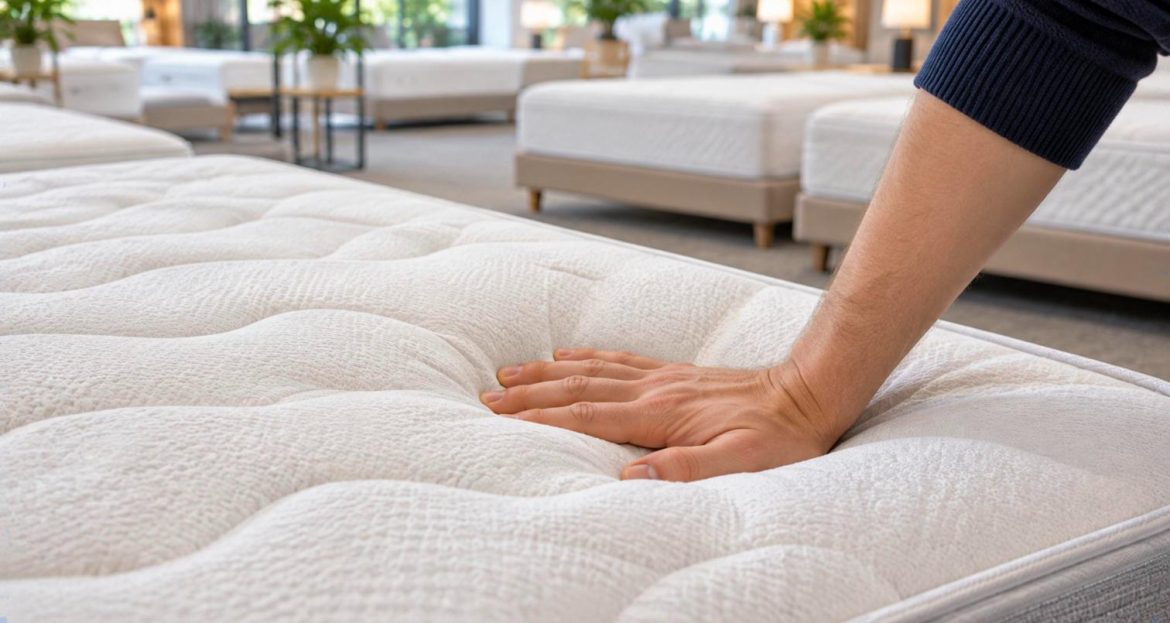
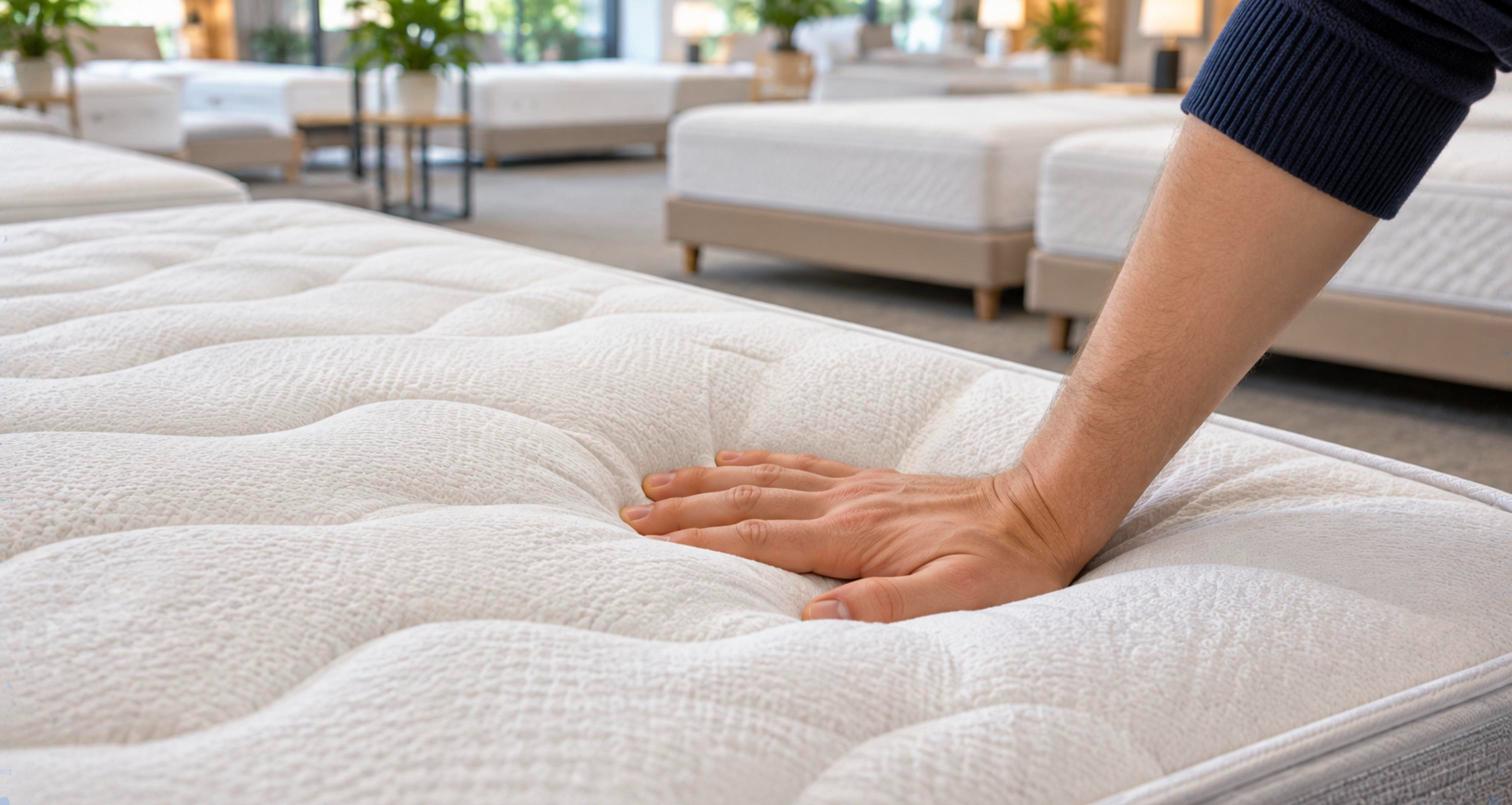
The hand test shown in the photo is a quick first impression, but the only reliable test is lying on a mattress in your normal sleep position for several minutes. This guide explains the scale and how to choose.
The firmness scale
- 1–2, extra soft: deep sink; rare in stores.
- 3–4, soft: plush, with lots of contouring.
- 5, medium: balanced cushioning and support.
- 6–7, medium-firm: the most popular range; supportive with some give.
- 8–9, firm: minimal sink; you lie on top of the mattress.
- 10, extra firm: very little give; uncommon.
Firmness vs. support
Firmness is how the surface feels. Support is how well the mattress keeps your spine in neutral alignment. A soft mattress can still be supportive if its core holds your hips up, and a very firm mattress can be unsupportive for a side sleeper if the shoulders and hips cannot sink in enough. Sagging, not softness, is the most common sign of poor support.
Firmness by sleep position
- Side sleepers: usually soft to medium (about 3–6) so the shoulders and hips can sink in.
- Back sleepers: medium to medium-firm (about 5–7) to support the lower back.
- Stomach sleepers: medium-firm to firm (about 6–8) to stop the hips sinking and arching the spine.
- Combination sleepers: medium to medium-firm, with a responsive surface that makes turning easy.
How body weight changes the feel
Lighter people (under about 130 lb) sink less, so a mattress feels firmer to them; they often prefer softer options. Heavier people (over about 230 lb) sink more, so a mattress feels softer; they often need firmer, thicker mattresses with strong coil or high-density foam support. Couples with different needs may consider a split king or a mattress with dual firmness.
How materials affect feel
- Memory foam feels softer and slower because it contours.
- Latex feels buoyant and springy.
- Innerspring mattresses feel bouncy and often firmer.
- Pillow tops add surface softness.
- Cold temperatures make foam feel firmer, especially in winter delivery.
How to test firmness in a store
- Wear comfortable clothes and bring your own pillow if you can.
- Lie in your usual sleep position for at least five to ten minutes.
- Have someone check whether your spine looks straight from the side.
- Test a few levels in the same line to compare.
- Ask about the sleep trial: new mattresses can take several weeks to break in.
Fixing the wrong firmness
If your mattress is too firm, a soft mattress topper can help. If it is too soft, a firm latex topper adds some support, but a mattress that sags needs replacing. Many retailers allow a comfort exchange within the trial period.
Related terms
Frequently asked questions
What is the most popular mattress firmness?
Medium-firm, about 6 to 7 on a 10-point scale.
What firmness is best for side sleepers?
Usually soft to medium, about 3 to 6, so the shoulders and hips can sink in.
Is a firm mattress better for back pain?
Not always; many people with back pain do best on medium-firm.
Is firmness the same as support?
No, firmness is surface feel, while support is spinal alignment.
Part of the Vancouver Furniture glossary of furniture, design and mattress terms. Browse furniture stores across Metro Vancouver or our mattress store guide.