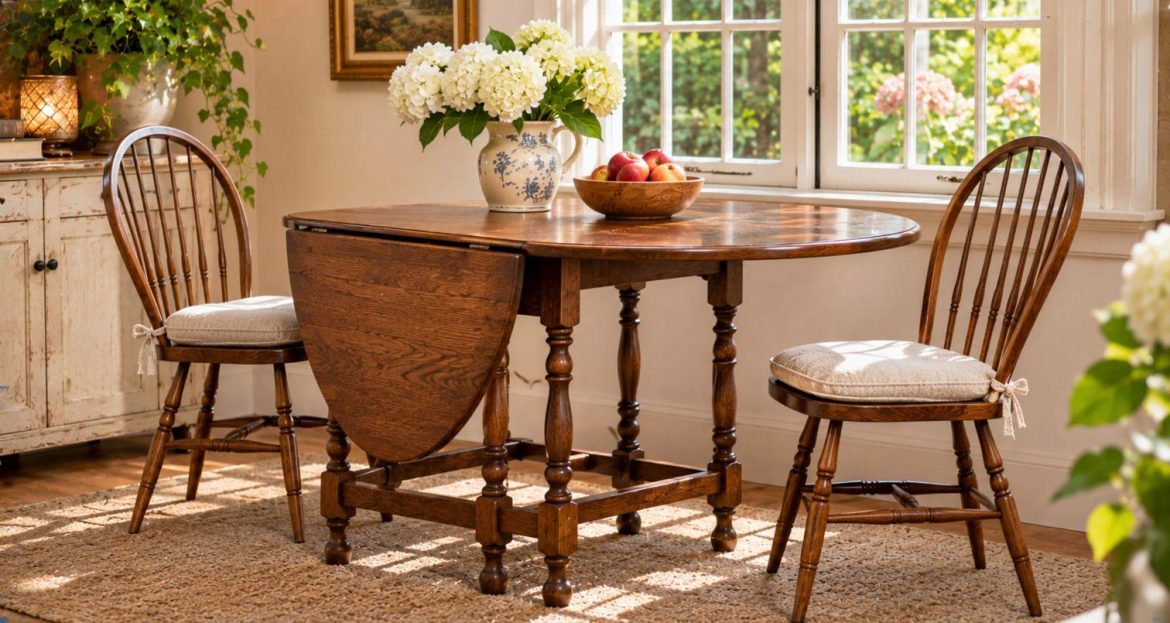
Gateleg Table: History, How It Works & Gateleg vs. Drop-Leaf
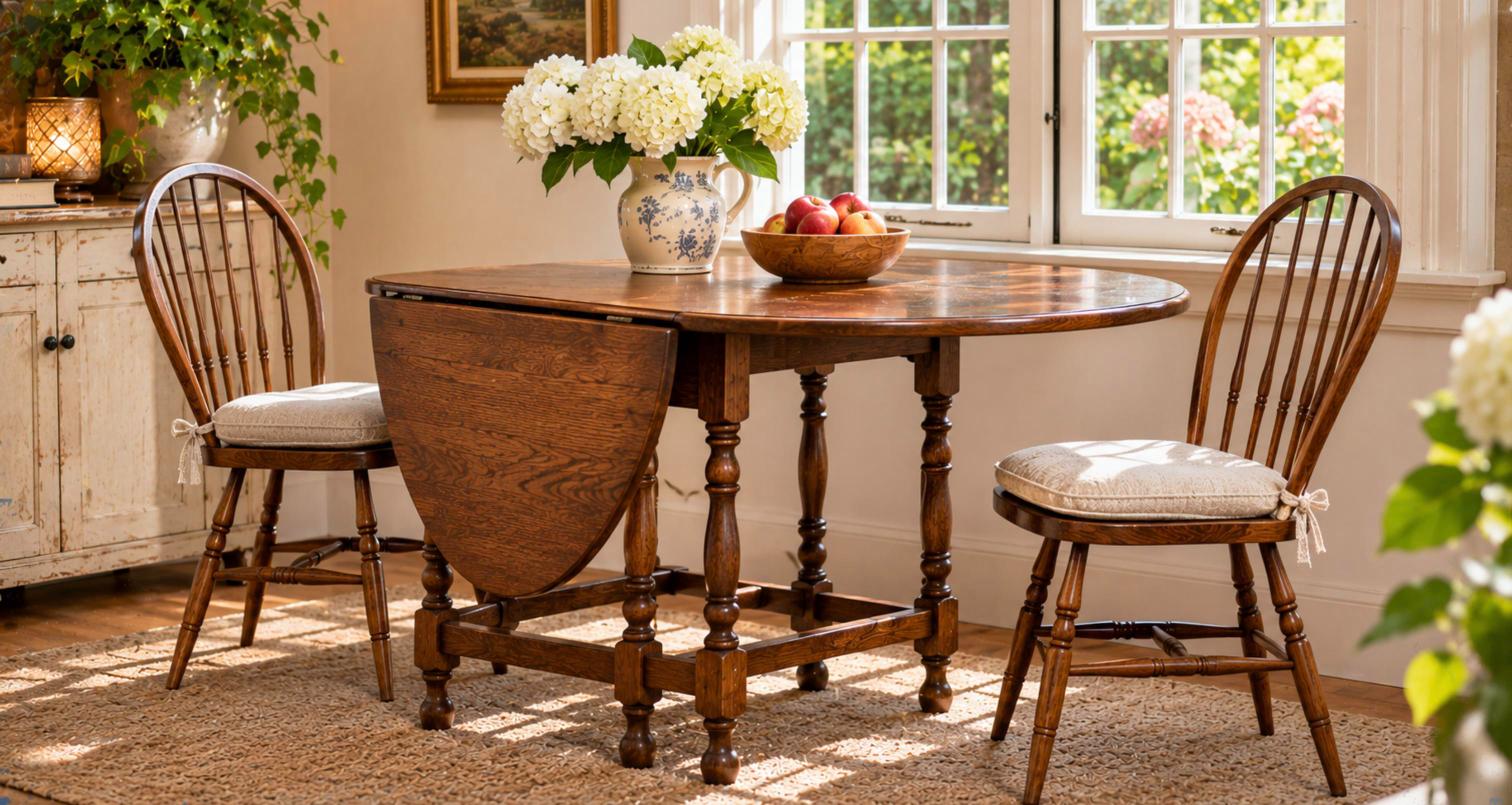
Gateleg tables were popular in England and colonial America in the 17th and early 18th centuries, when even well-off households used rooms for many purposes and furniture had to be moved or stored. Their turned legs, stretchers and oval tops are classic features of the period, and antique oak gatelegs remain sought-after today.
The design has never gone out of use because it solves a modern problem perfectly: how to fit a table for six into a home that usually needs a table for two. Contemporary gateleg tables, from slim painted versions to folding designs that store almost flat against a wall, are a staple of small-space living in Metro Vancouver.
How the gate mechanism works
The table has a narrow fixed centre top supported by a rectangular frame of legs and stretchers. On each side, an additional leg and stretcher are attached by a pivot, forming a “gate”. To open, you lift a leaf and swing the gate leg outward beneath it until it supports the leaf. Large antique tables often have double gates on each side for extra support.
Antique gateleg tables
Period examples are typically oak or walnut with baluster-turned or barley-twist legs, low stretchers near the floor and oval tops. When buying antiques, check for original surfaces, solid pivot joints, well-fitting hinges and repairs to the legs. Wear on stretchers from centuries of feet is normal and part of the character (see antique furniture and patina).
Modern gateleg tables
- Folding gateleg: very slim when closed, sometimes with storage drawers in the centre section.
- Painted cottage-style: suits farmhouse and coastal interiors.
- Scandinavian: light wood, clean lines, tapered legs.
- Wall-hugging: one leaf only, designed to sit against a wall.
Gateleg vs. drop-leaf vs. extension tables
All drop-leaf tables have hinged leaves; a gateleg is the version where swinging legs provide the support, making it very stable for large leaves. An extension table instead pulls apart to insert leaves. Gatelegs fold smaller than extension tables, but the extra legs can get in the way of seated knees, so check placement before buying.
Using a gateleg table in small homes
- Keep it closed against a wall as a console or serving table.
- Raise one leaf for daily meals for two.
- Open fully for dinner parties and holidays.
- Store folding chairs in a closet or use a bench nearby.
- Choose a model with drawers in the centre for cutlery and napkins.
Buying checklist
- Test every gate: it should swing smoothly and lock firmly under the leaf.
- Check that the open top is level and does not wobble.
- Measure closed and open sizes against your room.
- Look for solid wood, especially in the legs and gates.
- Consider how many people need to sit and where the gate legs fall.
Related terms
Frequently asked questions
What is a gateleg table?
A drop-leaf table whose leaves are supported by legs that swing out like a gate.
When were gateleg tables popular?
Especially in the 17th and early 18th centuries in England and colonial America.
Are gateleg tables good for small spaces?
Yes. They fold to a very narrow profile and open to seat several people.
What is the difference between a gateleg and a drop-leaf table?
A gateleg is a type of drop-leaf table that uses swing-out legs to support its leaves.
Part of the Vancouver Furniture glossary of furniture, design and mattress terms. Browse furniture stores across Metro Vancouver or our mattress store guide.