China Cabinet: Definition, Types, Sizes & Modern Ways to Use One
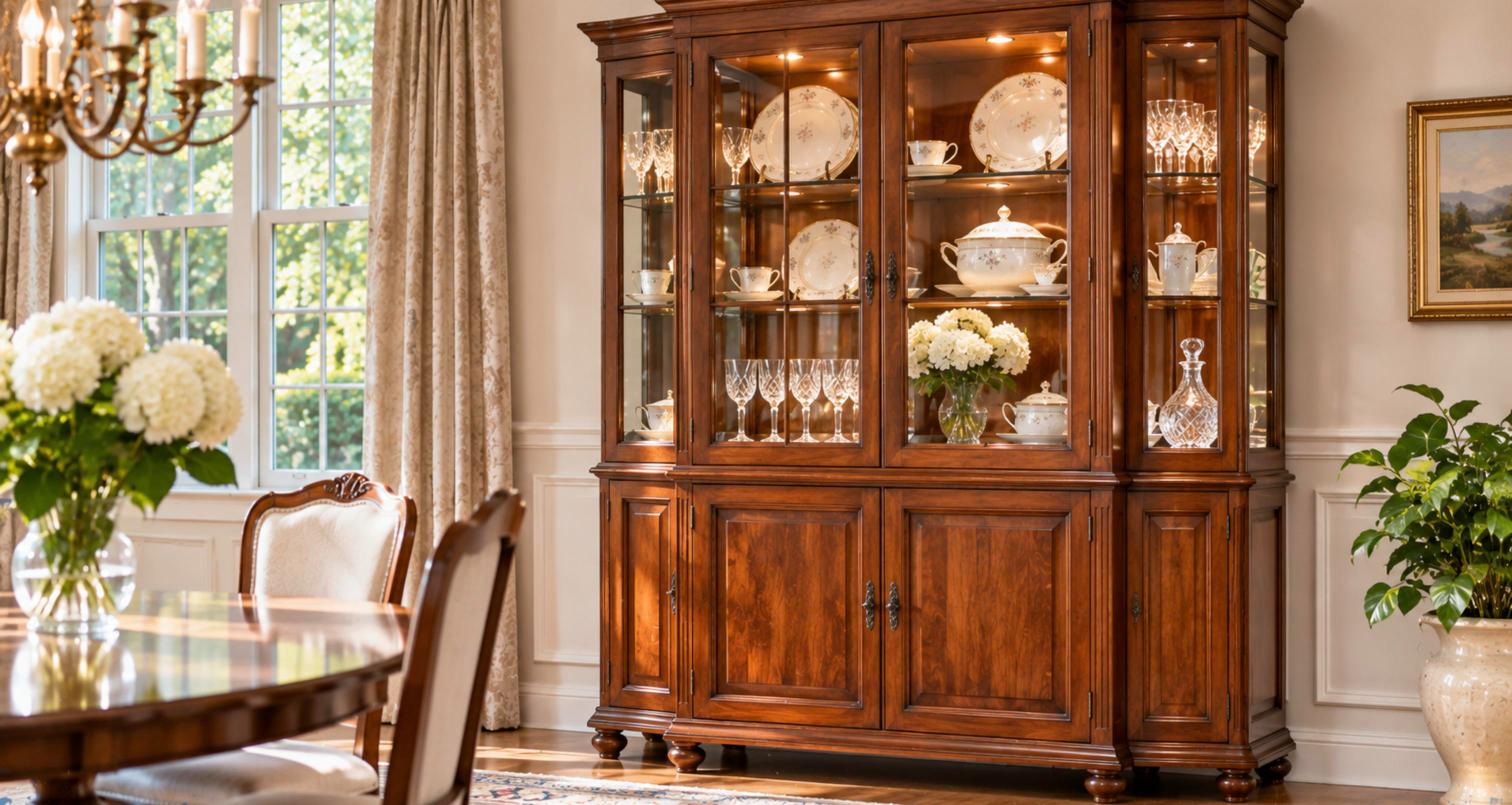
China cabinets became fashionable in the 18th and 19th centuries, when porcelain imported from China and later produced in Europe was a prized household possession. Families displayed their best tableware behind glass so it could be admired while staying dust-free. The cabinet itself became a sign of a well-furnished home, and many were passed down as heirlooms along with the china they held.
Today, china cabinets are less about formal dinner services and more about display: pottery, glassware, books, plants and collections. Vintage pieces are widely available secondhand around Metro Vancouver, and painted or modernised versions can be striking in contemporary rooms.
China cabinet vs. hutch vs. curio cabinet
- China cabinet: usually glass on the front and often the sides of the upper section, sometimes with mirrored backs and lighting; designed mainly for display.
- Hutch: a lower cabinet topped with an upper section of open shelves or glass doors; often more casual or country in style.
- Curio cabinet: a narrower, mostly glass case for small collectibles, often with glass on all sides.
Retailers use the terms loosely, so compare the actual design and dimensions.
Common features
- Glass doors and side panels to show contents from several angles.
- Glass or wood shelves; glass lets light pass through all levels.
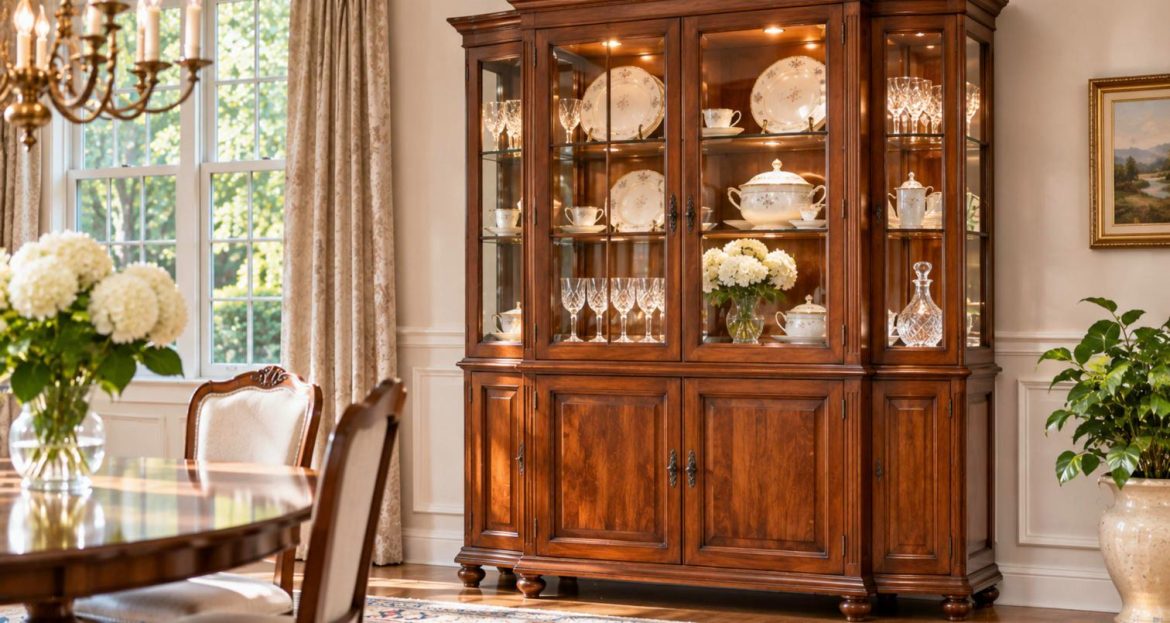
- Interior lighting, often LED, to make crystal and porcelain sparkle, as in the photo.
- Plate grooves for standing plates upright.
- Mirrored backs to reflect light and double the display.
- Lower cabinets and drawers for table linens, serving pieces and silverware.
Sizing and placement
Check ceiling height and leave a few inches above the cabinet. Allow at least 36 inches (91 cm) between the cabinet and dining chairs so doors open and people can pass. Place it on the wall opposite or beside the dining table, ideally away from direct sunlight that can fade wood and heat glass. Tall cabinets must be anchored to the wall, especially in earthquake-prone British Columbia.
Earthquake safety in BC
Metro Vancouver is in an active seismic zone, and tall glass-fronted cabinets full of breakables are a hazard in a quake. Secure the cabinet to wall studs with anti-tip straps or brackets, use museum putty or wax under precious items, and consider latches that keep doors closed. Place heavier items on lower shelves.
Modern ways to use a china cabinet
- Display everyday dishes and glasses in a mix of colours and textures.
- Turn it into a bar cabinet with glassware and bottles (see bar cabinet).
- Use it as a bookcase or plant cabinet in a living room.
- Paint a vintage cabinet a bold colour and swap hardware.
- Store craft supplies or collections in a home office or studio.
Styling tips
Group items by colour or type, vary heights, and leave breathing space on each shelf. Stand large plates at the back, put bowls and cups in front, and use the top shelf for lighter, taller objects. Warm-white lighting flatters wood and porcelain.
Buying vintage
Check for sturdy joinery, intact glass, working locks and level shelves. Replace old incandescent bulbs with cool-running LEDs. Many vintage china cabinets are solid wood or quality veneer and can be refinished or painted.
Related terms
Frequently asked questions
What is a china cabinet?
A tall cabinet with glass doors and shelves for displaying dishes, glassware and collectibles, usually with closed storage below.
What is the difference between a china cabinet and a hutch?
A china cabinet is more display-focused with glass sides and lighting; a hutch often has open shelves and a more casual style.
Should a china cabinet be anchored to the wall?
Yes, especially in BC’s earthquake zone.
What can I put in a china cabinet besides china?
Glassware, pottery, books, plants, collections or a home bar setup.
Part of the Vancouver Furniture glossary of furniture, design and mattress terms. Browse furniture stores across Metro Vancouver or our mattress store guide.