Barrel Chair: Definition, History, Styles & How to Choose One
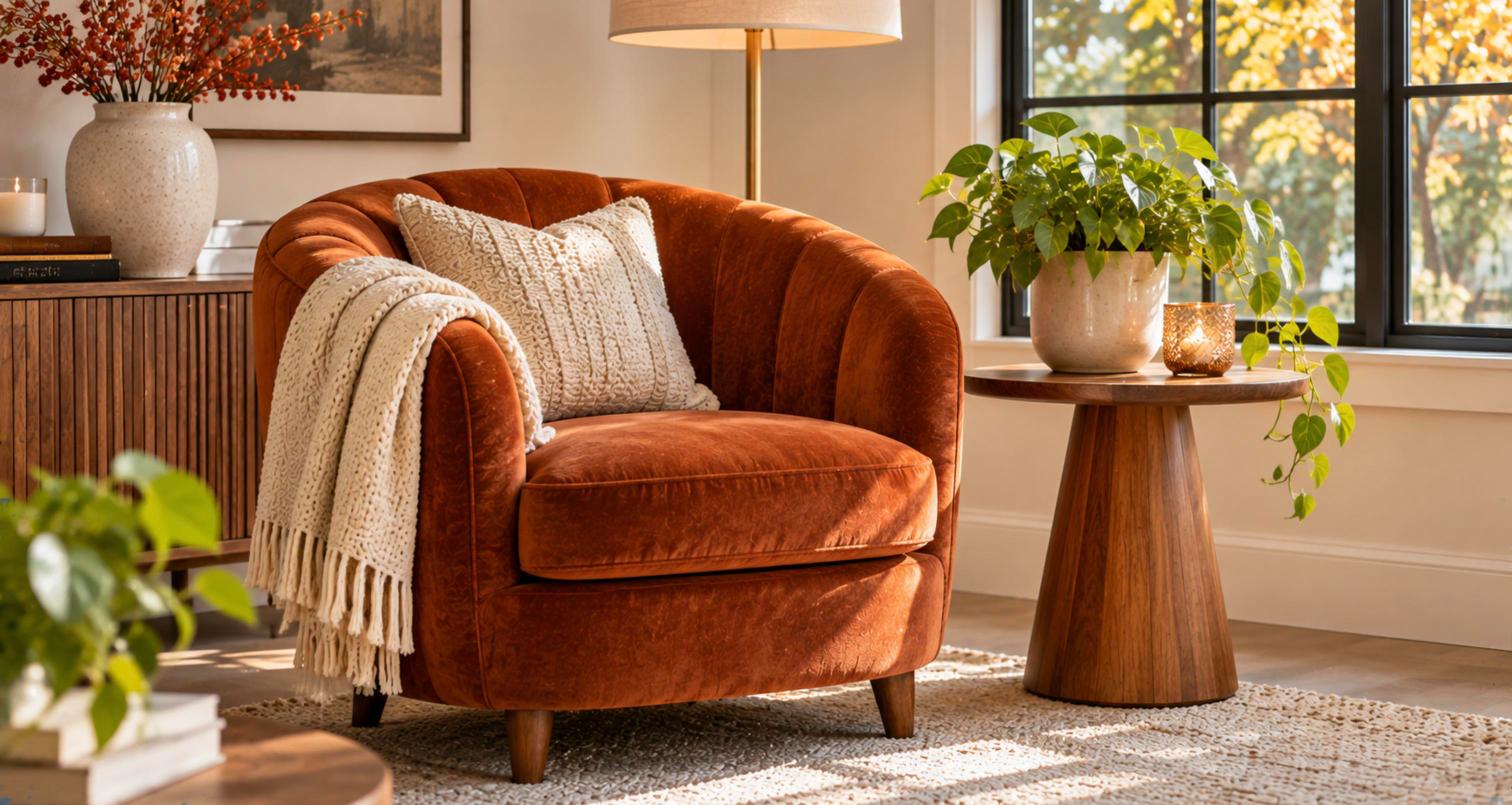
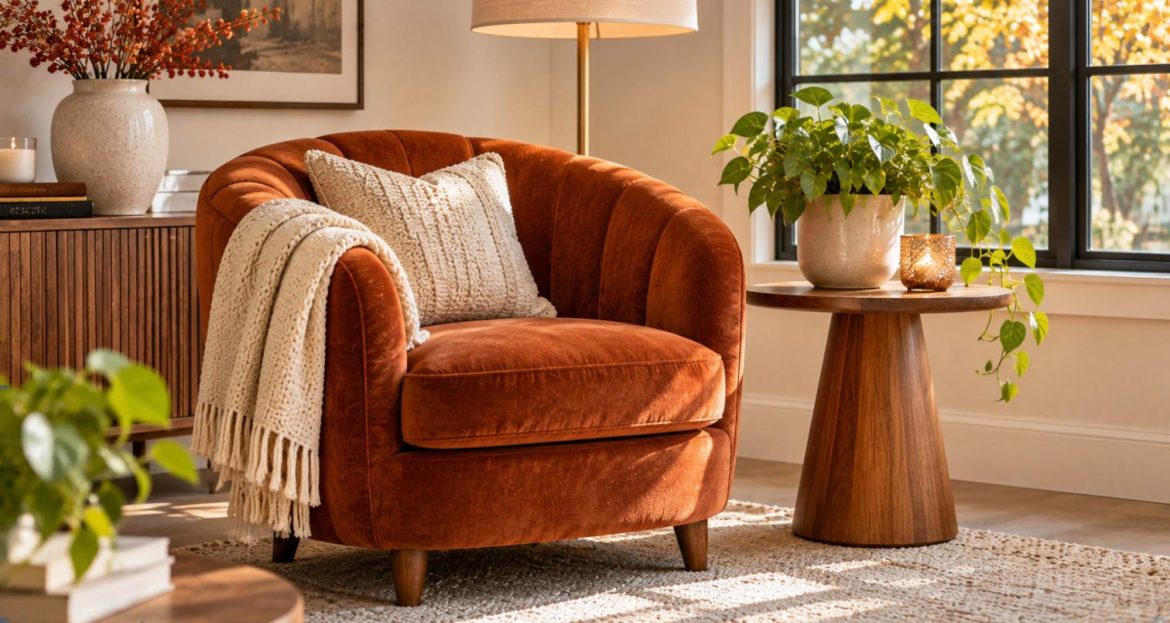
Curved, barrel-backed chairs date back centuries; early versions were literally made from halved wine and ale barrels, and upholstered barrel chairs became fashionable in the 18th and 19th centuries. The form returned strongly in mid-century and 1970s interiors and is popular again today, often in velvet or bouclé with channel stitching, as in the photo. Its rounded silhouette softens rooms full of straight lines and squared-off sofas.
Because a barrel chair has no corners sticking out, it suits small spaces, conversation areas and corners where a boxy armchair would feel bulky. It is one of the easiest ways to add a sculptural accent to a Vancouver condo living room.
Barrel chair vs. tub chair vs. club chair
The terms overlap. A barrel chair has a taller curved back that continues into the arms at roughly the same height. A tub chair is usually lower and smaller, with the back and arms forming a shallow tub shape. A club chair is low and deep but generally has distinct, squarer arms. All three are fully upholstered armchairs designed for relaxed sitting.
Popular styles
- Channel-tufted barrel chair: vertical stitched channels emphasise the curve; a strong 1970s and Art Deco influence (see tufting).
- Swivel barrel chair: rotates on a hidden base, ideal between a living area and a view or TV.
- Skirted barrel chair: a fabric skirt hides the legs for a traditional look.
- Leggy modern barrel chair: slim tapered or metal legs keep it light.
- Leather barrel chair: durable and clubby, ages with a patina.
Why choose a barrel chair?
- Space-efficient: the round footprint fits corners and tight conversation groups.
- Comfortable: the wraparound back supports the back and sides.
- Visual softness: curves balance boxy sofas and rectangular rooms.
- Flexible: works as an accent chair, reading chair, bedroom chair or even a dining host chair.
Sizing and placement
Most barrel chairs are 26 to 32 inches wide and deep. Place a pair facing a sofa across a coffee table for a classic layout, leaving 16 to 18 inches to the table. Swivel barrel chairs work well in open-plan rooms because they can turn toward conversation, the kitchen or the window. In bedrooms, a single barrel chair with a floor lamp creates a compact reading nook.
Fabrics and upholstery
Velvet shows off the curve and comes in rich colours; bouclé adds texture; leather offers durability. Because curved upholstery is harder to make than flat panels, check that seams are straight and the fabric is smooth without puckering. Choose performance fabric if the chair will see daily use or pets.
Quality checklist
- Sit in it: the back should support you without forcing you forward.
- Check that the arm height suits your sofa and side tables.
- For swivel chairs, test the mechanism for smoothness and stability.
- Ask about the frame (ideally kiln-dried hardwood) and cushion density.
- Look closely at curved seams and channel stitching for consistency.
Styling ideas
Pair a jewel-toned velvet barrel chair with a neutral sofa for a focal point, or use two matching chairs in cream bouclé for a soft, gallery-like look. Add a small round side table, as in the photo, to echo the curves, and a lumbar cushion for extra comfort.
Related terms
Frequently asked questions
What is a barrel chair?
An upholstered armchair whose back curves continuously into the arms, like half a barrel.
What is the difference between a barrel chair and a tub chair?
A tub chair is usually lower and smaller; a barrel chair has a taller curved back.
Are barrel chairs comfortable?
Yes. The wraparound back supports the sides as well as the back.
Are barrel chairs good for small spaces?
Yes. Their rounded footprint fits corners and tight layouts well.
Part of the Vancouver Furniture glossary of furniture, design and mattress terms. Browse furniture stores across Metro Vancouver or our mattress store guide.